

How rail predictive maintenance cuts downtime in practice
Dr. Alistair Thorne
Time
Click Count
For rail operators, unplanned failures mean service delays, rising costs, and safety pressure. Rail predictive maintenance helps turn sensor data, inspection records, and asset trends into early warnings that prevent breakdowns before they disrupt operations.
In practice, the value is not theoretical. It appears in fewer in-service faults, shorter maintenance windows, and better use of spare parts, labor, and track access time.
This article explains how rail predictive maintenance works, where it reduces downtime most effectively, and what is required to implement it across rolling stock, track, and signaling assets.
What is rail predictive maintenance, and how is it different from preventive maintenance?
Rail predictive maintenance uses condition data to estimate when an asset is likely to degrade beyond safe or efficient limits. Maintenance is then timed to actual risk, not just calendar intervals.
Traditional preventive maintenance follows fixed schedules. That approach is useful, but it often replaces parts too early or misses hidden faults between inspections.
Rail predictive maintenance adds continuous insight. It combines onboard sensors, wayside monitoring, inspection logs, fault histories, and operating context such as speed, load, weather, and route profile.
The result is a practical shift. Teams stop asking, “When is the next planned service?” They start asking, “Which asset shows abnormal behavior, and how soon must we intervene?”
That difference matters in rail. Many failures do not emerge linearly. Bearings overheat quickly, wheel flats worsen with each run, and switch machines drift before failing at peak hours.
A strong rail predictive maintenance program does not eliminate preventive routines. It refines them, prioritizes inspections, and focuses downtime on the assets most likely to disrupt service.
How does rail predictive maintenance cut downtime in practice?
Downtime falls when failures are found earlier than operational impact. That sounds simple, but the mechanism is specific and measurable across different rail asset classes.
Rolling stock: catching faults before train withdrawal
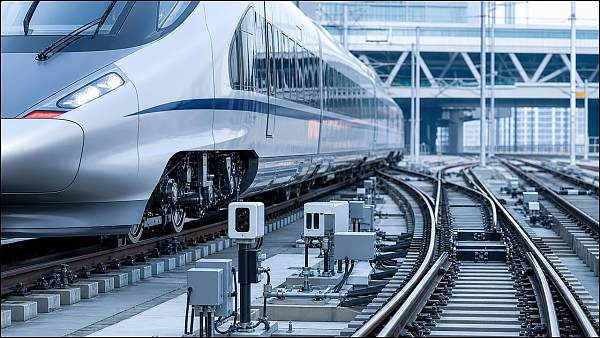
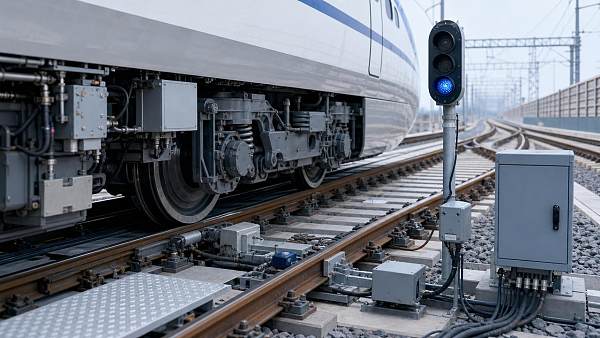
On trains, rail predictive maintenance commonly monitors traction motors, gearboxes, axle bearings, doors, brakes, HVAC, pantographs, and battery systems.
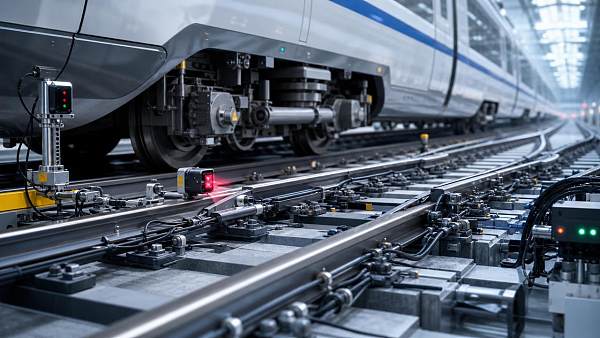
Vibration, temperature, current draw, and event logs reveal deviation patterns. A gearbox may still operate, yet show a rising vibration signature weeks before a severe fault.
Without prediction, the train may fail in service and require immediate removal. With prediction, the unit can be scheduled for depot work during an existing maintenance window.
Track and infrastructure: reducing possession overruns
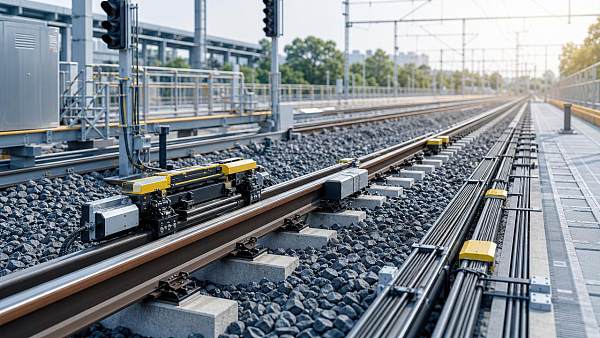
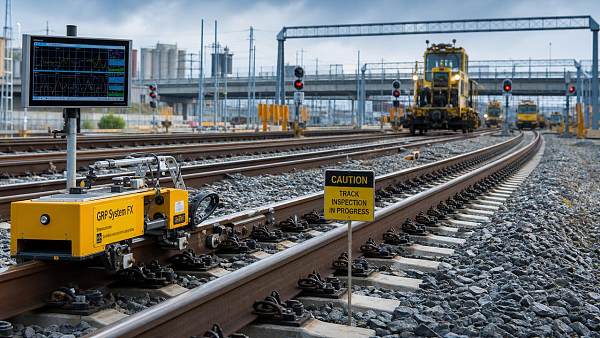
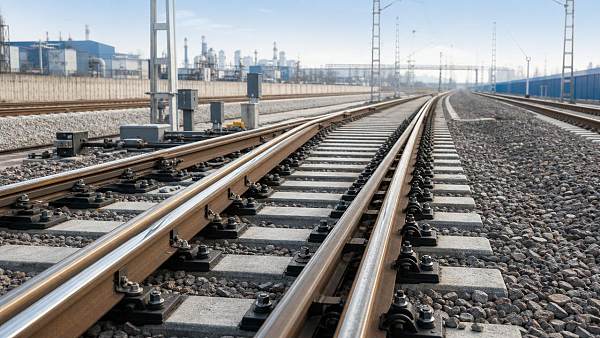
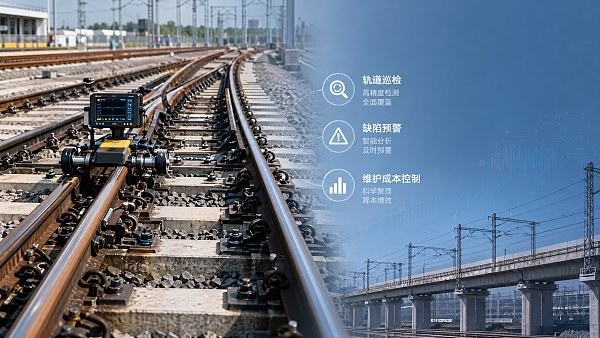
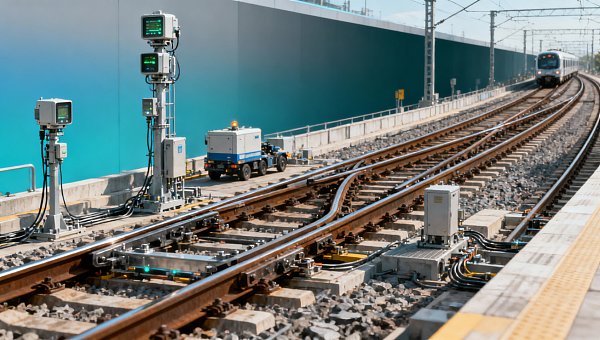
Track geometry cars, acoustic sensors, thermal imaging, and turnout condition monitoring help detect rail wear, ballast degradation, fastener issues, and switch machine drift.
This changes planning quality. Instead of wide-area maintenance blocks, teams can target the exact segment, component, and intervention type needed.
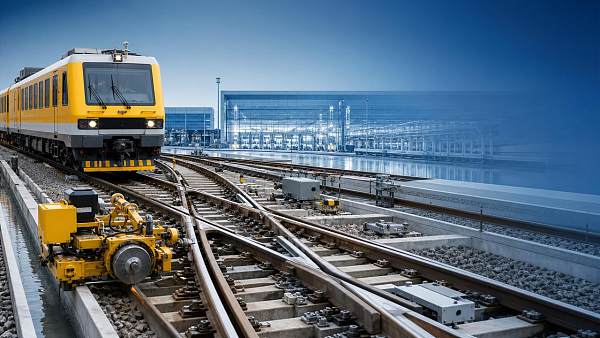
Possessions become shorter and more predictable. That directly lowers service disruption, especially on dense urban corridors or high-speed lines with limited maintenance windows.
Signaling and power: preventing cascading service impacts
Rail predictive maintenance also supports signaling cabinets, interlockings, point machines, telecom networks, and traction power equipment.
A single degraded component can trigger delay cascades. Monitoring power quality, relay behavior, cabinet temperature, and communication faults helps avoid network-wide disruption from one local failure.
In practice, downtime reduction often comes from better prioritization, not from dramatic technology alone. The right fault is fixed at the right time, before service is affected.
Which rail assets benefit most from rail predictive maintenance first?
Not every asset needs the same level of analytics. The best starting point is equipment with high failure impact, repeated fault history, and accessible condition data.
- Wheelsets and axle bearings with thermal or vibration trends
- Doors that create frequent dispatch delays
- Pantographs and overhead interface components on high-frequency lines
- Turnouts and switch machines with weather-related failures
- Traction power transformers, breakers, and substations
- Signaling equipment where minor faults have major operational consequences
A practical rule is to start where one failure causes three costs at once: service delay, emergency labor, and asset damage escalation.
Rail predictive maintenance delivers the fastest return on assets with frequent minor alarms that currently require manual interpretation. Algorithms can sort noise from meaningful change.
Another strong candidate is any asset with limited maintenance access. If track possession or depot time is scarce, prediction improves every available intervention window.
What data, systems, and workflow are needed for effective rail predictive maintenance?
The core requirement is not just more sensors. It is a usable chain from data capture to maintenance action.
1. Reliable condition data
Data may come from onboard sensors, wayside detectors, SCADA, inspection vehicles, manual checks, and maintenance records. Data quality matters more than volume.
2. Asset structure and history
Each signal must connect to the right component, serial number, location, and maintenance history. Poor asset hierarchy makes rail predictive maintenance difficult to trust.
3. Analytics that fit operating reality
Threshold alarms are useful, but not enough. Effective models account for route type, weather, duty cycle, and fleet differences to avoid false alerts.
4. Work order integration
Insight only reduces downtime when it reaches planners and technicians. Alerts should trigger inspection tasks, spare checks, and intervention deadlines inside maintenance systems.
5. Feedback after intervention
After each repair, teams should record root cause and part condition. That closes the learning loop and steadily improves rail predictive maintenance accuracy.
What common mistakes limit downtime reduction?
The most common mistake is treating rail predictive maintenance as a software purchase instead of an operating method.
Another mistake is starting with too many asset classes. Broad pilots look ambitious, but narrow pilots usually deliver clearer evidence and faster process correction.
False alarms are another risk. If the system generates too many weak alerts, teams stop trusting it. Alert design must reflect practical maintenance capacity.
Some programs ignore maintenance execution. Predicting a bearing issue means little if spares are unavailable or depot slots are already full.
Data silos also reduce value. Rolling stock, track, signaling, and power teams often hold separate datasets, even when one fault pattern affects several systems.
Finally, many organizations measure only model accuracy. The real metric is operational impact: delay minutes avoided, emergency callouts reduced, and repeat failures prevented.
How should implementation be phased for measurable results?
A practical rollout begins with one clear business problem. For example, repeated door failures, turnout faults, or traction motor overheating on a specific route.
- Select one asset group with high delay impact.
- Define failure modes and required data points.
- Build alert rules and escalation thresholds.
- Connect alerts to planning and work orders.
- Track avoided failures and maintenance outcomes.
- Scale only after the workflow proves repeatable.
This phased model is especially effective in complex rail environments. It aligns engineering evidence with operational realities, regulatory discipline, and budget control.
For networks operating under international standards, rail predictive maintenance should also align with safety assurance, traceability, and lifecycle documentation requirements.
FAQ: what should be checked before expanding rail predictive maintenance?
Rail predictive maintenance cuts downtime in practice when data, engineering judgment, and maintenance execution work as one system. The strongest results come from focused use cases, reliable condition signals, and disciplined follow-through.
For rail networks managing rolling stock, track, signaling, and power assets, the next step is clear: identify the failure patterns that create the most disruption, then build a targeted rail predictive maintenance workflow around them.
When implementation is phased carefully, downtime falls, interventions become smarter, and infrastructure performance becomes more predictable across the whole rail system.
Search News
Industry Portal
Hot Articles

Popular Tags
Recommended News
 Jul 03, 2026>30000 Layers H Type Automatic Battery Cage: Key Specs, Capacity, and Farm Fit>30000 Layers H Type Automatic Battery Cage guide covering key specs, true capacity, automation benefits, and farm fit—compare smarter and choose a system built for scalable egg production.
 Jul 01, 2026Sheet Metal Work vs CNC Machining: Which Process Fits Your Part Design and Volume?Sheet metal work vs CNC machining: discover how geometry, tolerance, and production volume affect cost, lead time, and scalability so you can choose the right process with confidence.
 Jun 30, 2026Rail Track Maintenance in the Middle East: Key Challenges, Methods, and Planning TipsRail track maintenance Middle East guide covering heat, sand, drainage, turnout care, and planning tips to cut downtime, improve safety, and optimize life-cycle cost.
 Jun 24, 2026Car Maintenance Checklist: What to Inspect Daily, Monthly, and Before Long TripsCar maintenance made simple: discover what to inspect daily, monthly, and before long trips to prevent breakdowns, improve safety, and save on costly repairs.
 Jun 22, 2026Handling Technology in Rail Maintenance: Equipment Types and Selection CriteriaHandling technology in rail maintenance: explore equipment types, key selection criteria, and smart ways to improve safety, uptime, and depot efficiency.
 Jun 16, 2026How to Read Hydraulic Press Specifications for Rail Workshop JobsHydraulic press specifications explained for rail workshop jobs: learn how to assess force, stroke, duty cycle, safety, and control to reduce procurement risk and improve performance.
 Jun 13, 2026Industrial Tablet PCs for Field Maintenance: Key Specs for Dust, Vibration, and ConnectivityTablet PCs built for field maintenance: discover the key specs for dust protection, vibration resistance, and reliable connectivity to keep rail and transit teams productive.
 Jun 03, 2026Hydraulic Parts Selection Guide: Seals, Valves, Pumps, and Failure RisksHydraulic parts selection guide for seals, valves, pumps, and hoses—learn how to reduce leakage, contamination, downtime, and failure risks in rail and transit maintenance.
 May 26, 2026When rail track maintenance costs more than expectedRail track maintenance costs often exceed budgets due to hidden lifecycle, compliance, and procurement risks. Learn the real cost drivers and make smarter approval decisions.
 May 24, 2026When does rail track maintenance cost more than expectedRail track maintenance costs rise fast when hidden defects, traffic pressure, aging assets, and compliance gaps go unchecked. Learn when overruns become avoidable.
 May 23, 2026When does rail predictive maintenance truly cut downtime?Rail predictive maintenance cuts downtime when critical assets show clear warning signs and teams can act fast. Learn when it delivers real ROI, fewer disruptions, and smarter rail maintenance planning.
 May 22, 2026How rail track maintenance costs change over asset lifeRail track maintenance costs change across every asset life stage. Learn the key cost drivers, renewal signals, and planning insights to reduce risk and improve rail budget performance.
 May 21, 2026How rail predictive maintenance cuts downtime in practiceRail predictive maintenance cuts downtime by turning condition data into early action. Learn where it works best, which rail assets to prioritize, and how to implement it for fewer failures and smarter maintenance.
 May 18, 2026What rail track maintenance issues cause most service delays?Rail track maintenance issues like geometry defects, turnout failures, wear, and drainage problems cause most service delays. See which risks matter most by operating scene.
 May 13, 2026Is rail global mobility reshaping spare parts planning?Rail global mobility is reshaping spare parts planning through compliance, forecasting, and lead-time control. Learn how smarter inventory strategies reduce risk and boost rail aftermarket growth.
 May 09, 2026Rail economic resilience now depends on maintenance timingRail economic resilience starts with smarter maintenance timing. Discover how data-driven planning cuts downtime, controls lifecycle cost, and strengthens rail network performance.
 May 08, 2026When Does Rail Track Maintenance Start Costing More Than It Saves?Rail track maintenance: learn the warning signs, cost triggers, and renewal thresholds that show when repeated repairs stop saving money and start hurting rail performance and budgets.
 May 06, 2026What Causes Rail Track Maintenance Costs to Spike Early?Rail track maintenance costs can spike early due to hidden drainage issues, load stress, delayed inspections, and poor component fit. Discover practical fixes to cut failures and extend track life.
 May 05, 2026What rail global mobility means for fleet deployment plansRail global mobility is redefining fleet deployment plans. Discover how operators balance interoperability, compliance, maintenance, and low-carbon goals for smarter rail decisions.
 May 04, 2026When Rail Track Maintenance Delays Start Signaling Bigger RiskRail track maintenance delays can reveal hidden safety, cost, and reliability risks. Learn the warning signs and how after-sales teams can act early to prevent major disruption.
 May 01, 2026How Rail Economic Resilience Affects Fleet Renewal TimingRail economic resilience shapes the right fleet renewal timing. Learn how ridership, funding, energy costs, and maintenance risk guide smarter rail investment decisions.
 Apr 30, 2026Why rail track maintenance costs jump after delayed inspectionsRail track maintenance costs rise fast after delayed inspections. Learn how hidden defects trigger speed limits, emergency repairs, and budget overruns—and how to prevent them.
 Apr 29, 2026Rail track maintenance costs rise fast when inspections slipRail track maintenance costs surge when inspections slip. Learn the key cost drivers, risk triggers, and planning tactics to cut downtime, protect budgets, and keep rail assets reliable.
 Apr 23, 2026Track maintenance delays that quietly reduce line capacityTrack maintenance delays quietly cut rail transit efficiency and line capacity. Learn how predictive maintenance, CBTC, ETCS, and smarter rail infrastructure planning reduce risk, cost, and disruption.







Quarterly Executive Summaries Delivered Directly.
Join 50,000+ industry leaders who receive our proprietary market analysis and policy outlooks before they hit the public library.