

Maintenance vehicles add value only when possession windows fit
Dr. Alistair Thorne
Time
Click Count
Maintenance vehicles deliver value only when they can actually work—and in rail, that depends on possession windows. If track access is too short, too fragmented, or poorly coordinated with signaling, power isolation, and traffic operations, even high-spec machines become underused assets. For procurement teams, EPC contractors, technical evaluators, and distributors, the practical question is not simply which maintenance vehicle is better on paper. It is whether the vehicle’s setup time, work rate, safety compliance, and system compatibility match the possession regime of the network.
That is the core search intent behind this topic: readers want to understand how to judge the real operational and commercial value of rail maintenance vehicles in relation to available track possession windows. They are also looking for a way to reduce procurement risk, improve utilization, and align maintenance planning with regulatory, signaling, traction power, and carbon-efficiency requirements across high-speed rail and urban metro environments.
Why maintenance vehicles create value only when possession windows are workable
In rail infrastructure, a maintenance vehicle is not valuable because of its catalog specifications alone. It creates value when it can enter the track, complete the task safely within the available possession window, and release the line without disrupting service recovery. That sounds straightforward, but in practice it is where many investment decisions fail.
A network may purchase tamping machines, rail grinding vehicles, catenary maintenance units, inspection vehicles, or multi-function maintenance trains with excellent technical capabilities. Yet if the operator only gets short overnight windows, split possessions, or highly restricted access under CBTC or ETCS-controlled traffic conditions, the vehicle may never reach its designed productivity. In those cases, the issue is not weak equipment; it is a mismatch between asset capability and possession reality.
For technical and business evaluators, the key principle is simple: maintenance vehicle value equals productive output achieved within real access constraints, not theoretical output under ideal test conditions.
What information researchers and evaluators are really looking for
Most readers searching this topic are not looking for a generic explanation of rail maintenance. They want a decision framework. Their main concerns usually fall into four areas.
First, utilization risk: Will the vehicle work often enough to justify the capital cost, maintenance overhead, operator training, and spare parts inventory?
Second, possession fit: Can the machine mobilize, secure the worksite, perform the intervention, and clear the line within the actual possession windows available on this corridor or metro line?
Third, systems integration: Does the maintenance approach align with signaling systems, traction power isolation procedures, depot access, emergency rules, and local rail standards?
Fourth, business outcome: Will this purchase reduce lifecycle cost, improve asset condition, increase network availability, and support carbon-neutral rail targets better than alternative maintenance strategies?
These are the questions that matter far more than broad feature lists. A high-output vehicle that requires long setup and long uninterrupted access may be ideal on one heavy-haul or intercity route, but inefficient on a dense urban metro where maintenance windows are brief and operational handback is tightly controlled.
How to assess possession-window fit before buying or specifying a vehicle
The most useful way to evaluate a maintenance vehicle is to start with the possession model of the railway, not the machine brochure. Buyers should ask: what kind of access does the network really provide?
Important variables include:
- Average possession duration per shift
- Frequency of possessions per week or month
- Single-block versus fragmented access
- Time needed for route protection, power isolation, and line clearance
- Travel time from stabling point or depot to worksite
- Restrictions from ETCS, CBTC, interlocking, or manual protection procedures
- Traffic recovery requirements after handback
- Rules for adjacent-line working and safe separation
Only after these conditions are clear should evaluators compare vehicle options. A machine that needs 40 minutes to set up and 30 minutes to demobilize may be a poor fit for a 2-hour urban possession, even if its peak work rate is excellent. On the other hand, a modular or multi-function vehicle with slightly lower hourly output may produce more completed work per month because it fits the available access pattern.
This is especially relevant in urban metro transit, where possession windows are often compressed by late-night service, early-morning startup, and strict signaling and power restoration timelines. In high-speed rail, access may be longer but regulatory controls, safety procedures, and line-speed tolerances can make work execution equally demanding.
The hidden productivity equation: setup time, travel time, and handback discipline
One of the most common procurement mistakes is to focus on the vehicle’s headline productivity while ignoring the lost time around the task. In reality, productive maintenance output depends on the full possession cycle.
A simplified evaluation model should include:
- Access time: time to enter the network and reach the worksite
- Protection time: line blocking, authority confirmation, isolation, and safety procedures
- Setup time: preparing the machine and work systems
- Effective work time: actual tamping, grinding, inspection, catenary repair, or component replacement
- Contingency time: allowance for operational delays or technical interruptions
- Handback time: testing, clearance, documentation, and release to traffic
For many networks, only a fraction of the nominal possession window becomes effective work time. That is why possession-window fit is the real determinant of value. A vehicle with lower setup complexity, faster stabilization, better onboard diagnostics, and easier compliance workflows may outperform a more powerful machine in annual output terms.
This is also where digital systems matter. Predictive maintenance software, onboard condition monitoring, automated measurement, and remote diagnostics can cut preparation time and improve first-time fix performance. In other words, digital capability can increase the economic value of a maintenance vehicle by making short possessions more usable.
Why signaling, ETCS, CBTC, and traction power strategy affect vehicle ROI
Maintenance vehicles do not operate in isolation from the broader rail system. Their value is shaped by signaling architecture, possession authorization processes, and traction power constraints.
On ETCS-equipped corridors, access planning may involve strict movement authority logic, balise-related protections, and interoperability requirements. On CBTC metro lines, work windows are closely linked to train control states, traffic shutdown sequencing, and system reactivation procedures. In electrified networks, traction power isolation and earthing procedures can consume a significant part of the possession. If these interfaces are not considered early, expected vehicle productivity can be overstated.
For technical evaluators, the practical questions include:
- Can the vehicle operate efficiently under the network’s signaling and access-control rules?
- Does it require special approvals for signaling compatibility or track access?
- How much time is routinely lost to power isolation and restoration?
- Can work be bundled to reduce repeated possession setup costs?
- Does the vehicle support data integration with maintenance management or traffic systems?
For business evaluators, these technical interfaces matter because they directly affect utilization, labor planning, service disruption risk, and return on investment.
What makes a maintenance vehicle commercially viable for EPC contractors and procurement teams
For EPC contractors and procurement directors, the commercial case must go beyond acquisition price. A lower-cost vehicle may become more expensive over its lifecycle if it cannot use the available possession windows effectively.
A sound procurement model should compare:
- Capital expenditure
- Expected annual productive hours under real possession conditions
- Labor requirement per intervention
- Maintenance and spare parts supportability
- Training burden and certification needs
- Failure impact on possession overrun risk
- Compatibility with local standards and approvals
- Residual value and flexibility across multiple project types
In many cases, the best-value solution is not the most specialized vehicle but the one that balances output, flexibility, reliability, and rapid deployment. Multi-function maintenance vehicles can be particularly attractive where possession windows are scarce and operators want to combine inspection, minor repair, and fault response within a single access period.
Distributors and agents should also note that customers increasingly want proof of operational fit. Sales arguments based only on machine capability are less persuasive than evidence showing how the vehicle performs under short possessions, mixed-traffic lines, metro constraints, or high-speed handback standards.
Where predictive maintenance changes the value equation
Predictive maintenance is often discussed as a software topic, but its impact on maintenance vehicles is highly practical. Better asset intelligence helps railways intervene earlier, package work more efficiently, and send the right vehicle to the right location during limited possessions.
When inspection data, condition monitoring, and maintenance planning are linked, networks can:
- Reduce unplanned interventions
- Use possession windows for targeted high-value tasks
- Avoid dispatching oversized equipment for small jobs
- Improve material readiness before access begins
- Lower the risk of possession overruns caused by uncertainty
This is especially important for carbon-neutral rail strategies. Efficient use of possessions reduces repeated access events, unnecessary machine movements, and wasted labor hours. It also supports infrastructure reliability, which helps operators maintain service quality and asset life without excessive replacement cycles.
For buyers evaluating maintenance vehicles, digital readiness should therefore be treated as a value multiplier, not an optional add-on.
Key red flags that indicate a poor match between vehicle and network
Several warning signs suggest that a maintenance vehicle may not deliver expected value.
- The supplier quotes productivity based on uninterrupted work periods that the network rarely offers.
- Setup and demobilization times are excluded from output calculations.
- There is limited evidence of operation under comparable ETCS, CBTC, or traction power conditions.
- The approval path for the target market is unclear.
- The vehicle requires highly specialized crews that are difficult to source locally.
- Spare parts or service support are weak in the destination region.
- The machine is too large, heavy, or complex for the line’s access, stabling, or depot arrangements.
- The business case assumes possession windows longer than those historically granted.
For information researchers and technical assessors, these red flags are often more revealing than specification tables. They show whether the supplier understands railway operations as a system rather than just equipment delivery.
A practical decision framework for evaluating real value
If the goal is to make a reliable procurement or partnership decision, a practical framework is to score each vehicle against five dimensions:
- Possession compatibility: fit with actual access windows and worksite procedures
- Operational productivity: net completed work per possession, not theoretical hourly rate
- Systems integration: signaling, traction power, data, and approval compatibility
- Lifecycle economics: utilization, maintenance cost, staffing, and downtime risk
- Strategic flexibility: ability to support future traffic growth, digital maintenance, and decarbonization goals
This framework helps different stakeholders align their priorities. Technical teams can validate feasibility. Commercial teams can test ROI. Distributors can position products more accurately. EPC contractors can reduce delivery and performance risk on major rail transit projects.
Conclusion: possession windows are the filter through which maintenance vehicle value is decided
Maintenance vehicles add value only when possession windows fit the machine, the maintenance task, and the railway’s operating environment. That is the central conclusion for rail transit decision-makers. In high-speed rail, urban metro, and mixed-traffic networks alike, the winning specification is not the one with the highest theoretical capability, but the one that converts limited access time into reliable, compliant, and repeatable maintenance output.
For procurement directors, technical evaluation teams, and market intermediaries, the right approach is to assess maintenance vehicles through real possession conditions, signaling and power interfaces, lifecycle economics, and predictive maintenance readiness. When those factors align, maintenance vehicles become strategic assets. When they do not, even advanced equipment can remain underutilized and commercially disappointing.
In short, possession-window fit is not a scheduling detail. It is the business case.
Search News
Industry Portal
Hot Articles

Popular Tags
Recommended News
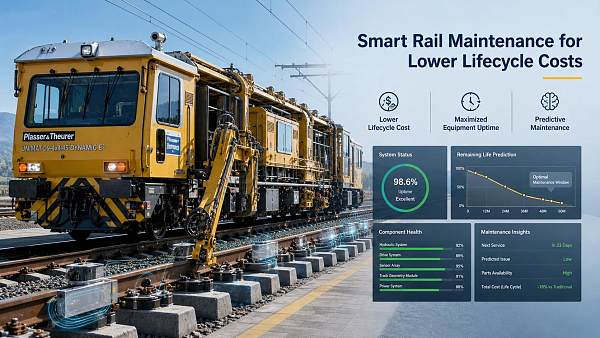
 Jul 15, 2026Track Maintenance Systems in Europe: How to Compare Lifecycle Cost and UptimeTrack maintenance systems Europe: compare lifecycle cost, uptime, compliance, and spare-parts risk to choose rail solutions that cut downtime and improve long-term value.
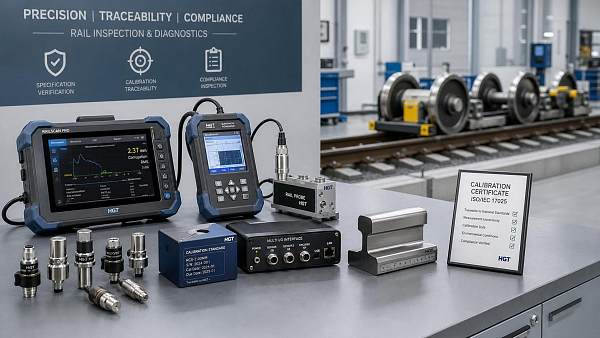
 Jul 11, 2026Diagnostic Equipment Manufacturer Selection: Key Specs, Calibration, and Compliance ChecksDiagnostic equipment manufacturer selection affects accuracy, calibration traceability, and compliance. Learn the key specs and checks to reduce risk and choose with confidence.
 Jul 10, 2026How to Choose a Hydraulic Press for Sheet Metal Based on Tonnage, Stroke, and Die SetupHydraulic press for sheet metal selection goes beyond tonnage. Learn how stroke, die setup, and part requirements affect accuracy, uptime, and smarter buying decisions.
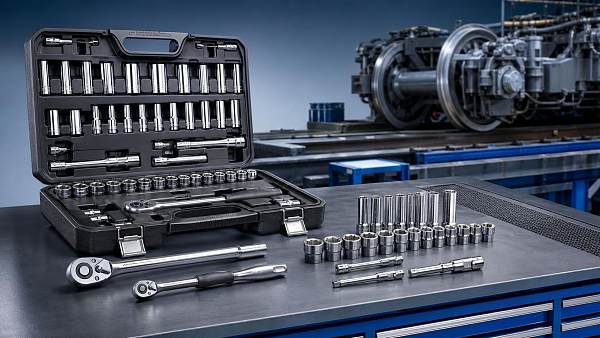
 Jul 09, 2026Socket Wrench Sets: What Sizes, Drive Types, and Case Options Are Worth Buying?socketwrenchsets buying guide: compare must-have sizes, 1/4, 3/8, and 1/2 drive options, plus case styles that improve access, durability, and value for real maintenance work.
![]() Jul 07, 2026Solid Waste Shredders: Which Types Fit MSW, Plastic, Wood, and Bulky Waste?solidwasteshredders guide: compare the best shredder types for MSW, plastic, wood, and bulky waste, with practical selection tips to boost uptime, cut costs, and choose smarter.
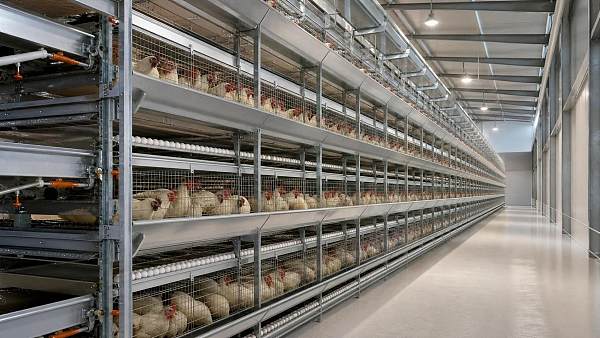
Jul 07, 2026Solid Waste Shredders: Which Types Fit MSW, Plastic, Wood, and Bulky Waste?solidwasteshredders guide: compare the best shredder types for MSW, plastic, wood, and bulky waste, with practical selection tips to boost uptime, cut costs, and choose smarter. Jul 03, 2026>30000 Layers H Type Automatic Battery Cage: Key Specs, Capacity, and Farm Fit>30000 Layers H Type Automatic Battery Cage guide covering key specs, true capacity, automation benefits, and farm fit—compare smarter and choose a system built for scalable egg production.
 Jul 01, 2026Sheet Metal Work vs CNC Machining: Which Process Fits Your Part Design and Volume?Sheet metal work vs CNC machining: discover how geometry, tolerance, and production volume affect cost, lead time, and scalability so you can choose the right process with confidence.
 Jun 30, 2026Rail Track Maintenance in the Middle East: Key Challenges, Methods, and Planning TipsRail track maintenance Middle East guide covering heat, sand, drainage, turnout care, and planning tips to cut downtime, improve safety, and optimize life-cycle cost.
 Jun 24, 2026Car Maintenance Checklist: What to Inspect Daily, Monthly, and Before Long TripsCar maintenance made simple: discover what to inspect daily, monthly, and before long trips to prevent breakdowns, improve safety, and save on costly repairs.
 Jun 22, 2026Handling Technology in Rail Maintenance: Equipment Types and Selection CriteriaHandling technology in rail maintenance: explore equipment types, key selection criteria, and smart ways to improve safety, uptime, and depot efficiency.
 Jun 16, 2026How to Read Hydraulic Press Specifications for Rail Workshop JobsHydraulic press specifications explained for rail workshop jobs: learn how to assess force, stroke, duty cycle, safety, and control to reduce procurement risk and improve performance.
 Jun 13, 2026Industrial Tablet PCs for Field Maintenance: Key Specs for Dust, Vibration, and ConnectivityTablet PCs built for field maintenance: discover the key specs for dust protection, vibration resistance, and reliable connectivity to keep rail and transit teams productive.
 Jun 03, 2026Hydraulic Parts Selection Guide: Seals, Valves, Pumps, and Failure RisksHydraulic parts selection guide for seals, valves, pumps, and hoses—learn how to reduce leakage, contamination, downtime, and failure risks in rail and transit maintenance.
 May 26, 2026When rail track maintenance costs more than expectedRail track maintenance costs often exceed budgets due to hidden lifecycle, compliance, and procurement risks. Learn the real cost drivers and make smarter approval decisions.
 May 24, 2026When does rail track maintenance cost more than expectedRail track maintenance costs rise fast when hidden defects, traffic pressure, aging assets, and compliance gaps go unchecked. Learn when overruns become avoidable.
 May 23, 2026When does rail predictive maintenance truly cut downtime?Rail predictive maintenance cuts downtime when critical assets show clear warning signs and teams can act fast. Learn when it delivers real ROI, fewer disruptions, and smarter rail maintenance planning.
 May 22, 2026How rail track maintenance costs change over asset lifeRail track maintenance costs change across every asset life stage. Learn the key cost drivers, renewal signals, and planning insights to reduce risk and improve rail budget performance.
 May 21, 2026How rail predictive maintenance cuts downtime in practiceRail predictive maintenance cuts downtime by turning condition data into early action. Learn where it works best, which rail assets to prioritize, and how to implement it for fewer failures and smarter maintenance.
 May 18, 2026What rail track maintenance issues cause most service delays?Rail track maintenance issues like geometry defects, turnout failures, wear, and drainage problems cause most service delays. See which risks matter most by operating scene.
 May 13, 2026Is rail global mobility reshaping spare parts planning?Rail global mobility is reshaping spare parts planning through compliance, forecasting, and lead-time control. Learn how smarter inventory strategies reduce risk and boost rail aftermarket growth.
 May 09, 2026Rail economic resilience now depends on maintenance timingRail economic resilience starts with smarter maintenance timing. Discover how data-driven planning cuts downtime, controls lifecycle cost, and strengthens rail network performance.
 May 08, 2026When Does Rail Track Maintenance Start Costing More Than It Saves?Rail track maintenance: learn the warning signs, cost triggers, and renewal thresholds that show when repeated repairs stop saving money and start hurting rail performance and budgets.
 May 06, 2026What Causes Rail Track Maintenance Costs to Spike Early?Rail track maintenance costs can spike early due to hidden drainage issues, load stress, delayed inspections, and poor component fit. Discover practical fixes to cut failures and extend track life.
 May 05, 2026What rail global mobility means for fleet deployment plansRail global mobility is redefining fleet deployment plans. Discover how operators balance interoperability, compliance, maintenance, and low-carbon goals for smarter rail decisions.






Quarterly Executive Summaries Delivered Directly.
Join 50,000+ industry leaders who receive our proprietary market analysis and policy outlooks before they hit the public library.