

Why rail track maintenance costs jump after delayed inspections
Dr. Alistair Thorne
Time
Click Count
Delayed inspections rarely save money in rail operations—they usually multiply future costs. In rail track maintenance, small undetected defects can quickly escalate into geometry degradation, speed restrictions, emergency repairs, and asset downtime. For project managers and engineering leads, understanding why inspection delays trigger sharp cost increases is essential to protecting budgets, extending track life, and maintaining network reliability.
Why do delayed inspections increase rail track maintenance costs so quickly?
The short answer is that rail track maintenance is highly time-sensitive. Track assets do not usually fail in a single step. They deteriorate in stages: minor geometry deviation, early fastening loosening, local ballast fouling, developing corrugation, drainage weakness, and then larger structural instability. When inspections slip by even one maintenance cycle—often 30, 60, or 90 days depending on traffic density and asset class—those small defects can move from planned intervention status into urgent repair status.
For project managers, the cost jump comes from the change in work type rather than from the defect alone. A minor tamping correction scheduled in a possession window is relatively predictable. The same location, if left unchecked, may later require speed restriction management, emergency crew mobilization, temporary materials, rerouting coordination, and overnight possession premiums. In practical rail track maintenance planning, labor cost can rise by 1.5 to 3 times once work shifts from preventive to reactive execution.
There is also a compounding asset effect. Rail, sleepers, fastening systems, ballast, switches, and subgrade interact mechanically. A delayed inspection on one component rarely remains isolated. If gauge widening or uneven settlement is not detected early, dynamic wheel loads increase. That accelerates wear elsewhere, including welds, insulated joints, and turnout components. In other words, delayed inspections increase not only the cost of one fix, but the number of assets that require intervention.
What changes when a defect moves from early-stage to late-stage?
In early-stage rail track maintenance, teams can schedule corrective work around existing possession windows, material inventory, and machine allocation. Late-stage defects force a different operating model. The network may impose a 25 km/h to 80 km/h temporary speed restriction, depending on line class and defect severity. Once train throughput is affected, the “maintenance cost” is no longer just engineering cost; it becomes an operations and revenue issue.
The technical scope also expands. A local dip may begin as a simple geometry adjustment but later reveal ballast contamination, poor drainage, sleeper cracking, or formation weakness. At that stage, rail track maintenance may require multiple disciplines instead of one team. Track, civil, signaling interface, and traffic control personnel may all need to coordinate, increasing administrative burden and project risk.
This is why experienced infrastructure owners treat inspection frequency as a cost-control lever. Inspection does not generate revenue by itself, but it preserves the option to repair efficiently. Once that option disappears, the cost curve becomes steep.
Typical cost escalation path
- Stage 1: Small defect detected during routine inspection, corrected in planned maintenance window.
- Stage 2: Missed inspection leads to worsening geometry or wear, requiring additional materials and machine time.
- Stage 3: Defect affects operations, triggering speed restrictions, dispatch coordination, and reactive crew deployment.
- Stage 4: Broader asset damage requires partial renewal, larger possession windows, and higher indirect cost exposure.
Which defects become most expensive when inspections are postponed?
Not every defect escalates at the same speed. For rail track maintenance decision-making, the most expensive delayed-inspection cases usually share one trait: they accelerate under traffic. Geometry defects, drainage failures, ballast contamination, turnout wear, and fastening degradation all worsen faster on heavily loaded or high-frequency corridors. A metro line with short headways or a freight line with high axle loads can turn a manageable issue into a major maintenance event within a single quarter.
Turnouts are especially sensitive. A late inspection of switch rails, crossing noses, stretcher bars, or machine interfaces can produce costs far beyond ordinary plain-line maintenance. Because turnouts concentrate wheel-rail forces and directly influence route availability, even a localized defect may reduce operational flexibility. When turnout rail track maintenance becomes reactive, the network often faces both direct repair costs and timetable disruption.
Drainage is another hidden cost driver. Water-related defects may appear secondary compared with visible rail wear, but poor drainage undermines ballast performance, weakens the formation, and increases settlement variability. Once water ingress persists across wet seasons, remediation frequently expands from track work into civil work. That can extend intervention periods from a 4-hour maintenance block to multi-day staged access.
How can project teams prioritize inspection-sensitive assets?
A practical approach is to rank assets by three factors: defect growth rate, operational criticality, and access difficulty. Assets with fast deterioration, high traffic consequence, and limited maintenance windows deserve the strictest inspection discipline. In many rail track maintenance programs, this puts turnouts, bridge transitions, wet subgrade zones, tight-radius curves, and high-tonnage approaches at the top of the list.
The table below summarizes where delayed inspections usually create the sharpest cost escalation. It is not a universal standard, but it reflects common field logic for project planning and maintenance risk screening.
For project managers, the key takeaway is that rail track maintenance cost escalation is not random. It is concentrated in a limited set of high-consequence assets. That means inspection recovery plans should prioritize these zones first rather than trying to restore every inspection backlog evenly.
How do delayed inspections affect budgets, schedules, and contractor planning?
Delayed inspections disrupt more than engineering workflows. They distort annual budgets because planned rail track maintenance is generally priced on forecastable quantities, crew productivity, and standard possessions. Once defects surface late, the expenditure profile becomes volatile. A budget originally allocated for periodic tamping, grinding, or fastening replacement can suddenly require emergency procurement, premium labor, and unscheduled logistics support.
Schedule reliability also suffers. In project environments, especially those with EPC contractors or multi-package maintenance frameworks, inspection delays create planning blind spots. If condition data is 8 to 12 weeks old instead of current, work packages may be issued with inaccurate quantities, wrong material assumptions, or insufficient access duration. That leads to variation orders, rework, and lower possession productivity.
Contractor performance can appear weak when the root problem is actually inspection latency. A contractor mobilized for routine rail track maintenance may arrive to find degraded formation, hidden drainage failure, or turnout wear beyond the original scope. In those cases, output falls not because execution is poor, but because the input condition data was stale. For engineering leads, this is a governance issue as much as a technical one.
What budget lines usually grow after inspection delays?
The most obvious increase is direct repair cost, but indirect lines often grow faster. Temporary speed restriction management, traffic control coordination, standby labor, track possession rescheduling, and spare part expedition can all add cost without improving the underlying asset. In some networks, the indirect cost of a delayed rail track maintenance response can equal or exceed the physical repair itself.
The table below helps project teams connect inspection discipline with budget exposure in practical terms.
For capital and maintenance program leaders, the strategic lesson is clear: rail track maintenance budgets are protected not only by negotiating unit rates, but by preserving visibility into asset condition. Good inspection data stabilizes scope, and stable scope protects both budget and schedule.
Warning signs in project governance
- Inspection reports are older than the current possession planning cycle.
- Repeated emergency work orders exceed 10% to 15% of monthly maintenance activity.
- Contractors report major scope differences between planned and actual site conditions.
- Temporary speed restrictions remain in place longer than one review cycle.
What are the most common mistakes teams make when trying to save money on inspections?
One common mistake is treating inspections as overhead rather than as a production enabler. In rail track maintenance, inspections are what keep the maintenance mix preventive instead of reactive. Cutting inspection rounds may appear efficient for one quarter, but it often raises total maintenance cost over the next two to four quarters by shifting work into more disruptive categories.
A second mistake is assuming that low recent defect history means low current risk. Traffic patterns change, drainage conditions change, and component aging rarely occurs linearly. A section that performed well last season may deteriorate quickly after weather events, tonnage increases, or adjacent construction. Rail track maintenance decisions should be based on current condition and exposure, not on historical comfort alone.
A third mistake is relying on one inspection method only. Visual checks are valuable, but they may miss geometry drift, early settlement patterns, or hidden interface degradation. Depending on the network, effective rail track maintenance often combines walking inspection, geometry measurement, turnout-specific checks, and targeted condition monitoring. The exact mix varies, but single-source visibility is rarely enough for high-utilization infrastructure.
Which misconceptions should project managers challenge?
Project managers should challenge the idea that delayed inspections can always be “caught up later.” In reality, inspection backlogs are not just administrative delays; they reduce the freshness of maintenance intelligence. By the time teams catch up, some defects have already crossed intervention thresholds. Another misconception is that only safety-critical defects matter. Operationally significant but non-critical defects can still generate major cost through speed loss, reduced possession efficiency, and accelerated wear.
The summary table below captures several FAQ-style judgments that help teams avoid false savings in rail track maintenance programs.
For engineering leaders, these distinctions matter because the goal is not simply to inspect more, but to inspect intelligently. The strongest rail track maintenance programs align inspection intensity with asset consequence and defect growth behavior.
How should teams decide inspection frequency and recovery plans after delays occur?
When inspection delays have already happened, the best response is not a blanket return to normal. Teams should first classify the backlog by route type, traffic volume, recent fault history, and maintenance window availability. High-speed, urban high-frequency, and heavy-haul environments generally need faster recovery than low-utilization secondary lines. In many cases, the first 2 to 6 weeks after discovering a backlog are the most important for restoring control.
A sensible recovery plan starts with critical asset screening, not full detail everywhere. Project teams should identify where missing inspection data could plausibly hide defects with rapid growth or high service impact. That usually includes turnouts, transitions, drainage-sensitive locations, level changes, and known recurrent trouble spots. Once those are reviewed, remaining areas can be sequenced by risk and access practicality.
Inspection frequency should also reflect intervention lead time. If a section can only be accessed once every few weeks, then delayed inspection carries higher consequence. In rail track maintenance, access constraints are part of the technical risk equation. A defect is more expensive when it is hard to reach, hard to isolate, or dependent on long-lead components.
What should a recovery-focused inspection plan include?
A recovery-oriented plan should define threshold-based priorities, not just dates. It should specify which asset groups require immediate review, what triggers escalation, and how findings convert into work orders. It should also separate “inspect to confirm serviceability” from “inspect to define renewal scope,” because these serve different management needs. The first protects operations in the near term; the second supports budget and procurement planning over the next quarter or year.
Recommended recovery sequence
- Review backlog by route criticality, recent incidents, and pending possession windows.
- Inspect high-risk assets first: turnouts, wet zones, transitions, tight curves, and recurrent defect areas.
- Convert urgent findings into short-cycle corrective actions within 7 to 14 days where feasible.
- Rebaseline medium-term rail track maintenance quantities for the next 30 to 90 days.
- Update contractor scopes, material forecasts, and access bookings based on fresh condition data.
This approach helps project managers regain predictability. Rather than chasing every overdue inspection equally, they use available labor and possessions where delayed information creates the highest cost exposure.
What should buyers, project managers, and engineering leads confirm before improving rail track maintenance strategy?
Before changing inspection regimes or maintenance contracts, decision-makers should confirm five basics: asset criticality, current defect visibility, access constraints, response capability, and data integration. These determine whether the problem is inspection frequency, inspection method, execution capacity, or reporting lag. Without this diagnosis, organizations may invest in extra inspections but still fail to improve rail track maintenance outcomes.
They should also verify how inspection outputs link to procurement and planning. If condition findings do not translate quickly into material reservations, possession requests, and work package updates, the value of better inspection is diluted. In complex networks, a 48-hour reporting improvement can be more useful than a large increase in raw inspection volume, because it shortens decision latency.
Standards and benchmarking matter as well. While each network has its own internal thresholds, alignment with recognized lifecycle, RAMS, and quality frameworks such as ISO/TS 22163, IEC 62278, and EN 50126 can help structure maintenance governance. For organizations managing multi-country supply chains or cross-border projects, consistent technical language reduces ambiguity in rail track maintenance planning, contractor coordination, and asset reporting.
Why choose us for rail infrastructure intelligence and maintenance benchmarking?
Global Rail & Transit Infrastructure (G-RTI) supports project managers and engineering decision-makers who need more than broad industry commentary. We focus on technical benchmarking, supply-chain visibility, and practical infrastructure intelligence across high-speed rail, metro, signaling, track systems, and traction power. For teams reviewing rail track maintenance strategy, delayed inspection risk, or asset lifecycle planning, that means clearer comparisons between maintenance urgency, component performance, compliance expectations, and delivery realities.
We can help you discuss the questions that affect execution most: which track assets need closer inspection intervals, how to compare preventive versus reactive cost profiles, what parameters should guide component selection, how long key delivery cycles may run, and what certification or standards alignment should be checked before procurement or framework planning. This is especially useful when managing international suppliers, multi-package transit projects, or technically demanding corridor upgrades.
If you need to confirm rail track maintenance priorities, inspection recovery plans, component selection logic, delivery timing, standards alignment, or budget-sensitive maintenance scenarios, contact us to discuss your project context. You can start with a focused conversation on asset parameters, maintenance scope definition, supplier evaluation, lead times, certification expectations, sample support, or quotation requirements for your next rail infrastructure decision.
Search News
Industry Portal
Hot Articles

Popular Tags
Recommended News
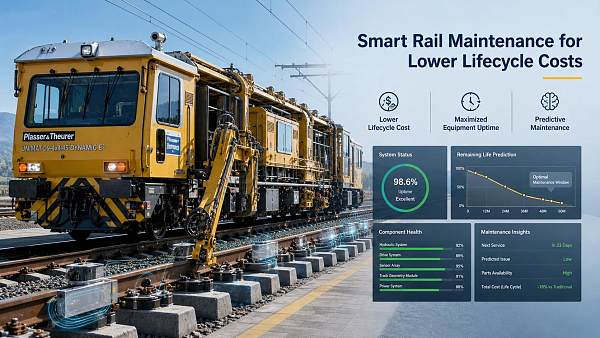
 Jul 15, 2026Track Maintenance Systems in Europe: How to Compare Lifecycle Cost and UptimeTrack maintenance systems Europe: compare lifecycle cost, uptime, compliance, and spare-parts risk to choose rail solutions that cut downtime and improve long-term value.
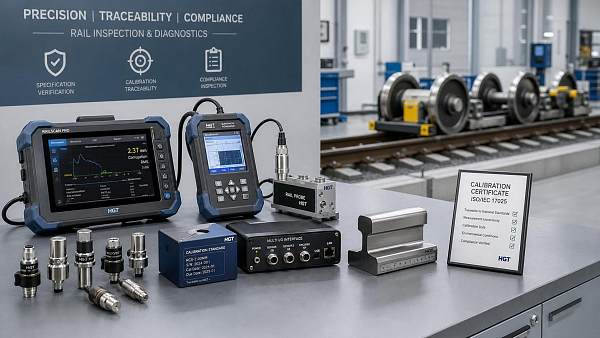
 Jul 11, 2026Diagnostic Equipment Manufacturer Selection: Key Specs, Calibration, and Compliance ChecksDiagnostic equipment manufacturer selection affects accuracy, calibration traceability, and compliance. Learn the key specs and checks to reduce risk and choose with confidence.
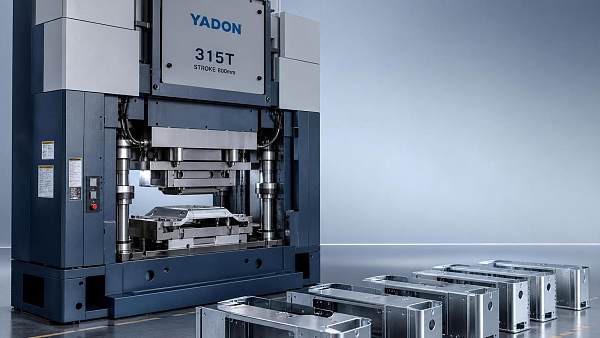
 Jul 10, 2026How to Choose a Hydraulic Press for Sheet Metal Based on Tonnage, Stroke, and Die SetupHydraulic press for sheet metal selection goes beyond tonnage. Learn how stroke, die setup, and part requirements affect accuracy, uptime, and smarter buying decisions.
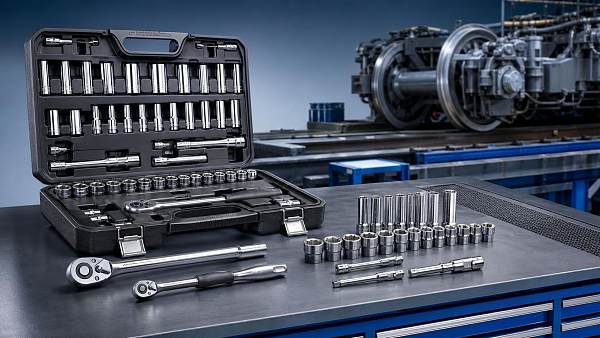
 Jul 09, 2026Socket Wrench Sets: What Sizes, Drive Types, and Case Options Are Worth Buying?socketwrenchsets buying guide: compare must-have sizes, 1/4, 3/8, and 1/2 drive options, plus case styles that improve access, durability, and value for real maintenance work.
![]() Jul 07, 2026Solid Waste Shredders: Which Types Fit MSW, Plastic, Wood, and Bulky Waste?solidwasteshredders guide: compare the best shredder types for MSW, plastic, wood, and bulky waste, with practical selection tips to boost uptime, cut costs, and choose smarter.
Jul 07, 2026Solid Waste Shredders: Which Types Fit MSW, Plastic, Wood, and Bulky Waste?solidwasteshredders guide: compare the best shredder types for MSW, plastic, wood, and bulky waste, with practical selection tips to boost uptime, cut costs, and choose smarter. Jul 03, 2026>30000 Layers H Type Automatic Battery Cage: Key Specs, Capacity, and Farm Fit>30000 Layers H Type Automatic Battery Cage guide covering key specs, true capacity, automation benefits, and farm fit—compare smarter and choose a system built for scalable egg production.
 Jul 01, 2026Sheet Metal Work vs CNC Machining: Which Process Fits Your Part Design and Volume?Sheet metal work vs CNC machining: discover how geometry, tolerance, and production volume affect cost, lead time, and scalability so you can choose the right process with confidence.
 Jun 30, 2026Rail Track Maintenance in the Middle East: Key Challenges, Methods, and Planning TipsRail track maintenance Middle East guide covering heat, sand, drainage, turnout care, and planning tips to cut downtime, improve safety, and optimize life-cycle cost.
 Jun 24, 2026Car Maintenance Checklist: What to Inspect Daily, Monthly, and Before Long TripsCar maintenance made simple: discover what to inspect daily, monthly, and before long trips to prevent breakdowns, improve safety, and save on costly repairs.
 Jun 22, 2026Handling Technology in Rail Maintenance: Equipment Types and Selection CriteriaHandling technology in rail maintenance: explore equipment types, key selection criteria, and smart ways to improve safety, uptime, and depot efficiency.
 Jun 16, 2026How to Read Hydraulic Press Specifications for Rail Workshop JobsHydraulic press specifications explained for rail workshop jobs: learn how to assess force, stroke, duty cycle, safety, and control to reduce procurement risk and improve performance.
 Jun 13, 2026Industrial Tablet PCs for Field Maintenance: Key Specs for Dust, Vibration, and ConnectivityTablet PCs built for field maintenance: discover the key specs for dust protection, vibration resistance, and reliable connectivity to keep rail and transit teams productive.
 Jun 03, 2026Hydraulic Parts Selection Guide: Seals, Valves, Pumps, and Failure RisksHydraulic parts selection guide for seals, valves, pumps, and hoses—learn how to reduce leakage, contamination, downtime, and failure risks in rail and transit maintenance.
 May 26, 2026When rail track maintenance costs more than expectedRail track maintenance costs often exceed budgets due to hidden lifecycle, compliance, and procurement risks. Learn the real cost drivers and make smarter approval decisions.
 May 24, 2026When does rail track maintenance cost more than expectedRail track maintenance costs rise fast when hidden defects, traffic pressure, aging assets, and compliance gaps go unchecked. Learn when overruns become avoidable.
 May 23, 2026When does rail predictive maintenance truly cut downtime?Rail predictive maintenance cuts downtime when critical assets show clear warning signs and teams can act fast. Learn when it delivers real ROI, fewer disruptions, and smarter rail maintenance planning.
 May 22, 2026How rail track maintenance costs change over asset lifeRail track maintenance costs change across every asset life stage. Learn the key cost drivers, renewal signals, and planning insights to reduce risk and improve rail budget performance.
 May 21, 2026How rail predictive maintenance cuts downtime in practiceRail predictive maintenance cuts downtime by turning condition data into early action. Learn where it works best, which rail assets to prioritize, and how to implement it for fewer failures and smarter maintenance.
 May 18, 2026What rail track maintenance issues cause most service delays?Rail track maintenance issues like geometry defects, turnout failures, wear, and drainage problems cause most service delays. See which risks matter most by operating scene.
 May 13, 2026Is rail global mobility reshaping spare parts planning?Rail global mobility is reshaping spare parts planning through compliance, forecasting, and lead-time control. Learn how smarter inventory strategies reduce risk and boost rail aftermarket growth.
 May 09, 2026Rail economic resilience now depends on maintenance timingRail economic resilience starts with smarter maintenance timing. Discover how data-driven planning cuts downtime, controls lifecycle cost, and strengthens rail network performance.
 May 08, 2026When Does Rail Track Maintenance Start Costing More Than It Saves?Rail track maintenance: learn the warning signs, cost triggers, and renewal thresholds that show when repeated repairs stop saving money and start hurting rail performance and budgets.
 May 06, 2026What Causes Rail Track Maintenance Costs to Spike Early?Rail track maintenance costs can spike early due to hidden drainage issues, load stress, delayed inspections, and poor component fit. Discover practical fixes to cut failures and extend track life.
 May 05, 2026What rail global mobility means for fleet deployment plansRail global mobility is redefining fleet deployment plans. Discover how operators balance interoperability, compliance, maintenance, and low-carbon goals for smarter rail decisions.







Quarterly Executive Summaries Delivered Directly.
Join 50,000+ industry leaders who receive our proprietary market analysis and policy outlooks before they hit the public library.