

Which rail technical standards matter most for compliance
Dr. Alistair Thorne
Time
Click Count
For quality and safety managers, understanding which rail technical standards drive compliance is essential to reducing risk, passing audits, and ensuring system reliability. From rolling stock and signaling to track infrastructure and traction power, the right rail technical standards shape every stage of procurement, certification, and lifecycle performance in today’s highly regulated global rail market.
The short answer is this: not every standard carries equal compliance weight. The most important rail technical standards are the ones that directly affect safety, interoperability, RAMS performance, product acceptance, and audit readiness in the market where the system will operate.
For most rail projects, that means focusing first on system assurance standards, then product-specific technical standards, then quality management and process control requirements. This order matters because many teams overinvest in component specifications while underestimating lifecycle safety evidence and integration compliance.
What is the real search intent behind “rail technical standards” for compliance?
Readers searching this topic usually do not want a generic list of standards. They want to know which standards actually influence approvals, tenders, inspections, supplier qualification, and operational acceptance.
For quality and safety managers, the question is practical: which standards must be built into audits, design reviews, supplier onboarding, test plans, and documentation so that projects do not fail late in procurement or certification.
In other words, the core search intent is prioritization. Teams need a way to separate mandatory or commercially critical standards from reference-only documents that have limited impact on compliance outcomes.
The standards that matter most usually fall into five compliance layers
A useful way to assess rail technical standards is to group them by compliance function. This helps quality teams identify what drives certification, what governs product performance, and what supports evidence during external review.
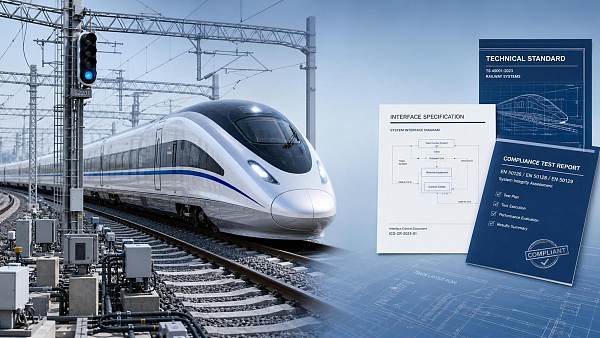
The first layer is safety, RAMS, and system lifecycle assurance. In many rail environments, standards such as EN 50126 and IEC 62278 are foundational because they define how reliability, availability, maintainability, and safety are managed across the system lifecycle.
The second layer is software, electronics, and safety-critical control. Depending on the application, this may include EN 50128 for software and EN 50129 for safety-related electronic systems. These matter greatly in signaling, train control, and digital subsystems.
The third layer is product and subsystem technical conformity. This includes rolling stock, braking, bogies, doors, fire safety, EMC, and traction-related requirements. These standards often determine whether equipment can enter testing or service acceptance.
The fourth layer is infrastructure and energy compatibility. Track, electrification, power supply, earthing, and interface standards become decisive when equipment must integrate with existing networks or cross-border operating conditions.
The fifth layer is organizational quality capability. Standards such as ISO 9001 and ISO/TS 22163 matter because regulators, operators, and OEMs increasingly assess not only the product, but also the maturity of the supplier’s process discipline.
Why EN 50126 and IEC 62278 often matter more than teams expect
Many quality teams begin with product specifications because those are visible in drawings, inspection points, and factory tests. But system acceptance in rail often depends more heavily on how safety and RAMS were structured from the start.
EN 50126 and IEC 62278 are critical because they define the lifecycle framework for demonstrating that the railway system has been specified, designed, validated, operated, and maintained in a controlled manner.
For safety managers, these standards matter because they support traceability between hazards, requirements, verification activities, and residual risk acceptance. Without that traceability, technically sound equipment can still face compliance obstacles.
For quality managers, they also influence document architecture. Test evidence, design changes, configuration status, and interface controls must all align with lifecycle assurance logic, not just with isolated component inspection criteria.
This is especially important in complex projects involving CBTC, ETCS, metro automation, or mixed-vendor integration. In those cases, the compliance risk often sits at system interfaces rather than inside the individual product itself.
Which rail technical standards are most critical by domain?
Compliance priorities change by subsystem, so the most important standards depend on what is being procured, installed, or audited. A practical domain-by-domain view is more useful than a single universal list.
Rolling stock
For rolling stock, the most critical standards usually include fire safety, braking, structural integrity, crashworthiness, doors, EMC, noise, and passenger safety. Market-specific approvals may also reference TSI requirements in Europe or operator standards elsewhere.
Quality teams should pay close attention to standards linked to bogies, wheelsets, traction systems, and onboard electronics, because failures here can trigger both safety findings and costly requalification during testing.
Signaling and train control
In signaling, EN 50126, EN 50128, and EN 50129 are often central. These standards matter because they govern safety lifecycle evidence, software assurance, and approval logic for safety-related electronic systems.
If the project involves CBTC, ETCS, interlocking, or communication-based control, quality managers must verify not only functional performance, but also safety case completeness, independence of assessment, and configuration control discipline.
Track infrastructure
For track systems, the critical standards are those affecting geometry, rail quality, fastening systems, welding, turnouts, ballast or slab track performance, and maintenance tolerances. Here, compliance is closely tied to long-term reliability and operational safety.
Track standards become commercially important when tender specifications require demonstrated lifecycle performance, fatigue resistance, and compatibility with axle loads, speed profiles, and maintenance regimes.
Traction power and electrification
In traction power, standards related to electrical safety, insulation coordination, EMC, earthing, substations, overhead contact systems, and return current management are often decisive for approval and network compatibility.
These requirements matter because electrification failures can cascade across multiple systems, affecting rolling stock, signaling immunity, worker safety, and service continuity all at once.
Urban metro and integrated transit
Metro projects often combine rolling stock, platform systems, signaling, SCADA, PSDs, and depot interfaces under tight operational constraints. In such projects, interface management standards and safety validation methods become as important as hardware compliance.
Why ISO/TS 22163 is commercially important even when it is not the only compliance standard
ISO/TS 22163 is frequently misunderstood as just another quality certification. In reality, it is highly influential in supplier qualification because it reflects rail-specific process maturity, project control, and special process governance.
For procurement and quality teams, this standard matters because many OEMs and project owners use it as a proxy for whether a supplier can consistently manage complex rail requirements across design, manufacturing, and service stages.
It is especially relevant when audits focus on first article inspection, change control, traceability, nonconformance handling, risk management, and performance monitoring. These are recurring pain points in multinational supply chains.
However, it should not be treated as a substitute for subsystem technical compliance. A supplier may hold ISO/TS 22163 certification and still fail project acceptance if product-specific safety, interoperability, or interface requirements are not met.
How quality and safety managers should prioritize standards in real projects
The most effective approach is to rank standards by consequence, not by document count. Start with the standards that can block authorization, delay commissioning, or create major safety findings if evidence is incomplete.
First, identify market-entry and operator-mandated standards. These are the standards directly tied to legal approval, tender eligibility, or customer acceptance in the target region.
Second, identify safety-critical standards. Any standard affecting hazard control, software assurance, signaling integrity, braking performance, fire behavior, or electrical safety should move to the top of the compliance matrix.
Third, identify interface-sensitive standards. These are often underestimated. A subsystem can comply in isolation but fail in integration due to EMC issues, communication mismatch, dimensional conflicts, or power compatibility gaps.
Fourth, identify process and documentation standards. These shape audit outcomes because they determine whether evidence is reproducible, traceable, and credible under external assessment.
Finally, distinguish between mandatory, contractual, and best-practice standards. This simple classification prevents overcontrol in low-risk areas while ensuring strict discipline where noncompliance has real commercial or safety consequences.
What causes compliance failures even when teams know the standards?
Knowing the relevant rail technical standards is not enough. Many compliance failures occur because organizations interpret standards too late, assign them to the wrong owners, or fail to connect them to verification planning.
One common problem is treating standards as a document library issue instead of a project control issue. If standards are not translated into inspection points, design gates, supplier clauses, and acceptance criteria, they remain theoretical.
Another issue is poor requirement decomposition. High-level standards may be cited in contracts, but unless they are converted into subsystem requirements and testable parameters, gaps remain hidden until validation or independent assessment.
Supplier alignment is another major risk. Global rail projects often involve manufacturers from different regions with different default practices. Without a unified compliance matrix, one supplier may build to domestic norms that do not satisfy export-market expectations.
Configuration changes also create exposure. A compliant design can become noncompliant after substitutions, software revisions, material changes, or interface modifications if formal impact assessment is weak.
A practical compliance checklist for quality and safety teams
To make rail technical standards actionable, quality and safety managers should use a structured review model that links each standard to evidence, ownership, timing, and approval dependency.
Start by building a standards register for the project. Each entry should include title, edition, applicability, subsystem, compliance type, responsible owner, verification method, and evidence location.
Next, map each standard to lifecycle gates. Clarify whether compliance must be demonstrated at bid stage, design freeze, first article, factory acceptance, system integration, trial running, or final authorization.
Then, check whether every critical standard has measurable acceptance criteria. If a requirement cannot be inspected, tested, reviewed, or independently assessed, the compliance plan is incomplete.
After that, review supplier contracts and technical specifications. Confirm that the right standards are flowed down with the correct revision level, not referenced vaguely or inherited by assumption.
Finally, maintain a live deviation log. In rail projects, formal deviation handling is essential because not every standard conflict can be avoided, but every deviation must be assessed, justified, approved, and traceable.
How to judge which standards deserve the most management attention
Management attention should go first to standards with the highest combined impact on safety, schedule, and commercial acceptance. This is where compliance work generates the strongest return.
If a standard affects authorization to operate, independent safety assessment, or customer sign-off, it deserves close oversight. If it only affects an internal preference with low external consequence, it can be managed at a lower level.
It is also useful to ask four questions. Does this standard affect system safety? Does it affect interoperability or integration? Does it affect tender eligibility? Does it affect audit confidence in our process control?
If the answer is yes to two or more of those questions, the standard is likely a high-priority compliance item and should be monitored at project leadership level, not only within technical teams.
Conclusion: the most important rail technical standards are the ones tied to safety, acceptance, and integration
For quality and safety managers, the most important rail technical standards are rarely just the most famous ones. They are the standards that directly influence safety assurance, market access, subsystem compatibility, and evidence credibility.
In practice, that means giving highest priority to lifecycle and RAMS standards such as EN 50126 and IEC 62278, safety-related signaling standards where relevant, subsystem technical conformity requirements, and rail-specific quality frameworks such as ISO/TS 22163.
The key is not to collect more standards, but to control the right ones more effectively. When standards are prioritized by risk and translated into verifiable project actions, compliance becomes faster, audits become smoother, and system reliability becomes more defensible.
In a global rail market shaped by strict regulation and complex cross-border supply chains, the strongest compliance strategy is a focused one: know which standards truly matter, assign ownership early, and build evidence before the audit asks for it.
Search News
Industry Portal
Hot Articles

Popular Tags
Recommended News
 Jul 05, 2026Rail Benchmarking Platform Software: Key Metrics, Data Sources, and Integration BasicsRail benchmarking platform software explained: compare key metrics, trusted data sources, and integration basics to improve rail compliance, supplier decisions, and lifecycle performance.
 Jul 05, 2026Blood Pressure Monitor Wholesale: MOQ, Certifications, Accuracy, and OEM Questions to AskBlood pressure monitor wholesale guide covering MOQ, certifications, accuracy checks, and OEM questions. Learn how to compare suppliers, reduce risk, and secure reliable long-term sourcing.
 Jul 05, 2026Cold Chain Failures Explained: Common Temperature Control Risks and How to Prevent ThemCold chain failures often start with small mistakes. Learn the most common temperature control risks in storage and transport, plus practical ways to prevent costly quality, compliance, and delivery issues.
 Jul 04, 2026What Is Bioengineering Used For? Core Applications in Medicine, Food, and ManufacturingBioengineering powers breakthroughs in medicine, food, and manufacturing. Discover its core applications, business value, and why it is shaping scalable innovation.
 Jul 04, 2026Hospital HVAC Air Exchange Rates: How to Read ACH Requirements by Room TypeHospital HVAC air exchange rates explained by room type. Learn how to read ACH requirements, avoid compliance mistakes, and improve infection control, design accuracy, and project performance.
 Jul 04, 2026Strategic Benchmarking vs Competitive Benchmarking: Which Method Fits Business Planning?Strategic benchmarking vs competitive benchmarking: learn which method best supports business planning, long-term investment, risk control, and stronger market decisions.
 Jul 04, 2026Fire Extinguishers Explained: Types, Ratings, and How to Choose for Different RisksFireextinguishers explained clearly: compare types, ratings, and best-use scenarios to choose the right protection for offices, workshops, warehouses, kitchens, and high-risk facilities.
 Jul 02, 2026How to Use a Rail Infrastructure Data Supplier Reference in Vendor ScreeningRail infrastructure data supplier reference strategies help procurement teams screen vendors faster, compare compliance and delivery risk, and choose qualified rail partners with confidence.
 Jul 01, 2026Cryogenic Storage Safety Protocols: Common Hazards, PPE, and Emergency Response StepsCryogenic storage safety protocols explained: learn common hazards, task-based PPE, and site-specific emergency response steps to reduce risk, improve compliance, and protect operations.
 Jul 01, 2026Modular Building Wind Load Resistance: Key Design Factors and Code ChecksModular building wind load resistance explained: discover key design factors, temporary-stage risks, and code checks to improve safety, compliance, and project delivery confidence.
 Jul 01, 2026Industrial ESG Reporting Explained: Which Metrics Matter Most for Manufacturers?Industrial ESG metrics that matter most for manufacturers: learn which environmental, social, and governance indicators drive compliance, buyer trust, and global market access.
 Jun 30, 2026TBM Boring Speed Benchmarks: What Affects Advance Rate Across Ground Conditions?TBM boring speed benchmarks explained: learn how geology, groundwater, cutter wear, logistics, and downtime shape true advance rate across tunnel ground conditions.
 Jun 30, 2026Translation Services for Technical Documents: How to Choose for Accuracy and ComplianceTranslationservices for technical documents should protect accuracy, terminology, and compliance. Learn how to choose a provider that reduces risk and supports confident cross-border decisions.
 Jun 30, 2026How to Evaluate an Outdoor Floodlight Supplier for Industrial and Infrastructure ProjectsOutdoor floodlight supplier selection starts with risk, not price. Learn how to compare compliance, optical performance, durability, lead times, and lifecycle cost for industrial projects.
 Jun 29, 2026Stainless Steel 304 vs 316 Benchmarks: Which Grade Fits Corrosion, Cost, and Machining Needs?Stainless steel 304 vs 316 benchmarks explained: compare corrosion resistance, cost, and machining trade-offs to choose the right grade for durable, budget-smart projects.
 Jun 29, 2026Health Guide Basics: How to Choose Reliable Advice for Daily Diet, Sleep, and ExerciseHealth guide basics for smarter daily choices: learn how to judge reliable advice on diet, sleep, and exercise with practical, evidence-based tips that fit real life.
 Jun 29, 2026How to Read Digital Calipers: Inch, Metric, and Common Measurement Errorsdigitalcalipers guide: learn how to read inch and metric modes correctly, avoid common measurement errors, and improve accuracy for inspection, maintenance, and workshop tasks.
 Jun 28, 2026Rail Technical Standards Requirements Explained for Cross-Border ProjectsRail technical standards requirements explained for cross-border rail projects. Learn how to reduce compliance risk, avoid redesign delays, and choose suppliers with confidence.
 Jun 27, 2026Rail Solution References Supplier Options: What to Compare Before ShortlistingRail solution references supplier options: compare matched project references, compliance, lifecycle cost, delivery resilience, and support depth before shortlisting the right vendor.
 Jun 27, 2026Rail Project Tenders Global: Where EPCs and Suppliers Find New OpportunitiesRail project tenders global insights for EPCs and suppliers: spot viable rail bids faster, assess compliance, technical fit, and market timing, and uncover high-potential opportunities worldwide.
 Jun 27, 2026Outdoor Furniture Wholesale: MOQ, Materials, Lead Times, and Supplier ChecksOutdoor furniture wholesale explained: compare MOQ, materials, lead times, and supplier checks to avoid hidden costs, reduce sourcing risk, and choose reliable partners with confidence.
 Jun 27, 2026How to Choose Outdoor Furniture for Hotels, Cafes, and Public SpacesOutdoor furniture buying guide for hotels, cafes, and public spaces. Learn how to compare materials, comfort, safety, and maintenance for smarter commercial decisions.
 Jun 26, 2026Gear Manufacturing Process Explained: Common Methods, Tolerances, and Use CasesGear manufacturing explained: explore key methods, tolerances, heat treatment, and supplier checks to choose reliable gears for industrial, rail, and mobility applications.
 Jun 26, 2026Frame Scaffolding System Bulk Orders: Pricing Factors, Sizes, and Safety ChecksFrame scaffolding system bulk buying guide covering pricing factors, size selection, and safety checks to reduce risk, improve site efficiency, and make smarter bulk procurement decisions.


















Quarterly Executive Summaries Delivered Directly.
Join 50,000+ industry leaders who receive our proprietary market analysis and policy outlooks before they hit the public library.