

How rail European standards affect project approval paths
Dr. Alistair Thorne
Time
Click Count
Understanding how rail European standards shape project approval paths is essential for business evaluators working across cross-border rail investments. From safety validation and interoperability to supplier qualification and tender compliance, these standards directly influence timelines, risk exposure, and market entry feasibility. This article outlines the approval logic behind major rail projects and helps decision-makers assess technical readiness with greater confidence.
Why rail European standards change approval logic from the start
For business evaluators, rail European standards are not just technical references. They act as gatekeeping mechanisms that determine whether a project can move from design review to procurement, testing, and operational authorization.
In practical terms, standards shape evidence requirements. A bidder may offer competitive pricing and strong manufacturing capacity, yet still fail if documentation, validation methods, or subsystem interfaces do not align with European approval expectations.
What approval bodies usually want to see
- A clear compliance matrix linking product or system functions to applicable EN, IEC, ISO, and project-specific requirements.
- Traceable safety and reliability evidence, especially where signaling, traction, braking, and control systems affect operational risk.
- Interoperability proof showing how rolling stock, infrastructure, power supply, and communication systems perform at interface points.
- Supplier quality assurance records, manufacturing controls, and lifecycle support capability.
This is why rail European standards influence project approval far earlier than many teams expect. The approval path is often locked in during specification writing, tender structuring, and subsystem architecture decisions.
Which standards matter most in rail project approval paths?
Business evaluators often face a practical question: which standards truly drive approval, and which are secondary? The answer depends on scope, but several frameworks repeatedly appear in major rail programs.
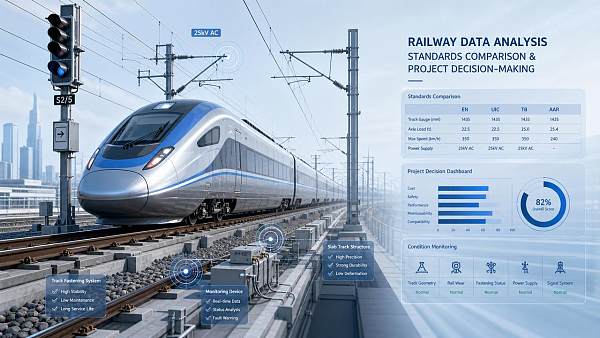
The table below summarizes how rail European standards commonly map to project approval concerns across rolling stock, signaling, and infrastructure packages.
For evaluators, the main lesson is simple: approval is not based on a single certificate. It depends on how multiple rail European standards interact across the whole system and across the full project lifecycle.
Where teams often underestimate complexity
- They treat product compliance as enough, while approval authorities assess subsystem integration and operating context.
- They assume test data from one market automatically transfers to another, even when route, climate, signaling, or fire requirements differ.
- They fail to budget for documentation adaptation, independent assessment, and interface coordination.
How approval paths differ by project type
Not every package follows the same approval path. High-speed rail, urban metro, signaling retrofit, and traction power projects face different regulatory triggers, stakeholder groups, and validation burdens.
Rolling stock programs
Rolling stock approval usually combines vehicle design review, subsystem compatibility checks, braking and dynamic behavior validation, fire safety review, EMC assessment, and route-specific constraints. A train approved in one geography may still need adaptation before acceptance in another.
Signaling and communication systems
For ETCS, CBTC, interlocking, or telecom packages, the burden often shifts toward software assurance, hazard analysis, cybersecurity interfaces, fail-safe logic, and independent safety assessment. Here, rail European standards can significantly extend timelines if evidence architecture was not planned early.
Infrastructure and power supply packages
Track, catenary, substations, and maintenance systems may appear less complex from a certification standpoint, but they still face strong interface review. Mechanical tolerances, earthing, energy performance, maintenance access, and operational resilience can all affect approval.
For mixed packages, business evaluators should map approval dependencies before commercial comparison. A lower bid may create later cost through interface redesign, re-testing, or delayed authorization.
What business evaluators should check before tender shortlisting
Shortlisting errors are expensive. When rail European standards are central to project approval, a commercial review that ignores technical evidence quality can distort the entire procurement decision.
The following checklist helps evaluators compare suppliers more accurately before final tender ranking.
A disciplined shortlist review reduces false economy. In rail procurement, the cheapest compliant-looking offer may be the highest-risk option once the full approval path is tested against European requirements.
A practical pre-award checklist
- Confirm which rail European standards are mandatory, referenced, or project-specific.
- Separate formal certificates from usable approval evidence.
- Check whether test reports match the intended operating environment.
- Review supplier change-control capability for long project durations.
- Quantify approval-related schedule float, not just manufacturing lead time.
How G-RTI supports cross-border compliance assessment
Business evaluators rarely struggle because information is unavailable. They struggle because information is fragmented across standards, tenders, subsystem documents, supplier claims, and regional approval practices. That is where G-RTI adds practical value.
G-RTI benchmarks mechanical, digital, and structural rail system integrity across five industrial pillars: high-speed rail systems, urban metro and transit, signaling and communication, track infrastructure and maintenance, and traction power supply. This cross-domain view helps evaluators understand whether a component is individually strong and whether it is approval-ready inside a larger system.
Where this matters most
- When comparing Asian manufacturing offers against European regulatory expectations.
- When reviewing tender packages that mix rolling stock, signaling, and infrastructure interfaces.
- When assessing whether a supplier’s claimed compliance can support real project authorization.
- When pricing schedule risk caused by certification, testing, or independent safety assessment.
Because G-RTI tracks global tenders and benchmarks technologies against standards such as ISO/TS 22163, IEC 62278, and EN 50126, it helps commercial teams move beyond surface-level qualification and into evidence-based decision support.
Cost, schedule, and risk: the hidden commercial impact of rail European standards
Many approvals fail not because a system is fundamentally poor, but because compliance work was under-scoped commercially. Rail European standards have a direct cost impact that should be visible in business cases, supplier comparisons, and negotiation strategy.
Typical cost drivers
- Design adaptation to route, gauge, platform, energy, or environmental conditions.
- Documentation preparation, translation, and structured evidence packages.
- Independent assessment, safety case review, and notified body support.
- Re-testing, interface simulation, and trial running caused by late changes.
- Configuration management over multi-year project execution.
Commercially, the key question is not “Does this supplier have a certificate?” It is “What is the total approval effort required to turn this offer into an authorized, operable railway asset?”
A smarter evaluation approach
Use scenario-based costing. Compare a low-price bid with limited European evidence against a mid-price bid with stronger approval maturity. The second offer may reduce rework, shorten authorization time, and lower downstream claims exposure.
Common misconceptions that delay approval
Several recurring misconceptions distort project decisions. These mistakes often surface in international rail investments where commercial, engineering, and compliance teams use different assumptions.
Misconception 1: compliance in one country guarantees approval elsewhere
Not necessarily. Rail European standards improve harmonization, but national rules, route conditions, operating models, and project-specific specifications still matter. Transferability of evidence must be checked case by case.
Misconception 2: certification is mainly a paperwork exercise
Approval documentation is only credible when supported by controlled design methods, tested interfaces, and traceable lifecycle management. Weak engineering discipline creates weak approval evidence.
Misconception 3: only signaling systems face serious approval barriers
Signaling is demanding, but rolling stock, traction power, and infrastructure packages can also trigger major delays through interface conflict, fire requirements, EMC issues, or incomplete maintenance safety planning.
FAQ: what business evaluators ask about rail European standards
How should we evaluate suppliers that are strong technically but new to Europe?
Look beyond manufacturing capability. Review their compliance mapping, documentation discipline, interface management process, and ability to adapt to TSIs, safety case expectations, and local approval workflows. A technically capable supplier can still become a schedule risk if European evidence maturity is low.
Which packages usually carry the highest approval uncertainty?
Integrated packages with strong operational interfaces tend to carry the most uncertainty. Signaling, onboard control software, train-platform integration, and traction power interfaces often require deeper verification and more stakeholder coordination than stand-alone equipment packages.
What should be included in a robust approval readiness review?
At minimum, review applicable standards, deviation lists, prior evidence transferability, RAMS planning, software assurance where relevant, test strategy, independent assessment needs, and project interface ownership. This creates a more realistic commercial risk picture.
Can rail European standards affect delivery timing even after contract award?
Yes. Late clarification of standards often triggers redesign, extra tests, revised documents, or prolonged assessor review. That is why approval planning should begin before award, not after manufacturing starts.
Why choose us for approval-focused rail market evaluation
If your team needs to evaluate how rail European standards will affect a tender, supplier qualification, or market entry plan, G-RTI can support the process with technical benchmarking and commercial intelligence grounded in real project conditions.
We help business evaluators review approval-sensitive topics such as subsystem compatibility, standards mapping, supplier documentation maturity, cross-border compliance gaps, and tender risk exposure across rolling stock, signaling, infrastructure, and traction power domains.
You can contact us for practical evaluation support on:
- Parameter confirmation for equipment or subsystem benchmarking against European project requirements.
- Supplier and product selection based on compliance readiness, not price alone.
- Delivery timeline review where testing, certification, and authorization may affect procurement schedules.
- Customized gap analysis for Asian-to-European market access and tender participation.
- Certification requirement clarification for rolling stock, signaling, maintenance, and power supply packages.
- Commercial quotation discussions informed by approval effort, interface risk, and lifecycle evidence needs.
When approval complexity can reshape project value, decision-makers need more than fragmented supplier claims. They need a structured view of standards, interfaces, and market realities. That is the basis on which G-RTI helps teams make clearer, faster, and lower-risk rail investment decisions.
Search News
Industry Portal
Hot Articles

Popular Tags
Recommended News
 May 20, 2026Why rail data transparency now shapes safer asset decisionsRail data transparency is reshaping safer rail asset decisions with traceable evidence, lifecycle insight, and stronger supplier confidence across complex transit projects.
 May 19, 2026How rail data transparency changes risk across projectsRail data transparency helps rail projects reduce hidden risk, improve compliance, and strengthen supplier visibility. See the checklist that supports safer delivery and smarter lifecycle decisions.
 May 19, 2026Why rail engineering integrity fails long before faults showRail engineering integrity often weakens long before visible faults appear. Discover scenario-based risks, early warning signs, and practical actions to reduce failures, costs, and compliance exposure.
 May 18, 2026How rail technical specifications reduce compliance mistakesRail technical specifications help rail teams reduce compliance mistakes, improve traceability, and align design, sourcing, testing, and installation for safer, faster project delivery.
 May 18, 2026What rail market analysis reveals before expansion plansRail market analysis reveals demand, supplier readiness, compliance, and lifecycle risks before expansion. See how scenario-based insights improve rail investment decisions.
 May 18, 2026How rail technical standards shape safer system upgradesRail technical standards guide safer rail upgrades by improving compliance, reducing integration risk, and strengthening procurement decisions. Learn how to evaluate suppliers and systems with confidence.
 May 17, 2026Why rail project tenders fail before technical reviewRail project tenders often fail before technical review due to compliance gaps, bid errors, and weak risk framing. Learn the key checks that improve bid survival and win rates.
 May 17, 2026How rail European standards affect project approval pathsRail European standards shape approval paths, timelines, and supplier risk in cross-border rail projects. Discover key compliance factors to evaluate bids and enter the market with confidence.
 May 16, 2026What rail economic resilience means for long term budgetsRail economic resilience helps financial approvers reduce long-term budget risk, improve lifecycle value, and make smarter rail investment decisions with greater confidence.
 May 16, 2026Why rail policy foresight now matters more in network planningRail policy foresight is now critical to network planning. Discover a practical checklist to reduce compliance risk, protect funding, and build resilient rail corridors.
 May 16, 2026What makes a rail commercial gateway worth the investmentRail commercial gateway value starts with verified benchmarks, compliance insight, and supply-chain clarity—discover what makes the investment smarter for rail decisions.
 May 15, 2026What Rail Benchmarking Really Shows Beyond Headline KPIsRail benchmarking goes beyond headline KPIs to reveal lifecycle risk, compliance gaps, and vendor resilience—helping rail leaders compare systems smarter and invest with confidence.
 May 15, 2026Why Some Rail Project Tenders Attract Fewer Qualified BidsRail project tenders often attract fewer qualified bids due to restrictive specs, unclear risks, and heavy compliance. Discover practical fixes to improve competition and delivery outcomes.
 May 15, 2026How EPC Rail Contractors Are Being Shortlisted TodayEPC rail contractors are now shortlisted by delivery record, compliance, systems integration, and supply chain strength. Learn the key criteria shaping better rail procurement decisions.
 May 14, 2026Rail Intelligence Is Expanding Fast, but Which Data Matters?Rail intelligence is growing fast, but only verified, decision-ready data drives results. Discover which benchmarks, standards, and market signals matter most for smarter rail opportunities.
 May 14, 2026How EPC Rail Contractors Are Being Evaluated DifferentlyEPC rail contractors are now judged on compliance, digital maturity, lifecycle reliability, and cross-border delivery—not just price. Learn what buyers value most today.
 May 13, 2026Can rail economic resilience reduce lifecycle budget shocks?Rail economic resilience helps financial approvers reduce lifecycle budget shocks, improve funding confidence, and make smarter rail investment decisions with data-backed cost stability.
 May 12, 2026Rail Technical Specifications That Often Break Projects LateRail technical specifications often trigger late rail project delays through hidden gaps in interfaces, compliance, and testing. See the critical risks and how to prevent costly rework.
 May 11, 2026Rail project tenders often fail on these bid compliance pointsRail project tenders often fail on bid compliance, not price. Learn the key gaps in standards, RAMS, testing, and document control to improve win rates.
 May 11, 2026EPC rail contractors: what causes cost overruns most oftenEPC rail contractors face cost overruns most often from scope changes, approval delays, and interface risk. Learn the key warning signs and how to control budget exposure early.
 May 11, 2026What separates rail Tier-1 suppliers from the rest?Rail Tier-1 suppliers stand out through engineering depth, compliance readiness, and lifecycle support. Learn how to compare vendors, reduce risk, and choose partners with confidence.
 May 09, 2026When rail commercial gateway strategy starts hurting marginsRail commercial gateway growth can boost rail market access, but rising compliance, layered channels, and hidden support costs can crush margins. Learn how to protect profit and scale smarter.
 May 09, 2026Can rail data transparency reduce delays in fault tracing?Rail data transparency can cut fault-tracing delays by linking logs, maintenance history, and asset data. See how rail teams speed diagnosis and prevent repeat failures.
![]() May 08, 2026Rail Benchmarking Can Mislead If You Compare the Wrong MetricsRail benchmarking can mislead when teams compare the wrong metrics. Learn how to assess lifecycle cost, compliance, and real-world performance for smarter rail decisions.
May 08, 2026Rail Benchmarking Can Mislead If You Compare the Wrong MetricsRail benchmarking can mislead when teams compare the wrong metrics. Learn how to assess lifecycle cost, compliance, and real-world performance for smarter rail decisions.























Quarterly Executive Summaries Delivered Directly.
Join 50,000+ industry leaders who receive our proprietary market analysis and policy outlooks before they hit the public library.