

When rail commercial gateway strategy starts hurting margins
Dr. Alistair Thorne
Time
Click Count
For distributors, agents, and channel partners in global rail, a rail commercial gateway can be a powerful route into new tenders, OEM relationships, and regional supply chains. But the same gateway starts hurting margins when access costs rise faster than revenue quality, when compliance work is not priced into deals, and when too many layers sit between the manufacturer and the end customer.
The practical question is not whether a gateway creates growth. It often does. The real question is whether that growth is profitable, defensible, and scalable. In rail, where approval cycles are long, certification burdens are heavy, and after-sales obligations can stretch for years, channel expansion without margin discipline can become an expensive trap.
For rail intermediaries, the warning signs are usually visible before profit erosion becomes obvious in the P&L. Bid support gets more technical, customer acquisition costs rise, payment cycles lengthen, and price expectations harden because buyers treat the channel as interchangeable. When that happens, what looked like market access starts acting like a margin drain.
Why a rail commercial gateway looks attractive at first
A rail commercial gateway is appealing because it lowers the barriers to entering difficult markets. For many distributors and agents, especially those working across Asia, Europe, the Middle East, or North America, local relationships and tender visibility are often more valuable than broad brand awareness. A gateway can provide both.
In practical terms, it helps partners identify project pipelines, understand buyer requirements, connect with EPC contractors, and position products for approved vendor lists. In complex sectors such as rolling stock components, signaling, traction power, bogie systems, and maintenance equipment, these advantages can shorten the path to first revenue.
It also creates legitimacy. If a channel partner is linked to a respected technical intelligence platform or a credible supply-side network, buyers may be more willing to review offers from lesser-known manufacturers. That matters in rail because procurement teams care not only about price, but also lifecycle reliability, standards compliance, and delivery risk.
So the gateway itself is not the problem. The problem begins when access is mistaken for sustainable advantage. A partner may win more conversations, more tenders, and more introductions, yet still earn less on each deal once hidden costs are included.
When access starts hurting margins instead of helping growth
The turning point usually comes when channel economics become more complicated than expected. A distributor may assume that higher volume through a rail commercial gateway will compensate for lower prices, but rail does not always reward scale in the same way as faster-moving industries. Each opportunity often carries project-specific documentation, engineering support, and compliance effort.
Margins start shrinking when channel partners absorb these extra tasks without changing their commercial model. If your team is providing prequalification support, translating technical files, coordinating certifications, attending factory audits, assisting with installation clarifications, and managing post-award communication, you are no longer just enabling access. You are adding operational value that must be priced.
Another trigger is layered intermediation. In many rail deals, the path from manufacturer to end customer may include a regional agent, a local distributor, an integrator, an EPC contractor, and sometimes a politically connected representative. Every layer wants a share of the contract value. The more fragmented the route to market, the less room remains for healthy margins.
Price pressure intensifies the problem. Once buyers know that multiple channel players can source similar components, they often push harder on discounts while expecting the same level of technical support. If your only defensible role is “market access,” you become easier to replace or use as leverage in negotiations.
The clearest signs your gateway model is leaking profit
Most margin problems do not begin with one disastrous contract. They show up gradually in operating patterns. One of the clearest signs is rising bid activity without proportional gross profit growth. If your team is spending more time on tenders, quotations, and technical clarifications, but your contribution margin per win keeps falling, the gateway strategy needs review.
A second sign is excessive non-billable support. Rail buyers often require substantial documentation, from EN, IEC, IRIS, ISO/TS, or local authority compliance evidence to factory process records and lifecycle maintenance data. If your organization is carrying this burden as a free sales service, you may be subsidizing the deal more than you realize.
Third, watch payment and cash-flow behavior. Gateway-driven business can look strong on paper but become weak in practice if payment milestones are delayed, retention terms are long, or local collections depend on intermediaries you do not control. Margin is not only about invoice price. It is also about how much working capital a deal consumes.
Fourth, pay attention to role dilution. If manufacturers begin contacting end users directly after you open the account, or if EPCs ask you for technical effort while treating you as a low-value broker, your commercial position is weakening. In that case, the gateway generated access but failed to secure ownership of value.
Why rail distribution is especially vulnerable to hidden margin erosion
Rail is not a simple import-export business. It is a project-heavy, compliance-intensive, reputation-driven market. That means channel partners often carry costs that do not appear in headline pricing discussions. Technical submittals, product adaptation, legal review, local approvals, spare parts planning, and warranty coordination all consume resources.
Cross-border rail supply chains make this even more difficult. A distributor bringing Asian manufacturing into European or American markets may need to bridge not just language and commercial habits, but also certification frameworks, safety expectations, documentation standards, and public procurement rules. The gateway becomes valuable precisely because the market is difficult, but that same difficulty can eat margins.
Long sales cycles create another issue. In rail, a channel partner can invest months or even years before a project is awarded. During that time, technical teams may support samples, audit requests, engineering clarifications, and repeated pricing rounds. If only a small portion of those pursuits convert, customer acquisition cost can quietly become unsustainable.
Then there is post-award exposure. Many intermediaries underestimate the cost of staying involved after contract signature. Logistics coordination, customs issues, installation support, field complaints, replacement part dispatch, and claim resolution all reduce the true profitability of a deal. A rail commercial gateway that multiplies such obligations without strict scope control can be dangerous.
How distributors and agents should evaluate a rail commercial gateway
The right way to assess a gateway is not by lead volume alone. You need a margin-quality framework. Start by asking whether the gateway improves access to the right opportunities: qualified tenders, technically matched buyers, and projects where your product portfolio can win on more than price.
Next, calculate full deal cost. This should include bid support hours, engineering coordination, document localization, travel, customer visits, sample preparation, legal review, compliance preparation, financing cost, and after-sales obligations. Many channel partners overestimate profitability because they only compare sales price to factory purchase price.
You should also measure control over the account. Who owns the customer relationship? Who controls technical communication? Who is visible during vendor approval? Who manages service expectations after delivery? If the gateway gives access but leaves you with little strategic control, your long-term margin position is weak.
Another key test is repeatability. A healthy gateway does not require building the process from zero on every project. It should create reusable trust, approved documentation pathways, known buyer expectations, and stable supplier coordination. If every deal remains custom, heavy, and politically dependent, scale will remain expensive.
Which costs should be priced in before you chase growth
Many rail channel partners lose money because they treat support work as a sunk selling expense rather than a real part of delivery. At minimum, your pricing model should reflect market development costs, bid participation effort, product adaptation, certification support, local warehousing where required, and the cost of carrying customer-specific risk.
Compliance-related work is especially important. If your role includes helping overseas manufacturers align with ISO/TS 22163 expectations, EN safety frameworks, customer test protocols, or project documentation formats, that is not administrative trivia. It is commercially meaningful work that reduces buyer risk. It deserves either direct fees or protected margin.
You should also separate standard support from exceptional support. Standard quotation handling may be included in normal commercial activity. But extensive tender engineering, repeated redesign cycles, emergency site visits, or prolonged claim management should trigger additional charges or revised commercial terms. Otherwise, your most demanding accounts may also become your least profitable ones.
Finally, account for time. In rail, long approval cycles tie up management attention and technical bandwidth. Even if an eventual order value looks large, the return may be poor if it consumed disproportionate resources over 18 months. Growth that blocks your team from serving better customers is not efficient growth.
How to protect margins without losing market access
Protecting margin does not mean abandoning the rail commercial gateway model. It means redesigning it. The first step is to define your role clearly. Are you a lead introducer, a technical distributor, a compliance bridge, a local stocking partner, or a lifecycle service coordinator? The more specific and measurable your role, the easier it is to defend value.
Second, reduce dependency on pure price comparison. Build differentiation around technical interpretation, faster tender response, documentation accuracy, local regulation understanding, project intelligence, and service coordination. In rail, buyers often pay for reduced execution risk, even when they negotiate aggressively on unit prices.
Third, formalize channel agreements. If you are opening accounts, supporting approvals, or developing a market for a manufacturer, your compensation structure should reflect that investment. This may include protected territories, registered project mechanisms, support fees, minimum margin floors, or shared cost arrangements for certification and business development.
Fourth, tier your opportunities. Not every tender deserves the same effort. Create filters based on technical fit, competitive intensity, expected margin, payment quality, compliance burden, and strategic customer value. The discipline to walk away from bad-fit projects is often what restores profitability.
Fifth, strengthen post-award boundaries. Document what is included in your support and what requires additional compensation. If spare parts planning, field troubleshooting, or warranty administration become open-ended obligations, your margin protection will fail no matter how well you negotiated the initial sale.
What a healthier gateway strategy looks like in rail markets
A stronger model is built on selective access, not maximum access. Instead of trying to touch every project, successful distributors and agents focus on market segments where they can combine technical credibility, local buyer understanding, and commercial control. That may mean specializing in metro systems, high-speed rail subsystems, signaling interfaces, track maintenance equipment, or traction power components rather than covering the entire sector.
Healthy gateway strategies also align closely with standards and procurement realities. Channel partners who understand how international benchmarks, certification expectations, and lifecycle reliability concerns shape buyer decisions can position suppliers more effectively and avoid wasting effort on poorly matched opportunities.
Data matters too. Real-time tender intelligence, supplier benchmarking, competitor mapping, and regulatory foresight help partners choose deals with better win probability and healthier economics. In this sense, a rail commercial gateway should be more than a contact network. It should function as a decision filter that improves where and how you invest your commercial resources.
Most importantly, profitable gateway strategies create value on both sides. Buyers get lower execution risk, better information, and more dependable supply. Manufacturers get structured market entry and clearer project guidance. The distributor or agent earns not just for introduction, but for reducing friction across technical, regulatory, and commercial stages.
Conclusion: growth is only useful if the gateway preserves margin quality
For distributors, agents, and channel partners, the key lesson is simple: a rail commercial gateway becomes harmful when it expands opportunity volume faster than it protects commercial value. More tenders, more meetings, and more supplier relationships do not automatically create a better business. If compliance effort, support workload, discount pressure, and intermediated deal structures keep rising, margins will suffer.
The right response is not to reject gateway-driven growth, but to manage it with sharper discipline. Measure full cost to serve, protect your role in the value chain, prioritize repeatable opportunities, and make sure your pricing reflects the technical and commercial complexity you absorb.
In global rail, access is expensive because trust, compliance, and execution reliability matter. That is exactly why channel partners can create real value. But if that value is not defined, defended, and monetized, the gateway stops being a growth engine and starts becoming a profit leak.
Search News
Industry Portal
Hot Articles

Popular Tags
Recommended News
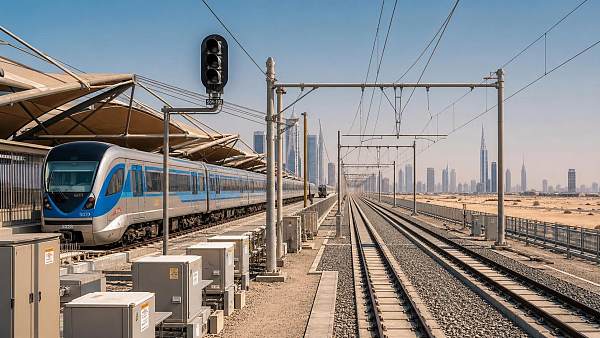
 Aug 07, 2026How to Evaluate EPC Rail Contractors in the Middle East for Metro and Mainline ProjectsEPC rail contractors Middle East: learn how to compare metro and mainline bidders on integration, local delivery, climate readiness, and handover to avoid costly project risks.
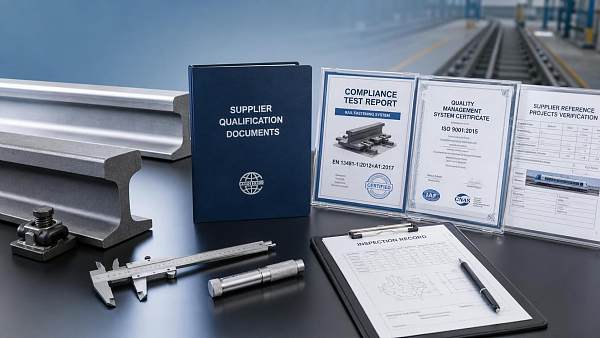
 Aug 01, 2026How to Qualify Rail Suppliers: A Practical Checklist for References and Vendor ReviewRail supplier references and qualified suppliers start with proof, not promises. Use this practical vendor review checklist to verify compliance, capability, and delivery risk before you buy.
 Jul 28, 2026Rail Infrastructure Data Procurement Guide: How to Compare Sources, Quality, and CostRail infrastructure data procurement guide for buyers comparing data sources, quality, and cost. Learn how to assess coverage, verification, updates, and total value before you buy.
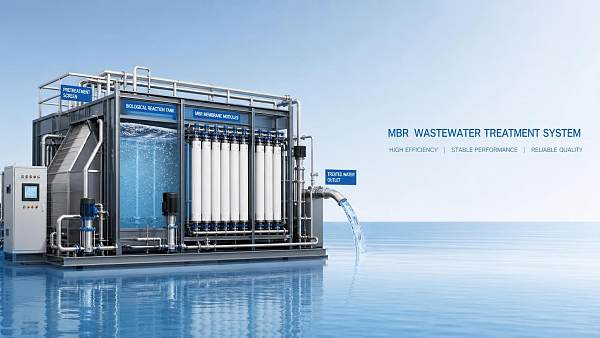
 Jul 26, 2026What Is MBR Filtration and When Is It the Right Choice for Wastewater Treatment?MBR filtration explained: learn when this compact wastewater treatment solution is the right choice for stable effluent quality, reuse goals, and space-constrained projects.
 Jul 25, 2026How to Evaluate Industry Applications for Rail Systems by Use Case and Operating NeedsIndustry applications for rail systems: learn how to assess use case fit, duty cycle, compliance, integration, and lifecycle cost to reduce risk and choose smarter solutions.
 Jul 22, 2026How to Evaluate Vacuum System Pump Capacity Metrics for Reliable System SizingVacuum system pump capacity metrics explained: learn how to compare pumping speed, ultimate pressure, leakage tolerance, and duty cycle for reliable sizing and better lifecycle performance.
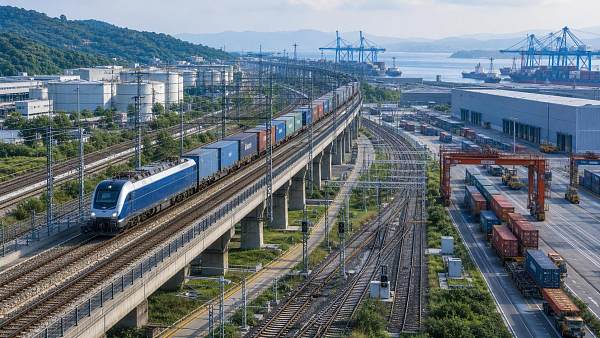
 Jul 20, 2026What Is Logistics Infrastructure and How Does It Shape Freight Efficiency?Logistics infrastructure drives freight speed, reliability, and cost control. Learn how rail, terminals, signaling, and digital systems improve efficiency and resilience.
 Jul 19, 2026How Rail Predictive Maintenance Analytics Helps Cut Failures and Plan Smarter RepairsRail predictive maintenance analytics helps rail teams cut failures, predict risks, and plan smarter repairs. Learn how to reduce downtime, improve safety, and control lifecycle costs.
 Jul 17, 2026How to Choose a Waste Recycling Line Manufacturer for Capacity, Material Mix, and ComplianceWaste recycling line manufacturer selection guide: compare real capacity, material mix fit, compliance, and lifecycle cost to choose a reliable supplier with confidence.
 Jul 16, 2026How to Evaluate a MES Software Manufacturer for Integration, Support, and ScalabilityMES software manufacturer selection starts with integration, support, and scalability. Learn how to compare vendors, reduce risk, and choose a platform built for traceability and growth.
 Jul 15, 2026Rail Technical Benchmarking in Europe: How Operators Compare Reliability and Asset KPIsRail technical benchmarking Europe explained: discover how operators compare reliability, maintenance design, signaling resilience, and asset KPIs to make smarter rail investment decisions.
 Jul 15, 2026Rail Systems Benchmarking Framework: What Metrics Matter for Network PerformanceRail systems benchmarking framework: discover the metrics that truly drive network performance, reliability, lifecycle cost, and compliance for smarter rail investment decisions.
 Jul 15, 2026How to Interpret Martindale Abrasion Test Results for Fabric Durability DecisionsMartindale abrasion test results reveal more than rub counts. Learn how to read fabric durability data correctly, compare reports with confidence, and choose materials that reduce wear risk and lifecycle cost.
: What Limits Apply and How Hospitals Measure Compliance") Jul 14, 2026ICU Noise Level Standards (dB): What Limits Apply and How Hospitals Measure ComplianceICU noise level standards (dB) explained: learn accepted ICU sound limits, how hospitals measure compliance, and what drives non-compliance to improve patient safety and care quality.
Jul 14, 2026ICU Noise Level Standards (dB): What Limits Apply and How Hospitals Measure ComplianceICU noise level standards (dB) explained: learn accepted ICU sound limits, how hospitals measure compliance, and what drives non-compliance to improve patient safety and care quality. Jul 14, 2026Sustainable Packaging Design: 7 Factors to Balance Recyclability, Cost, and Shelf AppealSustainable packaging design made practical: explore 7 key factors to balance recyclability, total cost, compliance, product protection, and shelf appeal for smarter packaging decisions.
 Jul 14, 2026EPS Sandwich Panels Wholesale: How to Compare Density, Fire Rating, and Lead TimeEPS sandwich panels wholesale buyers should compare density, fire rating, and real lead time—not just price. Learn how to avoid compliance risks, delays, and costly sourcing mistakes.
 Jul 13, 2026European IVDR Grace Period Updates: What Device Manufacturers Must Review NowEuropean IVDR grace period updates: learn what device manufacturers must review now, from classification and notified body timing to portfolio risk, to protect market access and avoid costly disruption.
 Jul 13, 2026Sustainable Agriculture Benefits Explained: Soil Health, Water Savings, and Yield StabilitySustainable agriculture benefits explained: discover how healthier soil, smarter water use, and more stable yields help farms reduce risk, improve resilience, and perform better over time.
 Jul 13, 2026Office Stationery Wholesale: How to Compare MOQ, Lead Time, and Private Label OptionsOffice stationery wholesale made simple: compare MOQ, lead time, and private label options to reduce risk, improve supply continuity, and choose the right supplier faster.
 Jul 12, 2026How to Choose an Outdoor Furniture Distributor for Hospitality and Retail ProjectsOutdoor furniture distributor selection for hospitality and retail projects: learn how to compare supply reliability, compliance, customization, and after-sales support with confidence.
 Jul 11, 2026How Rail Project Intelligence Reports Support Bid Planning and Market Entry DecisionsRail project intelligence reports help teams assess bid feasibility, compliance risk, and market entry timing—turning complex rail opportunities into smarter, lower-risk growth decisions.
 Jul 11, 2026How to Evaluate a Rail Data Platform Provider for Multi-Line Asset and Project VisibilityRail data platform provider selection starts with visibility you can trust. Learn how to compare data accuracy, benchmarking depth, and multi-line project control for better rail decisions.
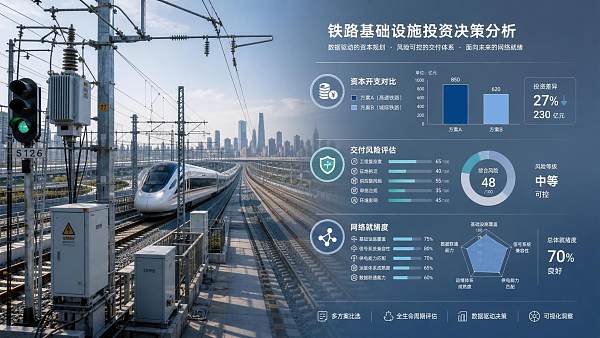
 Jul 10, 2026How Rail Infrastructure Benchmarking Reports Help Compare Capex, Delivery Risk, and Network ReadinessRail infrastructure benchmarking reports help decision-makers compare capex, delivery risk, and network readiness with greater clarity—discover smarter, lower-risk rail investment insights.
 Jul 10, 2026What an EPC Rail Contractors Database Should Include Before You Shortlist BiddersEPC rail contractors database essentials: discover the must-have data fields, compliance checks, and risk signals to shortlist stronger bidders and reduce tender mistakes.











Quarterly Executive Summaries Delivered Directly.
Join 50,000+ industry leaders who receive our proprietary market analysis and policy outlooks before they hit the public library.