

When rail track maintenance costs more than expected
Dr. Alistair Thorne
Time
Click Count
When rail track maintenance costs rise beyond initial forecasts, financial approvers face more than budget pressure—they face operational, compliance, and long-term asset risks. This article examines why rail track maintenance often costs more than expected, from hidden lifecycle factors to procurement gaps, helping decision-makers identify cost drivers early and evaluate investment priorities with greater confidence.
Why does rail track maintenance exceed budget so often?
For finance teams, rail track maintenance rarely fails because of one large mistake. Costs usually escalate through small assumptions that looked reasonable during planning but prove incomplete during execution.
A line may be designed around traffic projections, axle loads, and maintenance windows that later change. Once service density increases, the original maintenance strategy no longer matches wear patterns, labor demand, or possession constraints.
In practice, the gap between forecast and actual spend often comes from lifecycle blindness. Initial budgets focus on direct intervention costs, while real asset ownership includes diagnostics, compliance documentation, access delays, logistics, safety measures, and disruption penalties.
- Underestimated deterioration rates caused by mixed traffic, heavier axle loads, sharp curves, gradients, and climate stress.
- Shorter maintenance windows that increase night work, crew premiums, machine idle time, and mobilization inefficiency.
- Fragmented procurement that buys low unit price components but creates higher total intervention cost over time.
- Late detection of substructure, drainage, geometry, or fastening issues that expand the scope from routine work to corrective renewal.
This is why rail track maintenance should be reviewed as a capital protection function, not merely a recurring operating expense. Financial approval becomes stronger when budgets are linked to failure modes, service impact, and asset life extension.
The hidden cost categories financial approvers should test
Before approving a maintenance package, it helps to separate visible and hidden cost drivers. The table below highlights where rail track maintenance budgets commonly drift.
A disciplined approval process should ask not only “What is the contractor price?” but also “What conditions must remain true for that price to hold?” That single question often reveals weak assumptions early.
Which rail track maintenance factors create the biggest lifecycle surprises?
The largest surprises usually come from the interaction between traffic, environment, and asset condition. These are engineering variables, but they become financial issues once intervention frequency changes.
Traffic intensity is not just a usage metric
A route carrying high-speed passenger trains, freight traffic, and dense metro-style headways will not age like a conventional corridor. Rail wear, corrugation, ballast degradation, and geometry drift can accelerate far beyond baseline assumptions.
For a financial approver, this means maintenance intervals based on generic benchmarks may be misleading unless they are normalized by axle load, annual tonnage, speed profile, and route geometry.
Drainage and substructure defects multiply downstream costs
Water is one of the most expensive hidden variables in rail track maintenance. Poor drainage weakens formation layers, contaminates ballast, accelerates settlement, and triggers repeat tamping without solving the root cause.
Budgets that isolate track geometry correction from drainage remediation often look attractive in the short term but become more expensive over a two- to five-year cycle.
Deferred maintenance rarely stays cheap
Deferral may support quarterly cash control, yet repeated postponement pushes assets from preventive work into corrective or renewal territory. Once that threshold is crossed, unit cost and service disruption rise together.
- Preventive grinding is cheaper than managing advanced rail defects and speed restrictions.
- Targeted drainage repair is cheaper than repeated geometry intervention on unstable trackbed.
- Planned component replacement is cheaper than emergency possessions, reactive labor, and traffic disruption.
How should financial approvers assess rail track maintenance proposals?
A strong proposal should translate technical activity into financial outcomes. Approvers do not need to inspect every engineering detail, but they do need a framework that tests commercial realism and asset impact.
A practical approval checklist
- Confirm the maintenance objective: defect removal, life extension, compliance recovery, capacity support, or preparation for future upgrades.
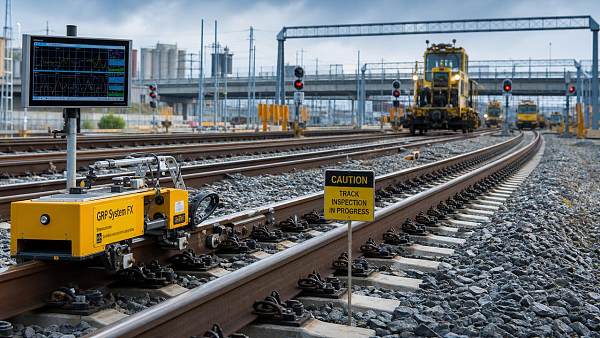
- Review condition evidence: geometry data, inspection history, ultrasonic testing, wear rates, drainage findings, and fault recurrence.
- Test resource assumptions: possession length, crew size, machine productivity, material lead times, and contingency allowance.
- Compare intervention options over lifecycle cost rather than first-year budget only.
- Check whether standards, traceability, and acceptance documentation are included, not treated as afterthoughts.
This process matters even more in multinational procurement, where supplier capability, certification culture, and compliance interpretation can vary significantly across regions.
What a finance-friendly evaluation model looks like
The table below can help decision-makers evaluate rail track maintenance offers beyond headline price. It is especially useful when comparing contractors, methods, or blended supply models.
A proposal that scores well across these dimensions often protects budget integrity better than the cheapest compliant-looking bid.
Where procurement strategy goes wrong in rail track maintenance
Many rail track maintenance overruns begin in procurement, not on site. The issue is often a mismatch between commercial packaging and physical asset behavior.
Lowest unit price can raise network-level cost
Buying rails, fasteners, pads, weld services, tamping, inspection, and digital monitoring separately may appear competitive. Yet fragmented buying can reduce accountability for performance outcomes and create coordination losses between suppliers.
For financial approvers, the relevant metric is not just item price. It is cost per usable asset year, cost per possession hour, and cost per avoided disruption event.
Short contract horizons discourage value creation
If suppliers are contracted only for isolated repairs, they have limited incentive to optimize long-term deterioration curves. By contrast, performance-based or condition-linked packages can align maintenance execution with lifecycle efficiency.
This does not mean every project needs a long-term outsourcing model. It means the contract should connect measurable output with asset outcomes, especially on high-traffic or strategically sensitive corridors.
Cross-border sourcing requires benchmark discipline
Global sourcing can improve cost position, especially when drawing from strong manufacturing bases in Asia. However, savings erode quickly if purchased components do not align with destination market standards, documentation expectations, or installation conditions.
This is where G-RTI adds practical value. By benchmarking track infrastructure, maintenance technologies, and supplier readiness against international frameworks such as ISO/TS 22163, IEC 62278, and EN 50126, G-RTI helps procurement and finance teams compare offers on more than brochure claims.
How standards and compliance affect maintenance budgets
Compliance is not a side topic in rail track maintenance. It influences planning, material approval, testing, traceability, possession approval, and handback acceptance. If these requirements are weakly scoped, cost pressure appears late and usually under schedule stress.
Why documentation costs are often underestimated
Decision-makers sometimes treat assurance records as administrative overhead. In reality, test protocols, inspection records, welding traceability, and system interface documentation are often essential for lawful and safe operation.
For networks with multi-jurisdictional exposure, investor oversight, or public procurement accountability, incomplete records can create approval delays that are more expensive than the original technical work.
Key compliance questions before budget sign-off
- Which standards govern materials, maintenance processes, and safety demonstration for this corridor?
- Are supplier documents aligned with the acceptance format required by the operator or authority?
- Does the budget include testing, witness inspections, technical submittals, and record retention?
- Will imported components require additional qualification, interface review, or local adaptation?
What are the most common rail track maintenance misconceptions?
“If the line is running, the track condition is acceptable”
Service continuity does not prove healthy asset condition. Operators may keep trains moving under temporary restrictions, increased inspection frequency, or deferred intervention risk. Those measures can hide growing financial exposure.
“Cheaper maintenance today preserves budget flexibility”
Sometimes it does. Often it only shifts cost into emergency repairs, access disruption, and shortened asset life. Finance teams should ask whether a low-cost option changes the deterioration curve or simply delays the bill.
“Digital monitoring automatically reduces rail track maintenance cost”
Monitoring can be valuable, but only if the data leads to actionable planning, intervention prioritization, and validated thresholds. Technology without disciplined maintenance execution may add reporting cost without reducing physical failure risk.
FAQ for financial approvers reviewing rail track maintenance
How can I tell if a rail track maintenance budget is unrealistically low?
Look for missing assumptions around access windows, drainage, testing, contingency, and repeat interventions. If the proposal prices only the visible repair task and excludes enabling conditions, the budget may be incomplete rather than efficient.
What should matter more: upfront price or lifecycle cost?
For strategic corridors, lifecycle cost is usually the better decision lens. Upfront savings can disappear if the chosen method shortens intervention intervals, causes rework, or increases outage risk. A lower first invoice is not always a lower total spend.
When is predictive maintenance worth funding?
It is most valuable where traffic density, asset criticality, and failure consequence justify early detection. High-speed rail, urban metro, and mixed-traffic corridors often gain more from predictive methods than lightly used lines with simple maintenance patterns.
How does G-RTI support procurement and approval decisions?
G-RTI provides benchmark-driven insight across track infrastructure, maintenance methods, supplier positioning, and compliance expectations in global rail markets. That helps finance and procurement teams compare options with better visibility into technical fit, commercial risk, and cross-border delivery reality.
Why choosing the right advisory partner changes the cost outcome
Rail track maintenance is not only a technical workstream. It is a decision environment shaped by asset condition, procurement structure, standards alignment, and timing pressure. Approvers need evidence that connects engineering need with commercial consequence.
G-RTI supports that need through technical benchmarking, global supply chain intelligence, and market-facing interpretation of rail infrastructure choices. For organizations balancing cost discipline with operational resilience, that perspective can reduce uncertainty before budget approval.
Why choose us
If you are reviewing rail track maintenance budgets, supplier options, or renewal timing, G-RTI can support a more defensible decision process. We help clarify cost drivers, compare maintenance and sourcing scenarios, and assess whether a proposal is aligned with operational conditions and regulatory expectations.
- Request parameter confirmation for maintenance scope, traffic assumptions, and asset condition inputs.
- Discuss product and supplier selection for track components, monitoring tools, and maintenance technologies.
- Review delivery timelines, procurement packaging, and cross-border supply considerations for critical materials.
- Assess certification, documentation, and standards alignment before commercial commitment.
- Open a quotation discussion based on lifecycle objectives, not just headline unit price.
For finance-led rail investment decisions, better benchmarking often prevents the most expensive outcome: approving a cheap-looking maintenance plan that costs more every year afterward.
Search News
Industry Portal
Hot Articles

Popular Tags
Recommended News
 Jul 10, 2026How to Choose a Hydraulic Press for Sheet Metal Based on Tonnage, Stroke, and Die SetupHydraulic press for sheet metal selection goes beyond tonnage. Learn how stroke, die setup, and part requirements affect accuracy, uptime, and smarter buying decisions.
 Jul 09, 2026Socket Wrench Sets: What Sizes, Drive Types, and Case Options Are Worth Buying?socketwrenchsets buying guide: compare must-have sizes, 1/4, 3/8, and 1/2 drive options, plus case styles that improve access, durability, and value for real maintenance work.
![]() Jul 07, 2026Solid Waste Shredders: Which Types Fit MSW, Plastic, Wood, and Bulky Waste?solidwasteshredders guide: compare the best shredder types for MSW, plastic, wood, and bulky waste, with practical selection tips to boost uptime, cut costs, and choose smarter.
Jul 07, 2026Solid Waste Shredders: Which Types Fit MSW, Plastic, Wood, and Bulky Waste?solidwasteshredders guide: compare the best shredder types for MSW, plastic, wood, and bulky waste, with practical selection tips to boost uptime, cut costs, and choose smarter. Jul 03, 2026>30000 Layers H Type Automatic Battery Cage: Key Specs, Capacity, and Farm Fit>30000 Layers H Type Automatic Battery Cage guide covering key specs, true capacity, automation benefits, and farm fit—compare smarter and choose a system built for scalable egg production.
 Jul 01, 2026Sheet Metal Work vs CNC Machining: Which Process Fits Your Part Design and Volume?Sheet metal work vs CNC machining: discover how geometry, tolerance, and production volume affect cost, lead time, and scalability so you can choose the right process with confidence.
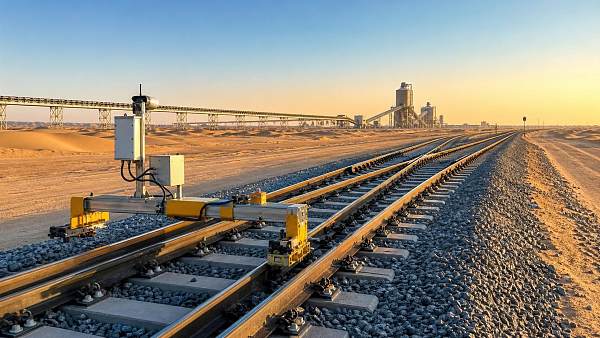
 Jun 30, 2026Rail Track Maintenance in the Middle East: Key Challenges, Methods, and Planning TipsRail track maintenance Middle East guide covering heat, sand, drainage, turnout care, and planning tips to cut downtime, improve safety, and optimize life-cycle cost.
 Jun 24, 2026Car Maintenance Checklist: What to Inspect Daily, Monthly, and Before Long TripsCar maintenance made simple: discover what to inspect daily, monthly, and before long trips to prevent breakdowns, improve safety, and save on costly repairs.
 Jun 22, 2026Handling Technology in Rail Maintenance: Equipment Types and Selection CriteriaHandling technology in rail maintenance: explore equipment types, key selection criteria, and smart ways to improve safety, uptime, and depot efficiency.
 Jun 16, 2026How to Read Hydraulic Press Specifications for Rail Workshop JobsHydraulic press specifications explained for rail workshop jobs: learn how to assess force, stroke, duty cycle, safety, and control to reduce procurement risk and improve performance.
 Jun 13, 2026Industrial Tablet PCs for Field Maintenance: Key Specs for Dust, Vibration, and ConnectivityTablet PCs built for field maintenance: discover the key specs for dust protection, vibration resistance, and reliable connectivity to keep rail and transit teams productive.
 Jun 03, 2026Hydraulic Parts Selection Guide: Seals, Valves, Pumps, and Failure RisksHydraulic parts selection guide for seals, valves, pumps, and hoses—learn how to reduce leakage, contamination, downtime, and failure risks in rail and transit maintenance.
 May 26, 2026When rail track maintenance costs more than expectedRail track maintenance costs often exceed budgets due to hidden lifecycle, compliance, and procurement risks. Learn the real cost drivers and make smarter approval decisions.
 May 24, 2026When does rail track maintenance cost more than expectedRail track maintenance costs rise fast when hidden defects, traffic pressure, aging assets, and compliance gaps go unchecked. Learn when overruns become avoidable.
 May 23, 2026When does rail predictive maintenance truly cut downtime?Rail predictive maintenance cuts downtime when critical assets show clear warning signs and teams can act fast. Learn when it delivers real ROI, fewer disruptions, and smarter rail maintenance planning.
 May 22, 2026How rail track maintenance costs change over asset lifeRail track maintenance costs change across every asset life stage. Learn the key cost drivers, renewal signals, and planning insights to reduce risk and improve rail budget performance.
 May 21, 2026How rail predictive maintenance cuts downtime in practiceRail predictive maintenance cuts downtime by turning condition data into early action. Learn where it works best, which rail assets to prioritize, and how to implement it for fewer failures and smarter maintenance.
 May 18, 2026What rail track maintenance issues cause most service delays?Rail track maintenance issues like geometry defects, turnout failures, wear, and drainage problems cause most service delays. See which risks matter most by operating scene.
 May 13, 2026Is rail global mobility reshaping spare parts planning?Rail global mobility is reshaping spare parts planning through compliance, forecasting, and lead-time control. Learn how smarter inventory strategies reduce risk and boost rail aftermarket growth.
 May 09, 2026Rail economic resilience now depends on maintenance timingRail economic resilience starts with smarter maintenance timing. Discover how data-driven planning cuts downtime, controls lifecycle cost, and strengthens rail network performance.
 May 08, 2026When Does Rail Track Maintenance Start Costing More Than It Saves?Rail track maintenance: learn the warning signs, cost triggers, and renewal thresholds that show when repeated repairs stop saving money and start hurting rail performance and budgets.
 May 06, 2026What Causes Rail Track Maintenance Costs to Spike Early?Rail track maintenance costs can spike early due to hidden drainage issues, load stress, delayed inspections, and poor component fit. Discover practical fixes to cut failures and extend track life.
 May 05, 2026What rail global mobility means for fleet deployment plansRail global mobility is redefining fleet deployment plans. Discover how operators balance interoperability, compliance, maintenance, and low-carbon goals for smarter rail decisions.
 May 04, 2026When Rail Track Maintenance Delays Start Signaling Bigger RiskRail track maintenance delays can reveal hidden safety, cost, and reliability risks. Learn the warning signs and how after-sales teams can act early to prevent major disruption.
 May 01, 2026How Rail Economic Resilience Affects Fleet Renewal TimingRail economic resilience shapes the right fleet renewal timing. Learn how ridership, funding, energy costs, and maintenance risk guide smarter rail investment decisions.





Quarterly Executive Summaries Delivered Directly.
Join 50,000+ industry leaders who receive our proprietary market analysis and policy outlooks before they hit the public library.