

When does rail predictive maintenance truly cut downtime?
Dr. Alistair Thorne
Time
Click Count
For aftersales maintenance teams, the real question is not whether rail predictive maintenance sounds promising, but when it measurably reduces service interruptions, emergency repairs, and lifecycle costs. The answer depends on asset criticality, data quality, failure patterns, and how well insights are turned into scheduled action—turning maintenance from reactive firefighting into a reliable strategy for uptime.
What does rail predictive maintenance actually mean in practice?
Rail predictive maintenance uses condition data to estimate when an asset is likely to fail or degrade beyond acceptable performance.
It goes beyond calendar-based servicing and beyond simple alarms from traditional condition monitoring systems.
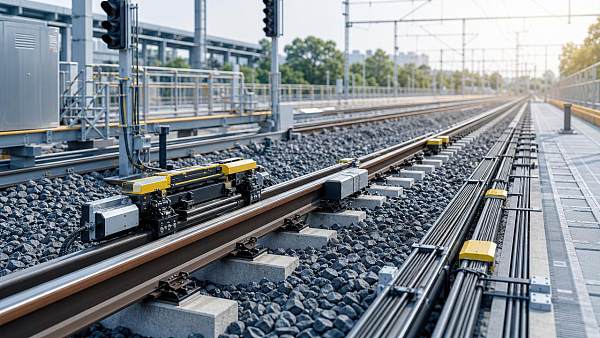
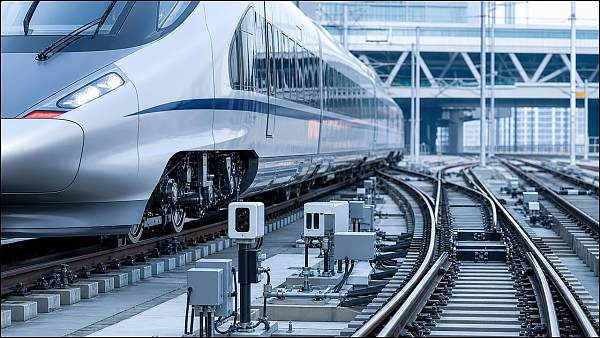
In rail operations, that may include data from traction systems, bogies, doors, braking components, track circuits, switch machines, and power supply assets.
The goal is not to predict every failure perfectly. The goal is to intervene early enough to avoid disruption.
Effective rail predictive maintenance combines three layers:
- Sensor and operational data collection
- Analytics that detect patterns, thresholds, or anomaly trends
- Maintenance planning that converts findings into scheduled work orders
Without the third layer, rail predictive maintenance becomes a dashboard project, not a downtime reduction strategy.
That distinction matters across integrated rail systems, where mechanical, digital, and infrastructure assets interact under strict service commitments.
When does rail predictive maintenance start cutting downtime?
Rail predictive maintenance truly cuts downtime when four conditions are met at the same time.
1. The asset has high operational criticality
Downtime impact is highest when failure stops service, slows headways, or triggers emergency access windows.
That is why turnout systems, signaling interfaces, traction converters, doors, and wheelset-related components often deliver early value.
2. Failure modes show detectable signals
If degradation creates measurable vibration, heat, current variation, timing drift, or repeated fault signatures, prediction becomes practical.
If failure is sudden and signal-free, predictive models have limited leverage.
3. Data quality is stable enough for decisions
Poor timestamps, missing records, inconsistent maintenance logs, or uncalibrated sensors quickly weaken trust in recommendations.
Reliable rail predictive maintenance depends on clean asset hierarchies and traceable event histories.
4. Maintenance teams can act within the warning window
An alert only reduces downtime if there is enough time to inspect, source parts, schedule access, and complete work safely.
A two-hour warning may help dispatch decisions. A two-week warning may prevent a service interruption entirely.
In short, rail predictive maintenance works best where degradation is visible, assets are critical, and action can be planned ahead.
Which rail assets benefit first from rail predictive maintenance?
Not every asset justifies the same investment. The strongest early cases usually share high failure cost and repeatable data patterns.
Rolling stock systems
- Wheelsets and bearings with vibration or temperature trends
- Doors with cycle-count fatigue and intermittent faults
- HVAC units with pressure, energy, or compressor anomalies
- Traction equipment showing thermal or current instability
Infrastructure systems
- Switches and point machines with rising actuation force
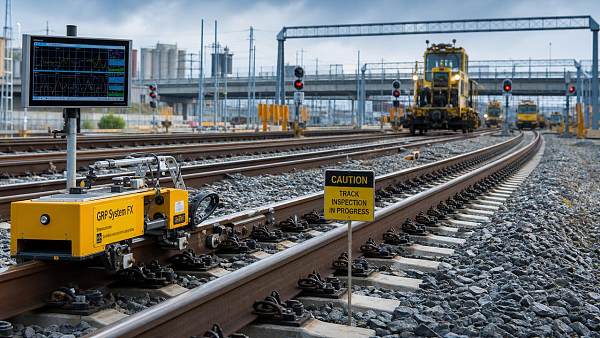
- Track geometry segments with recurring settlement trends
- Overhead line components with wear or tension variation
- Substation assets with thermal stress patterns
The first target should not be the asset with the most data. It should be the asset with the clearest business consequence.
That approach aligns well with large transit portfolios benchmarked across HSR, metro, signaling, track, and traction power environments.
How is rail predictive maintenance different from preventive maintenance?
Preventive maintenance follows fixed intervals based on time, mileage, cycles, or standard procedures.
Rail predictive maintenance adjusts timing using real asset condition and failure probability.
Both approaches still matter. In fact, strong maintenance strategies usually combine them.
The biggest advantage of rail predictive maintenance is not technical sophistication. It is timing precision.
That precision lowers unnecessary interventions while reducing the chance of in-service failure.
What common mistakes delay results from rail predictive maintenance?
Many programs stall because they start with software procurement instead of failure economics and maintenance workflows.
Mistake 1: Chasing too many assets at once
A broad rollout looks ambitious, but it usually spreads data cleansing and model validation too thin.
Mistake 2: Ignoring maintenance history quality
If failure codes are inconsistent, historical labels become unreliable. That weakens analytics from the beginning.
Mistake 3: Measuring alerts instead of outcomes
High alert volume does not prove value. The real metrics are avoided failures, fewer delays, and lower emergency callouts.
Mistake 4: Treating models as fully autonomous
Rail predictive maintenance still needs engineering judgment, route context, weather effects, and operating pattern interpretation.
Mistake 5: Forgetting standards and integration
Safety, traceability, and validation matter, especially where rail systems align with ISO/TS 22163, IEC 62278, or EN 50126 expectations.
The best rail predictive maintenance programs begin with one or two failure modes, prove operational impact, then scale deliberately.
How can teams judge whether rail predictive maintenance will pay back fast enough?
A practical business case should compare implementation cost against downtime avoided, labor efficiency, parts optimization, and asset life extension.
The following checklist helps test whether rail predictive maintenance is ready for value capture.
If most answers are yes, rail predictive maintenance has a credible path to faster ROI.
If not, better data governance may create more value than advanced analytics at the current stage.
How should rail predictive maintenance be implemented for lasting results?
Start with a narrow pilot linked to one high-cost failure mode and one clear operational metric.
Examples include switch failures per route-kilometer, door-related service delays, or traction heat alarms per fleet class.
Then build a stepwise implementation path:
- Define the failure mode and downtime consequence
- Map available sensors, logs, and maintenance records
- Validate data quality and event timestamps
- Set decision thresholds and engineering review rules
- Link alerts to work orders and access planning
- Measure avoided incidents, not model novelty
This method helps rail predictive maintenance move from experiment to operating discipline.
It also supports benchmarking across fleets, corridors, and infrastructure categories in complex transit programs.
FAQ summary: when is rail predictive maintenance the right choice?
Rail predictive maintenance delivers its strongest value when it is tied to critical assets, validated data, and disciplined execution.
The turning point is not model deployment. It is the moment insights begin preventing real service interruptions.
For complex rail and transit systems, the next step is simple: identify one high-impact failure mode, test the warning window, and measure avoided downtime with rigor.
Search News
Industry Portal
Hot Articles

Popular Tags
Recommended News
 Jul 10, 2026How to Choose a Hydraulic Press for Sheet Metal Based on Tonnage, Stroke, and Die SetupHydraulic press for sheet metal selection goes beyond tonnage. Learn how stroke, die setup, and part requirements affect accuracy, uptime, and smarter buying decisions.
 Jul 09, 2026Socket Wrench Sets: What Sizes, Drive Types, and Case Options Are Worth Buying?socketwrenchsets buying guide: compare must-have sizes, 1/4, 3/8, and 1/2 drive options, plus case styles that improve access, durability, and value for real maintenance work.
![]() Jul 07, 2026Solid Waste Shredders: Which Types Fit MSW, Plastic, Wood, and Bulky Waste?solidwasteshredders guide: compare the best shredder types for MSW, plastic, wood, and bulky waste, with practical selection tips to boost uptime, cut costs, and choose smarter.
Jul 07, 2026Solid Waste Shredders: Which Types Fit MSW, Plastic, Wood, and Bulky Waste?solidwasteshredders guide: compare the best shredder types for MSW, plastic, wood, and bulky waste, with practical selection tips to boost uptime, cut costs, and choose smarter. Jul 03, 2026>30000 Layers H Type Automatic Battery Cage: Key Specs, Capacity, and Farm Fit>30000 Layers H Type Automatic Battery Cage guide covering key specs, true capacity, automation benefits, and farm fit—compare smarter and choose a system built for scalable egg production.
 Jul 01, 2026Sheet Metal Work vs CNC Machining: Which Process Fits Your Part Design and Volume?Sheet metal work vs CNC machining: discover how geometry, tolerance, and production volume affect cost, lead time, and scalability so you can choose the right process with confidence.
 Jun 30, 2026Rail Track Maintenance in the Middle East: Key Challenges, Methods, and Planning TipsRail track maintenance Middle East guide covering heat, sand, drainage, turnout care, and planning tips to cut downtime, improve safety, and optimize life-cycle cost.
 Jun 24, 2026Car Maintenance Checklist: What to Inspect Daily, Monthly, and Before Long TripsCar maintenance made simple: discover what to inspect daily, monthly, and before long trips to prevent breakdowns, improve safety, and save on costly repairs.
 Jun 22, 2026Handling Technology in Rail Maintenance: Equipment Types and Selection CriteriaHandling technology in rail maintenance: explore equipment types, key selection criteria, and smart ways to improve safety, uptime, and depot efficiency.
 Jun 16, 2026How to Read Hydraulic Press Specifications for Rail Workshop JobsHydraulic press specifications explained for rail workshop jobs: learn how to assess force, stroke, duty cycle, safety, and control to reduce procurement risk and improve performance.
 Jun 13, 2026Industrial Tablet PCs for Field Maintenance: Key Specs for Dust, Vibration, and ConnectivityTablet PCs built for field maintenance: discover the key specs for dust protection, vibration resistance, and reliable connectivity to keep rail and transit teams productive.
 Jun 03, 2026Hydraulic Parts Selection Guide: Seals, Valves, Pumps, and Failure RisksHydraulic parts selection guide for seals, valves, pumps, and hoses—learn how to reduce leakage, contamination, downtime, and failure risks in rail and transit maintenance.
 May 26, 2026When rail track maintenance costs more than expectedRail track maintenance costs often exceed budgets due to hidden lifecycle, compliance, and procurement risks. Learn the real cost drivers and make smarter approval decisions.
 May 24, 2026When does rail track maintenance cost more than expectedRail track maintenance costs rise fast when hidden defects, traffic pressure, aging assets, and compliance gaps go unchecked. Learn when overruns become avoidable.
 May 23, 2026When does rail predictive maintenance truly cut downtime?Rail predictive maintenance cuts downtime when critical assets show clear warning signs and teams can act fast. Learn when it delivers real ROI, fewer disruptions, and smarter rail maintenance planning.
 May 22, 2026How rail track maintenance costs change over asset lifeRail track maintenance costs change across every asset life stage. Learn the key cost drivers, renewal signals, and planning insights to reduce risk and improve rail budget performance.
 May 21, 2026How rail predictive maintenance cuts downtime in practiceRail predictive maintenance cuts downtime by turning condition data into early action. Learn where it works best, which rail assets to prioritize, and how to implement it for fewer failures and smarter maintenance.
 May 18, 2026What rail track maintenance issues cause most service delays?Rail track maintenance issues like geometry defects, turnout failures, wear, and drainage problems cause most service delays. See which risks matter most by operating scene.
 May 13, 2026Is rail global mobility reshaping spare parts planning?Rail global mobility is reshaping spare parts planning through compliance, forecasting, and lead-time control. Learn how smarter inventory strategies reduce risk and boost rail aftermarket growth.
 May 09, 2026Rail economic resilience now depends on maintenance timingRail economic resilience starts with smarter maintenance timing. Discover how data-driven planning cuts downtime, controls lifecycle cost, and strengthens rail network performance.
 May 08, 2026When Does Rail Track Maintenance Start Costing More Than It Saves?Rail track maintenance: learn the warning signs, cost triggers, and renewal thresholds that show when repeated repairs stop saving money and start hurting rail performance and budgets.
 May 06, 2026What Causes Rail Track Maintenance Costs to Spike Early?Rail track maintenance costs can spike early due to hidden drainage issues, load stress, delayed inspections, and poor component fit. Discover practical fixes to cut failures and extend track life.
 May 05, 2026What rail global mobility means for fleet deployment plansRail global mobility is redefining fleet deployment plans. Discover how operators balance interoperability, compliance, maintenance, and low-carbon goals for smarter rail decisions.
 May 04, 2026When Rail Track Maintenance Delays Start Signaling Bigger RiskRail track maintenance delays can reveal hidden safety, cost, and reliability risks. Learn the warning signs and how after-sales teams can act early to prevent major disruption.
 May 01, 2026How Rail Economic Resilience Affects Fleet Renewal TimingRail economic resilience shapes the right fleet renewal timing. Learn how ridership, funding, energy costs, and maintenance risk guide smarter rail investment decisions.





















Quarterly Executive Summaries Delivered Directly.
Join 50,000+ industry leaders who receive our proprietary market analysis and policy outlooks before they hit the public library.