

What Does Digital Integrity in Rail Systems Certification Cover?
Dr. Alistair Thorne
Time
Click Count
Where does the certification scope actually begin and end?
For a technical evaluator, digital integrity in rail systems certification is not just about whether software runs without crashing. It covers whether digital functions behave correctly, safely, traceably, and consistently across the full operating life of a rail system. In practice, that usually means the certification scope reaches into signaling logic, onboard control software, train-to-wayside communication, configuration control, cybersecurity-related protections, data handling, validation records, and the change process used after deployment.
The boundary matters because suppliers often describe “digital” too narrowly. A control unit may be certified as hardware, while the real project risk sits in software updates, interface definitions, event logging, or network behavior under abnormal conditions. If certification does not look at those layers together, the digital integrity claim is weak even if individual components look compliant on paper.
What is “digital integrity” in a rail context?
In rail, digital integrity means that software-driven and data-driven functions can be trusted to perform as specified, especially when safety, availability, and interoperability are at stake. It is not a marketing term. It is closer to a technical confidence question: can the operator, integrator, assessor, and authority rely on the digital behavior of the system under normal service, degraded mode, maintenance activity, and change management?
That trust usually depends on five things being demonstrable:
- Requirements are defined and traceable.
- Software and logic are verified against those requirements.
- Interfaces behave predictably with connected subsystems.
- Changes are controlled so fielded systems do not drift from the approved baseline.
- Evidence exists to show the above, not just declarations from the supplier.
That is why digital integrity in rail systems certification usually sits close to RAMS and lifecycle assurance work, rather than being treated as a stand-alone IT check.
Which subsystems are usually examined?
The answer depends on project scope, but technical evaluations commonly focus on the digital parts of signaling, train control, traction and braking control interfaces, diagnostic platforms, condition monitoring, passenger information control, communications networks, and maintenance software where the output affects operations or safety decisions.
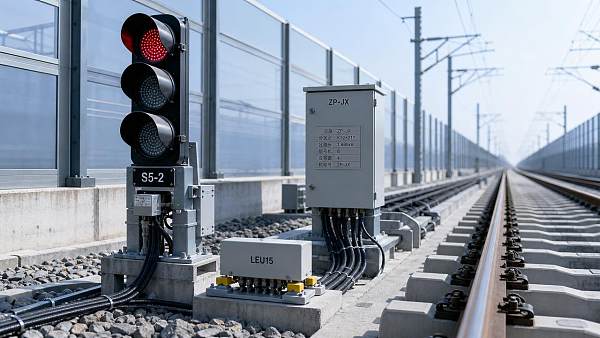
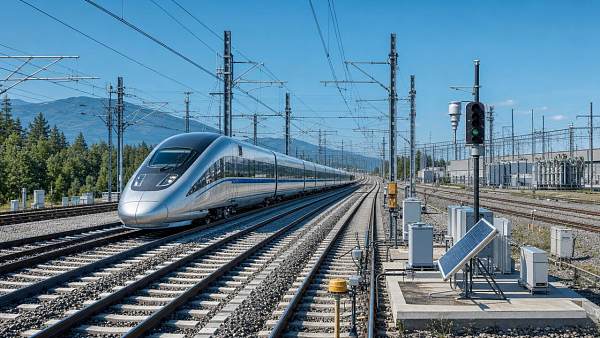
In a CBTC, ETCS, or other advanced signaling environment, scrutiny is usually deeper because the system depends on continuous data exchange and deterministic logic. In that setting, certification may examine onboard and wayside software versions, communication protocols, fallback behavior, event recording, fault handling, and the evidence that timing and message integrity were validated under realistic operating scenarios.
A simpler subsystem can still fall inside scope if bad data or bad logic could cause unsafe maintenance actions, false alarms, missed faults, or operational disruption.
Is this mainly a software certification exercise?
No. Software is central, but certification is broader than software testing. Evaluators usually need to see how software, hardware, communications, operating assumptions, and lifecycle controls fit together. A well-tested application can still fail a serious review if its interface assumptions are undocumented, if version control is weak, or if uploaded field configurations are not traceable to an approved release.
This is one of the most common misunderstandings in supplier submissions. A stack of test reports is useful, but it does not replace a controlled safety lifecycle, clear requirements allocation, and evidence that the deployed system matches what was assessed.
Which standards usually shape the review?
The exact framework depends on market and subsystem, but technical evaluators in rail usually work around lifecycle, safety, quality, and product assurance standards rather than one single “digital integrity” certificate. EN 50126 is widely referenced for RAMS lifecycle management. IEC 62278 is aligned with that lifecycle view. ISO/TS 22163 often matters from the rail quality management side. Depending on the system, related software and signaling standards may also shape the evidence package and assessment logic.
The practical point is this: certification coverage is often assembled from several standards, assessment methods, and project-specific requirements. A competent review does not stop at checking whether a document mentions the right standard number. It asks whether the supplier’s process and deliverables actually satisfy the intent of those standards.
What documents should a technical evaluator request first?
If you need a fast read on whether a supplier has real control over digital integrity, start with the documents that reveal traceability and governance, not the glossy overview deck.
- System and software requirements specifications.
- Architecture and interface control documents.
- Verification and validation plans, plus executed test records.
- Configuration management records, including version baselines.
- Hazard log or equivalent risk tracking documentation where digital functions affect safety.
- Change control records for patches, updates, and field modifications.
- Cybersecurity-related design and maintenance controls where networked functions are in scope.
- Evidence of independent assessment, where the project requires it.
When these documents are inconsistent with each other, that is usually a bigger warning sign than a missing marketing claim. Misaligned version references, unclear ownership of interfaces, and incomplete traceability are often where certification risk starts to show.
What does a reviewer look for beyond pass/fail test results?
Three things tend to separate mature submissions from weak ones.
That last point is easy to underestimate. Rail systems rarely fail cleanly. Certification has to show what happens when data are delayed, messages are corrupted, sensors disagree, or maintenance staff install an incorrect configuration package.
Does cybersecurity sit inside digital integrity certification?
Usually yes, at least where cyber weakness can undermine system trustworthiness, availability, safety, or configuration control. That does not mean every assessment is a full cybersecurity certification. It does mean digital integrity is hard to defend if remote access is unmanaged, account control is weak, logs are unreliable, or critical update paths are poorly protected.
For evaluators, the useful question is not “Is cybersecurity included?” in the abstract. It is “Which cyber-relevant controls affect the validity of the system’s approved digital behavior?” Once you frame it that way, access control, patch governance, secure communication paths, and auditability become part of the integrity conversation rather than a separate compliance box.
How do you tell whether lifecycle compliance is real or just documented nicely?
Look for continuity. A credible lifecycle file shows how requirements moved into design, how design moved into validation, how defects were handled, and how approved changes were carried into service. If the chain breaks at any point, the supplier may have documents without real process discipline.
A few checks work well in practice:
- Pick one safety-relevant function and trace it end to end.
- Match a test record to a specific software version and requirement ID.
- Check whether change requests reference hazard impacts and regression needs.
- Verify that interface changes trigger reassessment, not just local retesting.
If a supplier cannot do that quickly, the problem is rarely just poor filing.
What usually goes wrong during assessment?
The recurring failures are surprisingly consistent. One is treating software releases as operational events rather than certification events. Another is weak interface ownership: onboard, wayside, telecom, and maintenance systems all assume someone else controls the boundary. A third is incomplete evidence for degraded mode behavior, especially where interoperability and fallback operations are involved.
There is also a quieter problem: data traceability. Event logs, fault records, and maintenance data may exist, but without synchronized definitions, timestamps, or baseline references. That makes incident reconstruction and conformity assessment much harder. For technical evaluators, poor traceability is not an administrative flaw; it is a reliability and assurance problem.
Does market destination change the certification approach?
Yes, especially in evidence depth, assessor expectations, and acceptance pathways. A system prepared for one region may still need substantial adaptation for another because the issue is not only technical capability. It is also how conformity is demonstrated, who accepts the evidence, which lifecycle records are mandatory, and how interface responsibility is allocated across operators, integrators, and suppliers.
For cross-border or export-oriented rail projects, this is where benchmarking becomes useful. A product may be strong technically but still weak in certifiable digital integrity if its documentation model, change discipline, or validation evidence does not align with the target market’s review culture.
When should certification work start in a project?
Early, before detailed integration locks in bad assumptions. If digital integrity review starts only when the product is nearly delivered, the team usually discovers gaps that are expensive to unwind: undocumented interfaces, unsafe maintenance overrides, mismatched software baselines, or test evidence that does not match the installed configuration.
A good rule for evaluators is simple: start the certification lens when requirements, architecture, and interface ownership are still negotiable. That is the point where findings can still improve the system rather than merely delay acceptance.
What is the most practical takeaway for a technical evaluator?
Do not ask whether a rail product is “digitally certified” in a generic sense. Ask what functions are covered, which standards shaped the assessment, what lifecycle evidence exists, how field changes are controlled, and whether the assessed configuration is the one that will actually be deployed.
That line of questioning gets to the real issue behind digital integrity in rail systems certification: not whether the system sounds advanced, but whether its digital behavior can still be trusted after integration, updates, faults, and years of operation.
Search News
Industry Portal
Hot Articles

Popular Tags
Recommended News
 Aug 04, 2026What Does Digital Integrity in Rail Systems Certification Cover?Digital integrity in rail systems certification covers software, interfaces, lifecycle control, cybersecurity, and traceability. Learn what evaluators check and where certification risks hide.
 Jul 12, 2026High-Speed Rail Technology: Key Systems, Performance Limits, and Upgrade PrioritiesHigh-speed rail technology explained: explore core systems, real performance limits, and upgrade priorities to improve safety, capacity, efficiency, and long-term rail investment decisions.
 Jul 09, 2026Rail System Integrity Worldwide: Which Standards and Failure Risks Matter Most?Rail system integrity worldwide explained: discover the key standards, top failure risks, and practical assurance priorities shaping safer, more reliable global rail projects.
 Jun 14, 2026Printed Circuit Board Assembly Process Explained: From SMT to Testing and Rework ControlPrinted circuit board assembly explained from SMT and reflow to testing, traceability, and rework control. Learn how strong process discipline improves reliability and supplier confidence.
 Jun 13, 2026How to Compare a GSM-R Equipment Manufacturer for Metro Projects: Compliance, Integration, and Lifecycle CostCompare a gsm-r equipment manufacturer for metro projects with confidence. Learn how to assess compliance, integration strength, and lifecycle cost before you buy.
![]() Jun 09, 2026How to Choose Relay Modules for Control Panels: Voltage, Load Type, and Isolation BasicsRelaymodules selection made simple: learn how to match control voltage, load type, and isolation for safer control panels, longer service life, and more reliable switching.
Jun 09, 2026How to Choose Relay Modules for Control Panels: Voltage, Load Type, and Isolation BasicsRelaymodules selection made simple: learn how to match control voltage, load type, and isolation for safer control panels, longer service life, and more reliable switching. Jun 03, 2026PCB Dielectric Constant Benchmark: How to Compare Materials for RF BoardsPCB dielectric constant benchmark guide for comparing RF board materials, Dk tolerance, loss, and supplier data—make confident, standards-aware laminate decisions.
 May 29, 2026Can wholesale ic chip components pass traceability checks?wholesale ic chip components can pass traceability checks when sourcing, lot records, testing, and compliance evidence align. Learn how to reduce risk in critical rail applications.
 May 27, 2026Why rail data transparency now shapes safer signal upgradesRail data transparency is now critical to safer signal upgrades. Learn how traceability, compliance evidence, and smarter benchmarking reduce risk, speed approvals, and improve procurement decisions.
 May 26, 2026How rail technical specifications shape safer system choicesRail technical specifications shape safer procurement decisions by reducing compliance, integration, and lifecycle risk. Learn how to benchmark suppliers and choose rail systems with confidence.
 May 19, 2026What rail European standards mean for product approvalRail European standards shape product approval from design to market entry. Learn how compliance, safety evidence, and documentation affect faster rail project acceptance.
 May 18, 2026How rail connectivity affects urban project delivery speedRail connectivity drives faster urban project delivery by improving logistics, approvals, and system integration. See how smarter network planning reduces delays and boosts execution confidence.
 May 17, 2026What rail AI solutions can solve beyond pilot projectsRail AI solutions move beyond pilots to cut failures, optimize maintenance, improve signaling, and reduce energy waste—see how scalable deployment delivers measurable rail performance.
 May 16, 2026Rail connectivity is no longer just about faster transfersRail connectivity now drives resilience, compliance, and lifecycle value—not just speed. Learn how project leaders can reduce risk and build future-ready rail systems.
 May 13, 2026Rail policy foresight and the risks of late signaling upgradesRail policy foresight reveals how delayed signaling upgrades can increase safety, interoperability, and lifecycle risks—learn how early alignment protects capacity, compliance, and investment value.
 May 11, 2026Rail technical standards that delay cross-border approvalsRail technical standards can delay cross-border rail approvals through gaps in signaling, EMC, fire safety, and documentation. Learn how benchmarking reduces compliance risk.
 May 09, 2026The hidden tradeoffs behind rail connectivity upgradesRail connectivity upgrades can cut travel time and congestion, but hidden costs in interoperability, maintenance, and resilience shape real value. Explore the tradeoffs before investing.
 May 07, 2026Why Rail Multi-Disciplinary Projects Slip at Interface HandoverRail multi-disciplinary projects often slip at interface handover. Discover the hidden causes, business risks, and practical fixes project leaders need to cut delays and rework.
 May 04, 2026Rail Connectivity Gaps That Quietly Reduce Network PerformanceRail connectivity gaps can quietly cut network performance, increase maintenance, and delay delivery. Learn how to spot hidden interface risks and build more resilient rail systems.
 May 02, 2026Rail Connectivity Problems That Expansion Alone Will Not FixRail connectivity issues do not end with new lines. Discover how signaling, maintenance, power, and interoperability shape reliable rail performance—and what operators can fix first.
 May 01, 2026Why Rail Technical Standards Still Delay Signal UpgradesRail technical standards still slow signal upgrades through fragmented rules, legacy interfaces, and approval delays. Learn the real project risks and how to reduce schedule overruns.
 Apr 29, 2026Why rail connectivity projects stall after the first phaseRail connectivity projects often stall after phase one due to funding gaps, fragmented governance, permits, and integration risks. Learn the real causes and how leaders can keep expansion moving.
 Apr 23, 2026Signaling systems integration fails for familiar reasonsRail regulatory frameworks and signaling systems integration often fail at CBTC, ETCS, rolling stock, and traction power interfaces. Learn how rail standards, predictive maintenance, and data transparency improve compliance and transit efficiency.
 Apr 23, 2026Signal flow problems often start with one bad interface mapRail signaling systems often fail from one bad interface map. Explore ETCS, CBTC, rolling stock, traction power, rail standards, and predictive maintenance insights for smarter procurement.











Quarterly Executive Summaries Delivered Directly.
Join 50,000+ industry leaders who receive our proprietary market analysis and policy outlooks before they hit the public library.