

Rail connectivity is no longer just about faster transfers
Dr. Alistair Thorne
Time
Click Count
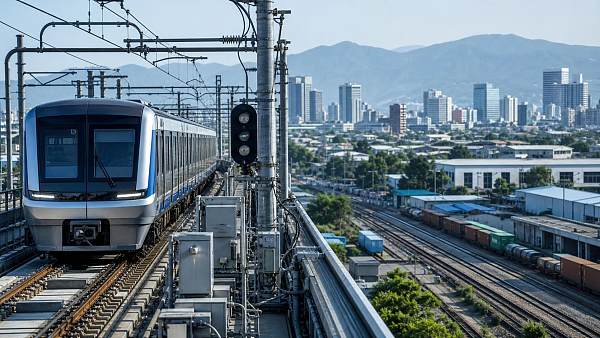
Rail connectivity is no longer just about faster transfers; it has become a strategic indicator of network resilience, regulatory readiness, and long-term asset performance. For project managers and engineering leaders navigating complex transit investments, understanding how systems, standards, and supply chains align is now critical to delivering reliable, future-ready rail infrastructure across global markets.
Why rail connectivity now defines project success beyond speed
In earlier project cycles, rail connectivity was often measured by travel time reduction and interchange efficiency. That view is now too narrow. For major rail and transit programs, connectivity influences capacity planning, cross-border compatibility, maintenance strategy, and the commercial viability of the entire asset lifecycle.
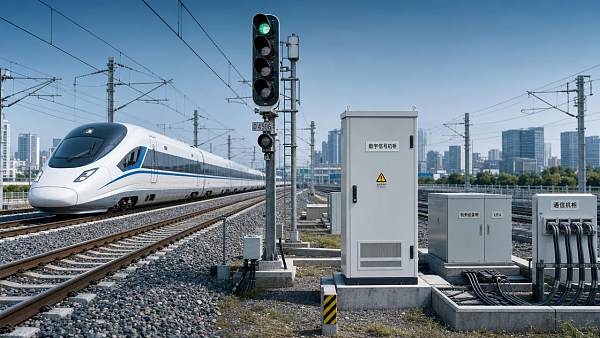
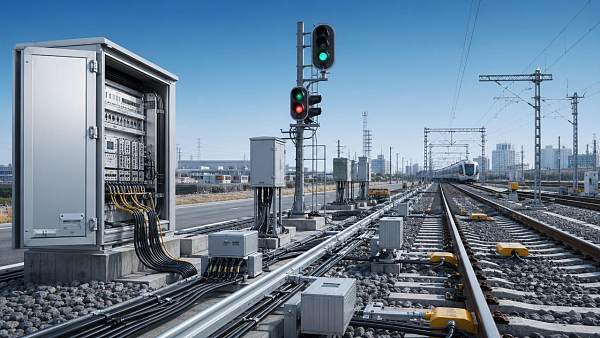
Project leaders are under pressure to deliver systems that remain operable across changing demand profiles, stricter carbon targets, and evolving digital standards. A station-to-station approach is no longer enough. Rail connectivity must now be assessed across rolling stock, signaling, track, traction power, depot readiness, and supplier compliance.
This is where G-RTI provides practical value. By combining technical benchmarking, standards-based evaluation, and supply chain intelligence, G-RTI helps decision-makers understand whether a proposed solution supports real network integration or simply promises isolated performance.
- Connectivity affects timetable resilience, not just nominal top speed.
- It determines whether equipment sourced from different regions can work within one regulatory framework.
- It shapes maintenance cost, spare parts planning, and digital interoperability over decades.
- It influences tender risk, especially for EPC teams managing multi-vendor packages.
What project managers should evaluate when judging rail connectivity
Many teams still evaluate rail connectivity too late, often after civil packages are fixed and core systems are already shortlisted. A better approach is to define connectivity as an integrated performance requirement during concept design and procurement planning.
The table below outlines the core dimensions that engineering and project teams should review before locking in specifications, supplier lists, or interface responsibilities.
For project managers, the key lesson is simple: rail connectivity should be specified as a systems outcome, not as a collection of disconnected technical packages. G-RTI’s benchmarking model is useful because it compares hardware, software, and structural performance against internationally recognized frameworks instead of relying on vendor claims alone.
A practical checklist before tender release
- Map every critical interface across civil works, rolling stock, signaling, and traction power.
- Identify which standards are mandatory by target market, especially in Europe, North America, and the Middle East.
- Check whether proposed suppliers can demonstrate compliance maturity, not just theoretical compatibility.
- Review lifecycle serviceability, including spare parts continuity and digital maintenance support.
Which rail connectivity model fits your project scenario?
Not every network needs the same connectivity strategy. The best solution depends on traffic density, regulatory environment, cross-border ambitions, and funding logic. A metro extension, a high-speed corridor, and a freight-passenger mixed route will each require different design priorities.
The comparison below helps narrow down the most suitable rail connectivity approach by application scenario.
This comparison shows why project managers should avoid copying specifications from unrelated projects. G-RTI supports this stage by translating market conditions into engineering selection logic, especially where Asian manufacturing options must align with European, American, or Middle Eastern compliance expectations.
Scenario-specific pressure points
Urban transit operators usually struggle with uptime, passenger throughput, and commissioning windows. High-speed projects face stricter performance margins, thermal loads, and long validation cycles. Cross-border projects add a new layer: customs, documentation, standards mapping, and tender risk from fragmented supplier ecosystems.
How standards and certification shape real rail connectivity
A rail system may appear technically attractive on paper yet still fail to support dependable rail connectivity if certification pathways are unclear. For engineering teams, compliance is not a late-stage paperwork exercise. It determines design assumptions, testing sequences, software approval, and acceptance timelines.
G-RTI’s value is especially relevant here because it benchmarks solutions against recognized frameworks such as ISO/TS 22163, IEC 62278, and EN 50126. These references help procurement and engineering teams evaluate whether a supplier’s offering is mature enough for regulated project environments.
Standards that frequently influence procurement decisions
- ISO/TS 22163: often used to assess quality management maturity in the rail supply chain.
- IEC 62278: relevant to railway applications, dependability, availability, maintainability, and safety processes.
- EN 50126: commonly referenced for RAMS-oriented lifecycle assessment in rail projects.
- CBTC and ETCS frameworks: critical where signaling integration determines corridor performance.
For project leaders, the practical question is not whether a standard exists, but whether the proposed design, documents, and testing evidence can move efficiently through local approval structures. That difference often decides whether a project opens on time or enters costly redesign.
Procurement guide: how to reduce risk when selecting rail connectivity solutions
Procurement risk in rail connectivity usually comes from fragmented accountability. One supplier owns propulsion, another signaling, another maintenance software, while the EPC team carries the interface burden. Without a disciplined selection method, hidden integration costs surface only during testing and handover.
The matrix below can be used during prequalification or technical-commercial review to compare solution readiness in a more structured way.
A structured review like this helps engineering leaders move beyond lowest-price comparisons. Rail connectivity is expensive to repair once the system architecture is fixed. Early benchmarking usually saves far more than late-stage troubleshooting.
Common procurement mistakes
- Treating compliance documents as a box-ticking exercise instead of a design constraint.
- Assuming that proven operation in one region guarantees acceptance in another.
- Underestimating software and data integration effort between maintenance and operations systems.
- Selecting components with good standalone specifications but weak subsystem compatibility.
Cost, alternatives, and the hidden economics of rail connectivity
The cheapest technical option is often not the most economical one over the asset lifecycle. Rail connectivity decisions shape spare parts consumption, energy use, downtime risk, software maintenance obligations, and the complexity of future upgrades.
Project teams should compare alternatives not only by capex, but also by interface burden and long-term maintainability. A lower entry price can become expensive if it creates custom integration work or limits vendor flexibility later.
Where lifecycle cost usually rises
- Custom interface engineering between incompatible signaling or propulsion packages.
- Repeated testing and validation after design changes triggered by approval comments.
- Higher maintenance labor due to weak diagnostics or fragmented asset data.
- Long lead times for replacement parts tied to narrow supplier ecosystems.
This is why benchmarking matters. G-RTI helps project stakeholders compare not only product performance, but also market accessibility, standards fit, and supply chain practicality. That combination is especially important when bridging Asian manufacturing capabilities with Western or Middle Eastern procurement requirements.
FAQ: key questions engineering leaders ask about rail connectivity
How should we define rail connectivity at the start of a project?
Define rail connectivity as an end-to-end systems requirement. It should cover operational interoperability, standards compliance, power compatibility, maintenance data continuity, and upgrade readiness. If the definition stays limited to passenger transfer speed, important interface risks will remain hidden until late design stages.
Which projects need the deepest connectivity review?
Cross-border rail, mixed-traffic corridors, metro upgrades on live networks, and high-speed programs typically need the most rigorous review. These projects involve multiple standards, heavy interface management, and limited tolerance for downtime during testing or migration.
What is the most overlooked risk in rail connectivity procurement?
The most overlooked risk is incomplete interface ownership. Teams often assume that if each package is technically sound, the full system will integrate smoothly. In practice, unclear responsibility across software, traction, signaling, and depot systems creates major delays and budget pressure.
How can G-RTI help during supplier evaluation?
G-RTI supports decision-making with technical benchmarking, standards-based comparison, and supply chain insight. For project managers, this means clearer visibility into whether a component or subsystem is likely to perform reliably in the target regulatory environment and within the project’s delivery logic.
Why many future-ready networks will compete on connectivity quality
As mobility systems become more digital, more regulated, and more exposed to supply chain disruption, rail connectivity will increasingly define competitiveness. The strongest projects will not simply move passengers faster. They will adapt more easily, recover from faults quicker, and integrate new technologies without destabilizing the network.
For engineering leaders, that means asking better questions earlier: Can the system scale? Can it be certified efficiently? Can data move across platforms? Can maintenance become predictive rather than reactive? These are now central connectivity questions, not side topics.
Why choose us for rail connectivity planning and benchmarking
G-RTI is built for project managers, EPC teams, procurement directors, and technical leaders who need more than general market commentary. Our platform connects engineering benchmarks, international standards references, and live supply chain intelligence across five core pillars: High-Speed Rail systems, Urban Metro and Transit, Advanced Signaling and Communication, Track Infrastructure and Maintenance, and Traction Power Supply.
You can consult us when you need support with parameter confirmation, supplier shortlisting, solution comparison, certification pathway review, delivery-cycle analysis, or custom benchmarking for a target market. We are particularly well positioned to help teams align Asian manufacturing opportunities with the regulatory and operational expectations of Europe, the Americas, and the Middle East.
If your next project depends on stronger rail connectivity, contact G-RTI to discuss technical selection criteria, interface risk assessment, compliance expectations, tender intelligence, and lifecycle support assumptions before major procurement decisions are finalized.
Search News
Industry Portal
Hot Articles
Popular Tags
Recommended News
 Jun 14, 2026Printed Circuit Board Assembly Process Explained: From SMT to Testing and Rework ControlPrinted circuit board assembly explained from SMT and reflow to testing, traceability, and rework control. Learn how strong process discipline improves reliability and supplier confidence.
 Jun 13, 2026How to Compare a GSM-R Equipment Manufacturer for Metro Projects: Compliance, Integration, and Lifecycle CostCompare a gsm-r equipment manufacturer for metro projects with confidence. Learn how to assess compliance, integration strength, and lifecycle cost before you buy.
![]() Jun 09, 2026How to Choose Relay Modules for Control Panels: Voltage, Load Type, and Isolation BasicsRelaymodules selection made simple: learn how to match control voltage, load type, and isolation for safer control panels, longer service life, and more reliable switching.
Jun 09, 2026How to Choose Relay Modules for Control Panels: Voltage, Load Type, and Isolation BasicsRelaymodules selection made simple: learn how to match control voltage, load type, and isolation for safer control panels, longer service life, and more reliable switching. Jun 03, 2026PCB Dielectric Constant Benchmark: How to Compare Materials for RF BoardsPCB dielectric constant benchmark guide for comparing RF board materials, Dk tolerance, loss, and supplier data—make confident, standards-aware laminate decisions.
 May 29, 2026Can wholesale ic chip components pass traceability checks?wholesale ic chip components can pass traceability checks when sourcing, lot records, testing, and compliance evidence align. Learn how to reduce risk in critical rail applications.
 May 27, 2026Why rail data transparency now shapes safer signal upgradesRail data transparency is now critical to safer signal upgrades. Learn how traceability, compliance evidence, and smarter benchmarking reduce risk, speed approvals, and improve procurement decisions.
 May 26, 2026How rail technical specifications shape safer system choicesRail technical specifications shape safer procurement decisions by reducing compliance, integration, and lifecycle risk. Learn how to benchmark suppliers and choose rail systems with confidence.
 May 19, 2026What rail European standards mean for product approvalRail European standards shape product approval from design to market entry. Learn how compliance, safety evidence, and documentation affect faster rail project acceptance.
 May 18, 2026How rail connectivity affects urban project delivery speedRail connectivity drives faster urban project delivery by improving logistics, approvals, and system integration. See how smarter network planning reduces delays and boosts execution confidence.
 May 17, 2026What rail AI solutions can solve beyond pilot projectsRail AI solutions move beyond pilots to cut failures, optimize maintenance, improve signaling, and reduce energy waste—see how scalable deployment delivers measurable rail performance.
 May 16, 2026Rail connectivity is no longer just about faster transfersRail connectivity now drives resilience, compliance, and lifecycle value—not just speed. Learn how project leaders can reduce risk and build future-ready rail systems.
 May 13, 2026Rail policy foresight and the risks of late signaling upgradesRail policy foresight reveals how delayed signaling upgrades can increase safety, interoperability, and lifecycle risks—learn how early alignment protects capacity, compliance, and investment value.
 May 11, 2026Rail technical standards that delay cross-border approvalsRail technical standards can delay cross-border rail approvals through gaps in signaling, EMC, fire safety, and documentation. Learn how benchmarking reduces compliance risk.
 May 09, 2026The hidden tradeoffs behind rail connectivity upgradesRail connectivity upgrades can cut travel time and congestion, but hidden costs in interoperability, maintenance, and resilience shape real value. Explore the tradeoffs before investing.
 May 07, 2026Why Rail Multi-Disciplinary Projects Slip at Interface HandoverRail multi-disciplinary projects often slip at interface handover. Discover the hidden causes, business risks, and practical fixes project leaders need to cut delays and rework.
 May 04, 2026Rail Connectivity Gaps That Quietly Reduce Network PerformanceRail connectivity gaps can quietly cut network performance, increase maintenance, and delay delivery. Learn how to spot hidden interface risks and build more resilient rail systems.
 May 02, 2026Rail Connectivity Problems That Expansion Alone Will Not FixRail connectivity issues do not end with new lines. Discover how signaling, maintenance, power, and interoperability shape reliable rail performance—and what operators can fix first.
 May 01, 2026Why Rail Technical Standards Still Delay Signal UpgradesRail technical standards still slow signal upgrades through fragmented rules, legacy interfaces, and approval delays. Learn the real project risks and how to reduce schedule overruns.
 Apr 29, 2026Why rail connectivity projects stall after the first phaseRail connectivity projects often stall after phase one due to funding gaps, fragmented governance, permits, and integration risks. Learn the real causes and how leaders can keep expansion moving.
 Apr 23, 2026Signaling systems integration fails for familiar reasonsRail regulatory frameworks and signaling systems integration often fail at CBTC, ETCS, rolling stock, and traction power interfaces. Learn how rail standards, predictive maintenance, and data transparency improve compliance and transit efficiency.
 Apr 23, 2026Signal flow problems often start with one bad interface mapRail signaling systems often fail from one bad interface map. Explore ETCS, CBTC, rolling stock, traction power, rail standards, and predictive maintenance insights for smarter procurement.















Quarterly Executive Summaries Delivered Directly.
Join 50,000+ industry leaders who receive our proprietary market analysis and policy outlooks before they hit the public library.