

What rail AI solutions can solve beyond pilot projects
Dr. Alistair Thorne
Time
Click Count
Pilot projects show promise, but scale changes the test.
In rail, isolated success is never enough for long-life assets.
Networks must prove safety, interoperability, uptime, and measurable lifecycle returns.
That is why rail AI solutions now matter beyond demonstrations.
The key issue is not abstract innovation.
It is whether rail AI solutions can solve persistent operational bottlenecks across infrastructure, rolling stock, signaling, and energy systems.
For globally connected rail markets, the strongest use cases combine data quality, regulatory fit, and repeatable business outcomes.
What rail AI solutions mean in operational terms
Rail AI solutions are digital systems that convert operational data into decisions or automated actions.
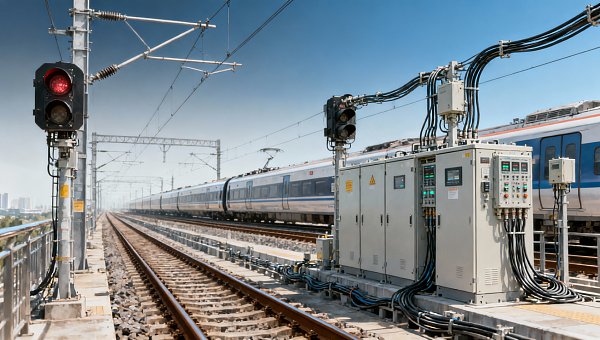
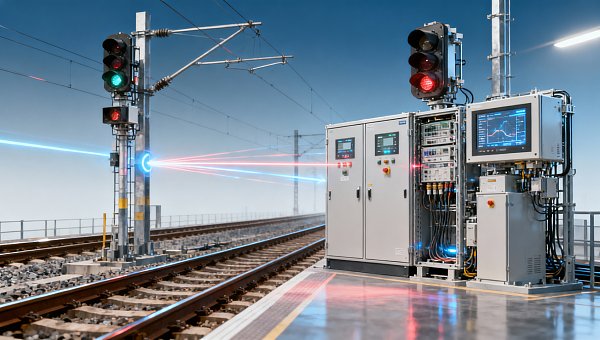
They usually connect sensors, onboard systems, signaling platforms, maintenance records, and engineering models.
Their value appears when they reduce failure risk, improve throughput, or support compliance evidence.
In rail and transit, this often means supporting condition-based maintenance, traffic management, inspection analytics, and energy optimization.
It also includes anomaly detection for traction power, track geometry, axle bearings, doors, pantographs, and signaling assets.
Mature rail AI solutions differ from pilot tools in one critical way.
They are designed for integration with safety processes, asset hierarchies, and long maintenance cycles.
They must also align with frameworks such as ISO/TS 22163, IEC 62278, and EN 50126.
Why the industry focus has shifted beyond pilot projects
Rail operators and infrastructure programs face pressure from multiple directions.
Asset age is rising in some networks, while capacity expectations continue to increase.
At the same time, decarbonization targets require better efficiency from traction, scheduling, and maintenance planning.
These conditions make scalable rail AI solutions more relevant than isolated innovation labs.
The shift is therefore practical, not fashionable.
Rail AI solutions are being judged against service punctuality, maintenance productivity, safety assurance, and total cost of ownership.
Core problems rail AI solutions can solve at scale
Predictive maintenance for high-value assets
One of the most mature rail AI solutions addresses asset failure before disruption occurs.
This includes motors, gearboxes, bearings, brake systems, doors, HVAC units, transformers, and overhead line components.
Models combine vibration, temperature, current, historical faults, and operating context.
The result is better intervention timing and fewer unnecessary replacements.
Track and infrastructure condition monitoring
Track maintenance often suffers from sparse inspection cycles and limited access windows.
Rail AI solutions can process geometry data, image streams, acoustic signals, and vehicle response patterns.
That helps identify corrugation, settlement, fastener issues, turnout degradation, and drainage-related anomalies earlier.
Earlier detection supports risk ranking and targeted possession planning.
Signaling and traffic management optimization
Scalable rail AI solutions can support dispatching decisions under disruption.
They analyze train position, dwell behavior, headway variation, route conflicts, and recovery options.
In CBTC or ETCS-related environments, AI can assist operational planning without replacing certified control logic.
The value lies in better flow, fewer cascading delays, and improved network resilience.
Energy and traction power efficiency
Energy optimization is moving from theory to daily operations.
Rail AI solutions can recommend eco-driving profiles, forecast substations loads, and optimize regenerative braking usage.
They also help detect power quality issues and abnormal consumption patterns.
This matters in high-speed rail, metro, and mixed-traffic corridors.
Automated visual inspection
Vision-based rail AI solutions can inspect pantographs, wheelsets, trackside equipment, tunnels, and station assets.
They reduce manual review loads and improve consistency across large networks.
However, accuracy only becomes valuable when linked to work orders, defect thresholds, and engineering acceptance criteria.
Business value and lifecycle significance
The strongest rail AI solutions create value across the asset lifecycle.
They influence design feedback, commissioning baselines, routine operations, renewals planning, and supplier performance evaluation.
This makes them relevant for comprehensive benchmarking environments such as G-RTI.
A useful evaluation lens includes the following outcomes:
- Lower unplanned service interruptions
- Higher maintenance labor productivity
- Better spare parts forecasting
- Improved asset life extension decisions
- More transparent compliance documentation
- Reduced energy waste and emissions intensity
The commercial significance is equally important.
Rail AI solutions can support tender qualification by proving data governance, interoperability readiness, and measurable performance indicators.
That becomes especially relevant in cross-regional projects connecting Asian supply capabilities with European, American, and Middle Eastern standards.
Typical application categories across rail systems
These categories show why rail AI solutions should be evaluated as an operating architecture, not a standalone dashboard.
Implementation considerations and common limits
Not every rail AI solution is ready for deployment at network scale.
Several conditions determine whether value can move beyond pilot status.
- Data quality must be stable across fleets, lines, and maintenance systems.
- Model outputs must map to engineering workflows and defect severity rules.
- Cybersecurity and access control must protect operational technology environments.
- Validation must reflect seasonal, geographic, and operational variability.
- Human oversight must remain clear for safety-related decisions.
A common failure point is focusing on model accuracy alone.
If alerts do not fit maintenance planning, the system creates noise instead of action.
Another issue is weak standard alignment.
For international programs, rail AI solutions should support traceability, configuration control, and evidence generation for audits and acceptance reviews.
Practical evaluation path for scalable adoption
A disciplined evaluation process helps separate credible rail AI solutions from attractive prototypes.
A practical sequence can include the following steps.
- Define the target bottleneck in measurable operational terms.
- Link the use case to a specific asset class and failure mode.
- Review data availability, labeling quality, and systems integration effort.
- Set success metrics such as false alarm rate, delay reduction, or energy savings.
- Check compatibility with standards, assurance processes, and lifecycle documentation.
- Plan transition from pilot site to multi-line or multi-fleet deployment.
This method supports clearer benchmarking and stronger procurement confidence.
It also aligns with the G-RTI approach of comparing digital and mechanical performance against international requirements.
Rail AI solutions can now solve more than pilot-stage questions.
They can address maintenance inefficiency, infrastructure risk, dispatch complexity, power waste, and compliance visibility.
The decisive factor is structured deployment supported by standards, data discipline, and operational integration.
For organizations benchmarking global mobility systems, the next step is to assess where rail AI solutions deliver repeatable value across real network conditions.
That is where technical benchmarking turns innovation into infrastructure performance.
Search News
Industry Portal
Hot Articles
Popular Tags
Recommended News
 May 19, 2026What rail European standards mean for product approvalRail European standards shape product approval from design to market entry. Learn how compliance, safety evidence, and documentation affect faster rail project acceptance.
 May 18, 2026How rail connectivity affects urban project delivery speedRail connectivity drives faster urban project delivery by improving logistics, approvals, and system integration. See how smarter network planning reduces delays and boosts execution confidence.
 May 17, 2026What rail AI solutions can solve beyond pilot projectsRail AI solutions move beyond pilots to cut failures, optimize maintenance, improve signaling, and reduce energy waste—see how scalable deployment delivers measurable rail performance.
 May 16, 2026Rail connectivity is no longer just about faster transfersRail connectivity now drives resilience, compliance, and lifecycle value—not just speed. Learn how project leaders can reduce risk and build future-ready rail systems.
 May 13, 2026Rail policy foresight and the risks of late signaling upgradesRail policy foresight reveals how delayed signaling upgrades can increase safety, interoperability, and lifecycle risks—learn how early alignment protects capacity, compliance, and investment value.
 May 11, 2026Rail technical standards that delay cross-border approvalsRail technical standards can delay cross-border rail approvals through gaps in signaling, EMC, fire safety, and documentation. Learn how benchmarking reduces compliance risk.
 May 09, 2026The hidden tradeoffs behind rail connectivity upgradesRail connectivity upgrades can cut travel time and congestion, but hidden costs in interoperability, maintenance, and resilience shape real value. Explore the tradeoffs before investing.
 May 07, 2026Why Rail Multi-Disciplinary Projects Slip at Interface HandoverRail multi-disciplinary projects often slip at interface handover. Discover the hidden causes, business risks, and practical fixes project leaders need to cut delays and rework.
 May 04, 2026Rail Connectivity Gaps That Quietly Reduce Network PerformanceRail connectivity gaps can quietly cut network performance, increase maintenance, and delay delivery. Learn how to spot hidden interface risks and build more resilient rail systems.
 May 02, 2026Rail Connectivity Problems That Expansion Alone Will Not FixRail connectivity issues do not end with new lines. Discover how signaling, maintenance, power, and interoperability shape reliable rail performance—and what operators can fix first.
 May 01, 2026Why Rail Technical Standards Still Delay Signal UpgradesRail technical standards still slow signal upgrades through fragmented rules, legacy interfaces, and approval delays. Learn the real project risks and how to reduce schedule overruns.
 Apr 29, 2026Why rail connectivity projects stall after the first phaseRail connectivity projects often stall after phase one due to funding gaps, fragmented governance, permits, and integration risks. Learn the real causes and how leaders can keep expansion moving.
 Apr 23, 2026Signaling systems integration fails for familiar reasonsRail regulatory frameworks and signaling systems integration often fail at CBTC, ETCS, rolling stock, and traction power interfaces. Learn how rail standards, predictive maintenance, and data transparency improve compliance and transit efficiency.
 Apr 23, 2026Signal flow problems often start with one bad interface mapRail signaling systems often fail from one bad interface map. Explore ETCS, CBTC, rolling stock, traction power, rail standards, and predictive maintenance insights for smarter procurement.

Quarterly Executive Summaries Delivered Directly.
Join 50,000+ industry leaders who receive our proprietary market analysis and policy outlooks before they hit the public library.