

Why rail data transparency now shapes safer signal upgrades
Dr. Alistair Thorne
Time
Click Count
As signal modernization accelerates across global rail networks, rail data transparency has become essential for quality and safety leaders. From component traceability to standards-based performance validation, transparent data helps teams reduce upgrade risks, verify compliance, and make faster, evidence-based decisions. It is now a practical foundation for safer signaling projects in complex, high-stakes transit environments.
Why does rail data transparency matter more during signal upgrades?
Signal upgrades are no longer isolated equipment swaps. They often involve software migration, interface validation, mixed fleets, legacy interlockings, and cross-border compliance requirements. In that environment, rail data transparency becomes a control mechanism for quality teams and safety managers.
When project data is fragmented across suppliers, EPC contractors, operators, and maintainers, risk hides in the gaps. A missing configuration record, an unclear revision history, or an undocumented test condition can delay approvals and increase operational exposure.
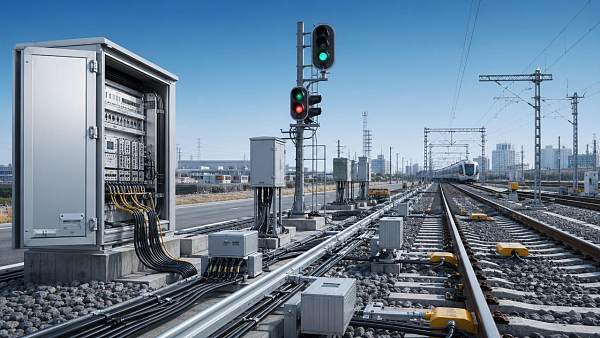
For signaling systems such as CBTC, ETCS, train detection, interlocking, and wayside communication, transparent data supports three urgent goals: proving technical fitness, protecting system safety, and maintaining procurement accountability.
- Quality control teams need traceable records for components, firmware, inspection results, and supplier changes.
- Safety managers need verifiable evidence that hazards, failure modes, and interface conditions were assessed under recognized standards.
- Procurement and project leaders need comparable benchmarks to judge whether a lower bid creates higher lifecycle risk.
This is where a specialized intelligence platform such as G-RTI adds value. Instead of treating rail data as a static document archive, G-RTI benchmarks mechanical, digital, and structural integrity across signaling, track, power, and rolling stock interfaces.
What changes when transparency is weak?
Weak transparency usually shows up as slow root-cause analysis, repeated factory acceptance test disputes, inconsistent configuration baselines, and uncertainty around whether equipment actually aligns with ISO/TS 22163, IEC 62278, or EN 50126 expectations.
In practice, that can mean longer approval cycles, more site rework, and a higher chance that a “compliant” package still creates integration problems once installed in live or near-live rail corridors.
Which data points should quality and safety teams verify first?
Not every dataset has equal risk weight. During signal modernization, the highest-value data is the information that proves identity, performance, compatibility, and compliance. Rail data transparency becomes actionable only when teams know what to prioritize.
The table below highlights the data categories that typically deserve early verification before procurement release, FAT, SAT, or commissioning approval.
The main lesson is simple: transparent data is not just documentation volume. It is the ability to connect each technical claim to a reliable source, a defined test condition, and a controlled revision status.
A practical verification sequence
- Confirm the system boundary: identify what belongs to signaling, telecom, traction power interface, and rolling stock interface.
- Lock the baseline: ensure all drawings, software versions, and test specifications point to the same approved release.
- Validate traceability: match critical parts and code versions to procurement, inspection, and test records.
- Check standards alignment: review whether evidence supports the required lifecycle and safety obligations.
- Escalate gaps early: unresolved data gaps should be treated as project risks, not paperwork issues.
How does transparent rail data improve procurement decisions?
Many signaling procurement failures begin before installation. The problem is not always poor hardware. Often, it is poor comparability between supplier submissions. Rail data transparency allows buyers to compare bids on evidence, not on claims.
For quality and safety leaders, the goal is not simply to approve a vendor. It is to understand whether a proposed system can pass validation, integrate with existing assets, and maintain reliability over the asset lifecycle.
The table below compares a transparent submission against a low-visibility submission from a procurement risk perspective.
Transparent submissions tend to look more demanding at first because they expose assumptions, limitations, and dependencies. Yet this visibility usually reduces total project friction and makes supplier accountability much stronger.
What procurement teams should ask before award
- Can the supplier provide revision-controlled test evidence for the exact configuration being offered?
- Are interface obligations with rolling stock, track circuits, telecom, and power systems explicitly listed?
- What happens if a sub-supplier changes a critical part or firmware branch during the project?
- Which acceptance documents are included in the base offer, and which are treated as change-order items?
Where do signal upgrade risks usually hide?
For safety managers, rail data transparency is most valuable where hidden conditions create unsafe assumptions. Modernization projects often combine old field assets with new digital layers. That mix creates blind spots unless data is complete and comparable.
Common risk zones in signaling modernization
- Legacy interface uncertainty: old interlockings or detection systems may not have full digital records, forcing teams to validate assumptions through additional testing.
- Configuration drift: software, firmware, and parameter sets may diverge between design, factory test, and site deployment.
- Cross-market compliance gaps: equipment suited for one region may still need additional documentation to satisfy European, American, or Middle Eastern requirements.
- Sub-supplier opacity: critical modules may be sourced through multiple tiers, making traceability harder when failures occur.
- Test condition mismatch: a pass result has limited value if ambient, load, electromagnetic, or interface conditions differ from real operation.
G-RTI is particularly relevant in these situations because its role extends beyond basic supplier discovery. Its benchmarking approach helps buyers and technical reviewers interpret whether claimed performance stands up across standards, operating environments, and supply chain realities.
Why cross-border projects need deeper transparency
A signaling package manufactured in Asia and deployed into a European or Middle Eastern project may be technically capable, but technical capability alone is not enough. Decision-makers need alignment between manufacturing data, certification logic, lifecycle documentation, and local acceptance expectations.
That is one of G-RTI’s strongest practical advantages: bridging manufacturing capacity with the stricter procurement, quality, and regulatory expectations of international rail markets.
How should teams evaluate standards, certification, and evidence quality?
Standards are often mentioned in bids, but naming a standard is not the same as proving conformity. Rail data transparency makes it easier to separate broad marketing language from usable evidence.
For signal upgrades, teams should focus on whether the evidence package supports lifecycle safety, quality consistency, and technical integrity under the required operating context.
A strong evidence package links test data, design decisions, and lifecycle controls. A weak package simply lists standards without showing how requirements were translated into verifiable project deliverables.
What implementation model works best for safer signal upgrades?
For most operators and contractors, the most effective model is not “collect everything later.” It is staged transparency. That means defining required data gates at bid review, design freeze, FAT, SAT, and commissioning.
Recommended data-gate approach
- Bid stage: compare scope boundaries, standards matrix, and critical interface assumptions.
- Design stage: freeze versions, architecture logic, hazard records, and traceability rules.
- Factory stage: verify component identity, test coverage, software baselines, and deviation records.
- Site stage: confirm installation alignment, configuration integrity, and interface readiness.
- Commissioning stage: close residual actions and secure the final evidence package for operations and maintenance.
This staged model helps quality and safety leaders avoid the most expensive mistake in rail modernization: discovering unresolved data issues only when the possession window is closing and site changes become operationally disruptive.
FAQ: practical questions about rail data transparency
How does rail data transparency reduce safety risk in signaling projects?
It reduces safety risk by making design assumptions, component identity, software versions, test conditions, and change histories visible. That visibility improves hazard review, strengthens verification, and lowers the chance of hidden incompatibilities entering service.
Which projects benefit most from rail data transparency?
The highest benefit appears in upgrades involving legacy assets, multiple suppliers, cross-border procurement, CBTC or ETCS migration, and any project where rolling stock, signaling, telecom, and power systems must work as one controlled environment.
What is the most common mistake during supplier evaluation?
A common mistake is accepting generic compliance claims without checking whether the evidence applies to the exact offered configuration. Another is focusing on unit price before confirming traceability, baseline control, and interface responsibility.
Can transparent data help under tight delivery schedules?
Yes. It usually shortens clarification cycles, supports faster approvals, and reduces late-stage rework. Tight delivery programs benefit when data requirements are defined early and linked to milestone gates rather than requested reactively.
Why choose us for rail data transparency and signal upgrade benchmarking?
G-RTI supports quality control and safety management teams that need more than surface-level market information. Our strength lies in translating technical data into procurement judgment, compliance visibility, and upgrade risk reduction across high-speed rail, metro, signaling, track, and traction power domains.
We help decision-makers assess supplier evidence, compare technical submissions, review standards alignment, and identify hidden integration risks across global supply chains. This is especially useful when projects connect Asian manufacturing sources with the stricter documentation and acceptance expectations of Europe, the Americas, and the Middle East.
- Request support for parameter confirmation on signaling, communication, track interface, or traction-related equipment.
- Discuss product and supplier selection based on traceability, lifecycle evidence, and project compatibility.
- Review delivery timelines, documentation readiness, and risk points before procurement award.
- Clarify certification expectations, standards mapping, and evidence gaps for export or cross-border deployment.
- Explore customized benchmarking for tenders, upgrade packages, or technical due diligence.
If your team is preparing a signal upgrade, vendor shortlist, or compliance review, contact us with your target application, project stage, required standards, expected delivery window, and documentation concerns. We can help structure the evaluation around real rail data transparency needs rather than assumptions.
Search News
Industry Portal
Hot Articles

Popular Tags
Recommended News
 Jul 09, 2026Rail System Integrity Worldwide: Which Standards and Failure Risks Matter Most?Rail system integrity worldwide explained: discover the key standards, top failure risks, and practical assurance priorities shaping safer, more reliable global rail projects.
 Jun 14, 2026Printed Circuit Board Assembly Process Explained: From SMT to Testing and Rework ControlPrinted circuit board assembly explained from SMT and reflow to testing, traceability, and rework control. Learn how strong process discipline improves reliability and supplier confidence.
 Jun 13, 2026How to Compare a GSM-R Equipment Manufacturer for Metro Projects: Compliance, Integration, and Lifecycle CostCompare a gsm-r equipment manufacturer for metro projects with confidence. Learn how to assess compliance, integration strength, and lifecycle cost before you buy.
![]() Jun 09, 2026How to Choose Relay Modules for Control Panels: Voltage, Load Type, and Isolation BasicsRelaymodules selection made simple: learn how to match control voltage, load type, and isolation for safer control panels, longer service life, and more reliable switching.
Jun 09, 2026How to Choose Relay Modules for Control Panels: Voltage, Load Type, and Isolation BasicsRelaymodules selection made simple: learn how to match control voltage, load type, and isolation for safer control panels, longer service life, and more reliable switching. Jun 03, 2026PCB Dielectric Constant Benchmark: How to Compare Materials for RF BoardsPCB dielectric constant benchmark guide for comparing RF board materials, Dk tolerance, loss, and supplier data—make confident, standards-aware laminate decisions.
 May 29, 2026Can wholesale ic chip components pass traceability checks?wholesale ic chip components can pass traceability checks when sourcing, lot records, testing, and compliance evidence align. Learn how to reduce risk in critical rail applications.
 May 27, 2026Why rail data transparency now shapes safer signal upgradesRail data transparency is now critical to safer signal upgrades. Learn how traceability, compliance evidence, and smarter benchmarking reduce risk, speed approvals, and improve procurement decisions.
 May 26, 2026How rail technical specifications shape safer system choicesRail technical specifications shape safer procurement decisions by reducing compliance, integration, and lifecycle risk. Learn how to benchmark suppliers and choose rail systems with confidence.
 May 19, 2026What rail European standards mean for product approvalRail European standards shape product approval from design to market entry. Learn how compliance, safety evidence, and documentation affect faster rail project acceptance.
 May 18, 2026How rail connectivity affects urban project delivery speedRail connectivity drives faster urban project delivery by improving logistics, approvals, and system integration. See how smarter network planning reduces delays and boosts execution confidence.
 May 17, 2026What rail AI solutions can solve beyond pilot projectsRail AI solutions move beyond pilots to cut failures, optimize maintenance, improve signaling, and reduce energy waste—see how scalable deployment delivers measurable rail performance.
 May 16, 2026Rail connectivity is no longer just about faster transfersRail connectivity now drives resilience, compliance, and lifecycle value—not just speed. Learn how project leaders can reduce risk and build future-ready rail systems.
 May 13, 2026Rail policy foresight and the risks of late signaling upgradesRail policy foresight reveals how delayed signaling upgrades can increase safety, interoperability, and lifecycle risks—learn how early alignment protects capacity, compliance, and investment value.
 May 11, 2026Rail technical standards that delay cross-border approvalsRail technical standards can delay cross-border rail approvals through gaps in signaling, EMC, fire safety, and documentation. Learn how benchmarking reduces compliance risk.
 May 09, 2026The hidden tradeoffs behind rail connectivity upgradesRail connectivity upgrades can cut travel time and congestion, but hidden costs in interoperability, maintenance, and resilience shape real value. Explore the tradeoffs before investing.
 May 07, 2026Why Rail Multi-Disciplinary Projects Slip at Interface HandoverRail multi-disciplinary projects often slip at interface handover. Discover the hidden causes, business risks, and practical fixes project leaders need to cut delays and rework.
 May 04, 2026Rail Connectivity Gaps That Quietly Reduce Network PerformanceRail connectivity gaps can quietly cut network performance, increase maintenance, and delay delivery. Learn how to spot hidden interface risks and build more resilient rail systems.
 May 02, 2026Rail Connectivity Problems That Expansion Alone Will Not FixRail connectivity issues do not end with new lines. Discover how signaling, maintenance, power, and interoperability shape reliable rail performance—and what operators can fix first.
 May 01, 2026Why Rail Technical Standards Still Delay Signal UpgradesRail technical standards still slow signal upgrades through fragmented rules, legacy interfaces, and approval delays. Learn the real project risks and how to reduce schedule overruns.
 Apr 29, 2026Why rail connectivity projects stall after the first phaseRail connectivity projects often stall after phase one due to funding gaps, fragmented governance, permits, and integration risks. Learn the real causes and how leaders can keep expansion moving.
 Apr 23, 2026Signaling systems integration fails for familiar reasonsRail regulatory frameworks and signaling systems integration often fail at CBTC, ETCS, rolling stock, and traction power interfaces. Learn how rail standards, predictive maintenance, and data transparency improve compliance and transit efficiency.
 Apr 23, 2026Signal flow problems often start with one bad interface mapRail signaling systems often fail from one bad interface map. Explore ETCS, CBTC, rolling stock, traction power, rail standards, and predictive maintenance insights for smarter procurement.













Quarterly Executive Summaries Delivered Directly.
Join 50,000+ industry leaders who receive our proprietary market analysis and policy outlooks before they hit the public library.