

Why Rail Technical Standards Still Delay Signal Upgrades
Dr. Alistair Thorne
Time
Click Count
Rail signal upgrades are delayed less by technology gaps than by the way rail technical standards are interpreted, layered, and enforced across different networks. For project managers and engineering leads, the real issue is not whether a new interlocking, CBTC package, ETCS overlay, or communications backbone can work. The issue is whether it can be approved, integrated, maintained, and contracted without triggering redesign cycles, interface disputes, or certification delays.
The core search intent behind this topic is practical: decision-makers want to understand why signaling modernization still moves slowly even when capable suppliers and mature solutions exist. They are looking for root causes, not abstract standards theory. They also want to know which risks sit inside procurement documents, system interfaces, acceptance processes, and legacy migration plans.
For project leaders, the biggest concerns are usually predictable. Will standards fragmentation expand scope after contract award? Will a regional requirement override an international baseline? Will legacy assets force custom engineering? Will safety approval extend beyond the planned commissioning window? And most importantly, how can these risks be identified early enough to protect schedule, budget, and operational continuity?
The most useful way to answer those concerns is to focus on where standards create delay in real projects: specification writing, cross-border compliance, subsystem integration, independent safety assessment, testing strategy, cybersecurity alignment, and lifecycle maintenance obligations. Broad definitions of standards are less useful than a practical view of how misalignment shows up in project execution.
Why signaling upgrades stall even when the technology is already available
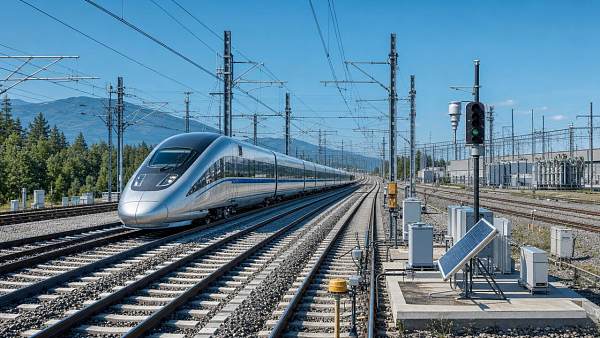
In most rail modernization programs, the technology stack is not the bottleneck. Mature signaling solutions already exist for automatic train protection, interlocking, train control, onboard communication, and traffic management. Delays happen because projects must prove that these solutions fit a very specific operating environment shaped by national regulations, local rules, existing asset conditions, and operator preferences.
That proof burden is where rail technical standards become a delivery challenge. International frameworks such as EN 50126, IEC 62278, or related safety and RAMS methodologies provide a strong baseline, but they do not erase local requirements. A project can be compliant in principle and still face long approval cycles because a metro authority, infrastructure manager, or transport ministry requires additional interpretations, test evidence, or interfaces that were not fully defined at tender stage.
For project managers, this means signaling upgrades often fail to move at the speed of software or hardware development. They move at the speed of standard harmonization, documentation quality, and stakeholder approval. In practice, that is much slower.
Where rail technical standards create hidden delay in project delivery
The first delay point is specification ambiguity. Many tenders reference international standards, national codes, operator standards, and legacy design rules at the same time. If these references are not prioritized clearly, bidders make different assumptions. The winning contractor may then discover that the employer’s interpretation is more restrictive than the submitted design basis, leading to variation orders, redesign, or dispute.
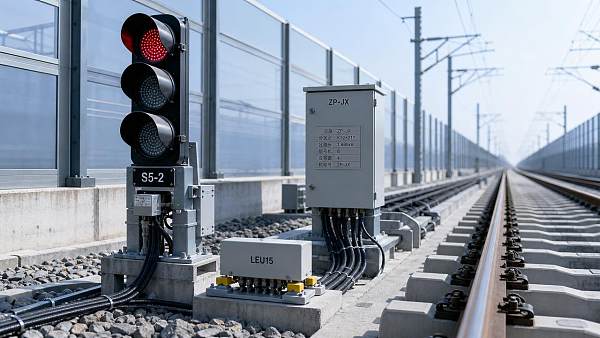
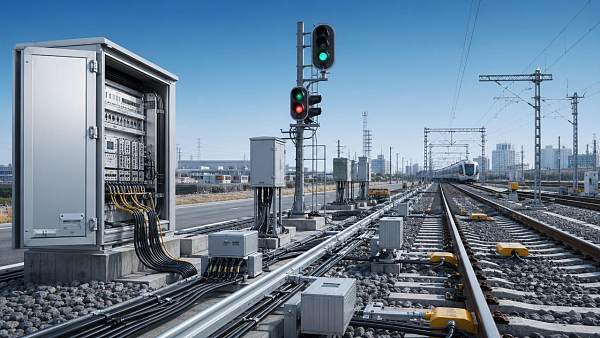
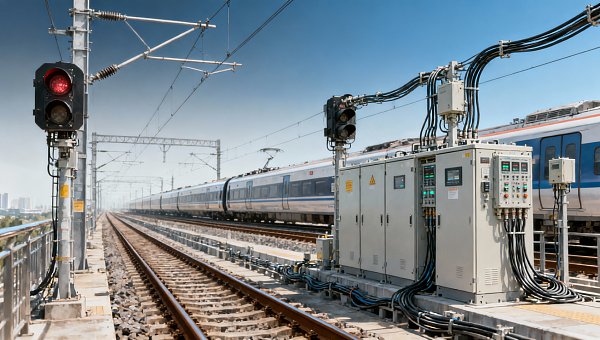
The second delay point is interface ownership. Signaling upgrades rarely stand alone. They interact with rolling stock, telecom, power supply, platform screen doors, SCADA, axle counters, track circuits, OCC software, and maintenance tools. Each subsystem may be governed by different standards or by different generations of standards. If interface responsibilities are not mapped to a single compliance matrix, the project can spend months resolving who must adapt.
The third delay point is safety assurance. Signaling systems operate in a high-integrity environment, so compliance is not just a checklist. Hazard logs, safety cases, software validation, fail-safe architecture, and independent assessment all require structured evidence. If the selected supplier’s product architecture aligns with one market but not another, the documentation package may need to be rebuilt for local approval. That adds time even if the product itself is technically sound.
The fourth delay point is legacy migration. Many networks are upgrading in phases while maintaining active service. Standards written for greenfield systems do not always translate smoothly into brownfield conditions. Mixed fleets, old relay interlockings, non-standard cable routes, undocumented modifications, and regional maintenance practices create exceptions that standards do not solve automatically. Those exceptions become engineering delays.
Why regional fragmentation remains a major problem
One of the biggest reasons rail technical standards still delay signal upgrades is that rail is not a globally standardized market in the same way as some other infrastructure sectors. Europe, North America, the Middle East, and Asia all borrow from common engineering principles, yet each market applies them differently through approval agencies, operator rulebooks, and procurement habits.
Even inside Europe, where interoperability has advanced significantly, practical differences remain in national technical rules, route-specific operating conditions, and legacy signaling migration paths. Outside Europe, the variation can be greater. A system configured for ETCS, CBTC, or communications-based train control in one jurisdiction may require substantial adaptation elsewhere due to local fail-safe logic, radio spectrum rules, cybersecurity requirements, or wayside equipment preferences.
For EPC contractors and project owners, this fragmentation affects more than engineering. It changes bid strategy, supplier eligibility, lead times, spare parts logic, and the acceptable level of product customization. If a signaling package has to be heavily localized, its cost and delivery risk can increase sharply, even when the base platform is mature.
This is why benchmark-driven planning matters. Decision-makers need to know not only whether a solution complies with headline standards, but whether it has proven compliance in a comparable regulatory environment. That distinction often determines whether a project moves efficiently or gets trapped in repeated technical clarifications.
How legacy systems make standards harder to apply
Legacy infrastructure is where formal compliance meets operational reality. Many rail networks still run a combination of relay-based signaling, early electronic interlockings, proprietary onboard systems, and older telecom architecture. The challenge is not simply replacing obsolete equipment. It is doing so without disrupting service, invalidating existing certifications, or creating unsafe transition states.
Standards often describe what a compliant end-state should look like, but they do not remove the complexity of getting there from a mixed-asset baseline. A project may have to maintain compatibility with old train fleets for years. It may need temporary interfaces, shadow operation modes, or phased commissioning windows. Each transitional arrangement adds design effort and can trigger fresh compliance checks.
There is also a documentation issue. Older assets may not have complete digital records, verified wiring diagrams, or reliable configuration histories. When baseline conditions are uncertain, it becomes harder to prove that an upgrade fully meets the required technical and safety standard. Engineers then spend time validating the existing system before they can even finalize the new one.
For project leaders, the lesson is straightforward: legacy complexity should be treated as a standards risk, not just an engineering inconvenience. If it is discovered late, it will almost certainly affect milestones.
Why procurement documents often underestimate standards risk
Many delays start long before detailed design. They begin in the tender package. Employers often state that systems must comply with a broad set of international and local standards, but they do not always define how conflicts between those standards should be resolved. Nor do they always specify which party carries the burden of demonstrating compatibility with existing assets, third-party subsystems, or future upgrade paths.
This creates a familiar problem in rail procurement: apparent competition at bid stage, followed by clarification-heavy execution. Suppliers may price compliance based on standard product assumptions, while the asset owner expects project-specific adaptation that is not fully visible in the contract baseline. Once delivery starts, the gap between those assumptions becomes a schedule issue.
Another common weakness is insufficient attention to verification and validation planning. A specification may define performance outcomes but not the full chain of evidence needed for approval. If testing, simulation, field trial requirements, or independent assessor expectations are vague, the project can enter execution without a realistic certification roadmap.
For managers overseeing major signaling work, the practical answer is to strengthen procurement around compliance hierarchy, interface matrices, approval responsibilities, and evidence deliverables. The more precise the tender package is about standards application, the lower the risk of downstream delay.
What project managers should examine before approving a signaling strategy
Before moving forward, project managers should ask whether the proposed signaling architecture is aligned with the actual approval environment, not just with the desired technology roadmap. A solution that looks efficient on paper can still become high-risk if its certification path depends on local waivers, custom interfaces, or unresolved operational rule changes.
One useful test is to review standards in four layers. First, the international framework: what baseline standards govern safety, RAMS, software, EMC, cybersecurity, and system integration? Second, the regional or national layer: what mandatory technical rules or agency approvals apply? Third, the operator layer: what network-specific design and maintenance rules exist? Fourth, the legacy layer: what existing assets impose practical constraints?
Another key review point is product maturity in comparable markets. Has the supplier delivered this configuration before, or only a similar one? Has the system passed independent safety assessment under a similar authority? Are the interfaces already proven, or will the project be the first implementation? These questions matter more than marketing claims about advanced functionality.
Managers should also review lifecycle implications. A standards-compliant signaling system is not valuable if spare parts, software support, cybersecurity patching, and technical documentation are difficult to sustain after handover. Upgrade success should be measured across the asset lifecycle, not only at commissioning.
How to reduce delay caused by rail technical standards
Projects cannot eliminate standards complexity, but they can control it earlier. The first step is to create a standards governance model at concept stage. That means identifying all applicable standards, ranking them by authority, assigning owners for each compliance area, and documenting where interpretation gaps exist. This should happen before final procurement documents are issued, not after contract award.
The second step is to build a live compliance matrix tied to interfaces, hazards, and deliverables. Instead of treating standards as a static appendix, high-performing projects map each requirement to design evidence, test responsibility, and approval status. That gives project leadership a clearer view of whether delay is emerging from engineering, documentation, or external review.
The third step is early engagement with assessors, operators, and maintainers. Too many projects focus on supplier selection while postponing discussion with the parties who will approve, operate, and maintain the system. In signaling, late operational objections can be just as damaging as technical non-compliance.
The fourth step is realistic staging for brownfield migration. If service continuity, temporary interfaces, and fleet coexistence are required, they should be treated as core scope. Compression of migration planning usually leads to rework. A slower but well-defined transition plan is often faster overall than an aggressive plan that triggers repeated redesign.
The fifth step is using benchmark data from comparable projects. Understanding how similar networks handled standards interpretation, safety approval, and subsystem integration can materially improve schedule realism. This is especially important for buyers sourcing from global suppliers across different regulatory cultures.
What a better standards strategy looks like for future rail upgrades
The most successful signaling programs treat rail technical standards as a strategic delivery discipline, not a compliance afterthought. They recognize that standards are where engineering, procurement, operations, and regulation meet. That is why a standards strategy must be cross-functional from the start.
For organizations delivering large transit projects, this means shifting from reactive compliance to proactive harmonization. Instead of asking whether a product is certified somewhere, they ask whether it is certifiable here. Instead of assuming international standards guarantee local approval, they examine the full pathway from specification to handover. And instead of judging bids mainly on capital cost, they evaluate the cost of localization, assurance, integration, and long-term maintainability.
This approach is increasingly important as rail networks pursue digitalization, higher capacity, and lower lifecycle emissions. New signaling architectures promise better headways, stronger resilience, and richer operational data. But the value only materializes if projects can move through approval and integration without excessive delay.
That is where intelligence-led benchmarking becomes a practical advantage. When project owners and EPC teams can compare product maturity, standards alignment, and market-specific approval experience, they make better procurement and design decisions. In a global supply environment, that visibility reduces uncertainty.
Conclusion
Signal upgrades are still delayed because standards remain fragmented across jurisdictions, operators, asset generations, and approval systems. The technology is often ready. The project environment is not. For project managers and engineering leads, the real challenge is not choosing modern signaling in theory, but delivering it within a compliance landscape that is rarely fully harmonized.
The clearest path forward is to treat standards as a front-end project control issue. Define the compliance hierarchy early, map interfaces rigorously, test migration assumptions against legacy realities, and demand evidence of success in comparable regulatory contexts. When rail technical standards are managed this way, signaling modernization becomes more predictable, safer to implement, and far more likely to stay on schedule.
Search News
Industry Portal
Hot Articles

Popular Tags
Recommended News
 Jul 12, 2026High-Speed Rail Technology: Key Systems, Performance Limits, and Upgrade PrioritiesHigh-speed rail technology explained: explore core systems, real performance limits, and upgrade priorities to improve safety, capacity, efficiency, and long-term rail investment decisions.
 Jul 09, 2026Rail System Integrity Worldwide: Which Standards and Failure Risks Matter Most?Rail system integrity worldwide explained: discover the key standards, top failure risks, and practical assurance priorities shaping safer, more reliable global rail projects.
 Jun 14, 2026Printed Circuit Board Assembly Process Explained: From SMT to Testing and Rework ControlPrinted circuit board assembly explained from SMT and reflow to testing, traceability, and rework control. Learn how strong process discipline improves reliability and supplier confidence.
 Jun 13, 2026How to Compare a GSM-R Equipment Manufacturer for Metro Projects: Compliance, Integration, and Lifecycle CostCompare a gsm-r equipment manufacturer for metro projects with confidence. Learn how to assess compliance, integration strength, and lifecycle cost before you buy.
![]() Jun 09, 2026How to Choose Relay Modules for Control Panels: Voltage, Load Type, and Isolation BasicsRelaymodules selection made simple: learn how to match control voltage, load type, and isolation for safer control panels, longer service life, and more reliable switching.
Jun 09, 2026How to Choose Relay Modules for Control Panels: Voltage, Load Type, and Isolation BasicsRelaymodules selection made simple: learn how to match control voltage, load type, and isolation for safer control panels, longer service life, and more reliable switching. Jun 03, 2026PCB Dielectric Constant Benchmark: How to Compare Materials for RF BoardsPCB dielectric constant benchmark guide for comparing RF board materials, Dk tolerance, loss, and supplier data—make confident, standards-aware laminate decisions.
 May 29, 2026Can wholesale ic chip components pass traceability checks?wholesale ic chip components can pass traceability checks when sourcing, lot records, testing, and compliance evidence align. Learn how to reduce risk in critical rail applications.
 May 27, 2026Why rail data transparency now shapes safer signal upgradesRail data transparency is now critical to safer signal upgrades. Learn how traceability, compliance evidence, and smarter benchmarking reduce risk, speed approvals, and improve procurement decisions.
 May 26, 2026How rail technical specifications shape safer system choicesRail technical specifications shape safer procurement decisions by reducing compliance, integration, and lifecycle risk. Learn how to benchmark suppliers and choose rail systems with confidence.
 May 19, 2026What rail European standards mean for product approvalRail European standards shape product approval from design to market entry. Learn how compliance, safety evidence, and documentation affect faster rail project acceptance.
 May 18, 2026How rail connectivity affects urban project delivery speedRail connectivity drives faster urban project delivery by improving logistics, approvals, and system integration. See how smarter network planning reduces delays and boosts execution confidence.
 May 17, 2026What rail AI solutions can solve beyond pilot projectsRail AI solutions move beyond pilots to cut failures, optimize maintenance, improve signaling, and reduce energy waste—see how scalable deployment delivers measurable rail performance.
 May 16, 2026Rail connectivity is no longer just about faster transfersRail connectivity now drives resilience, compliance, and lifecycle value—not just speed. Learn how project leaders can reduce risk and build future-ready rail systems.
 May 13, 2026Rail policy foresight and the risks of late signaling upgradesRail policy foresight reveals how delayed signaling upgrades can increase safety, interoperability, and lifecycle risks—learn how early alignment protects capacity, compliance, and investment value.
 May 11, 2026Rail technical standards that delay cross-border approvalsRail technical standards can delay cross-border rail approvals through gaps in signaling, EMC, fire safety, and documentation. Learn how benchmarking reduces compliance risk.
 May 09, 2026The hidden tradeoffs behind rail connectivity upgradesRail connectivity upgrades can cut travel time and congestion, but hidden costs in interoperability, maintenance, and resilience shape real value. Explore the tradeoffs before investing.
 May 07, 2026Why Rail Multi-Disciplinary Projects Slip at Interface HandoverRail multi-disciplinary projects often slip at interface handover. Discover the hidden causes, business risks, and practical fixes project leaders need to cut delays and rework.
 May 04, 2026Rail Connectivity Gaps That Quietly Reduce Network PerformanceRail connectivity gaps can quietly cut network performance, increase maintenance, and delay delivery. Learn how to spot hidden interface risks and build more resilient rail systems.
 May 02, 2026Rail Connectivity Problems That Expansion Alone Will Not FixRail connectivity issues do not end with new lines. Discover how signaling, maintenance, power, and interoperability shape reliable rail performance—and what operators can fix first.
 May 01, 2026Why Rail Technical Standards Still Delay Signal UpgradesRail technical standards still slow signal upgrades through fragmented rules, legacy interfaces, and approval delays. Learn the real project risks and how to reduce schedule overruns.
 Apr 29, 2026Why rail connectivity projects stall after the first phaseRail connectivity projects often stall after phase one due to funding gaps, fragmented governance, permits, and integration risks. Learn the real causes and how leaders can keep expansion moving.
 Apr 23, 2026Signaling systems integration fails for familiar reasonsRail regulatory frameworks and signaling systems integration often fail at CBTC, ETCS, rolling stock, and traction power interfaces. Learn how rail standards, predictive maintenance, and data transparency improve compliance and transit efficiency.
 Apr 23, 2026Signal flow problems often start with one bad interface mapRail signaling systems often fail from one bad interface map. Explore ETCS, CBTC, rolling stock, traction power, rail standards, and predictive maintenance insights for smarter procurement.

















Quarterly Executive Summaries Delivered Directly.
Join 50,000+ industry leaders who receive our proprietary market analysis and policy outlooks before they hit the public library.