

What rail carbon neutrality means for future investment
Dr. Alistair Thorne
Time
Click Count
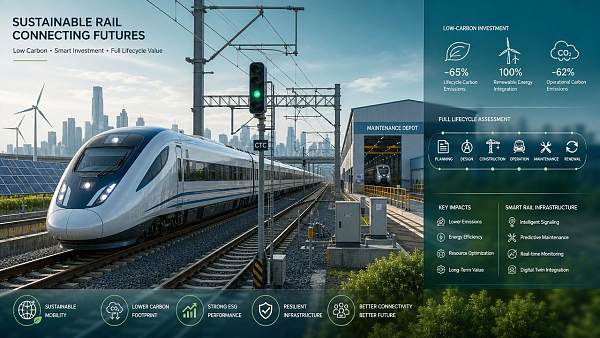
As rail networks become central to resilient, low-carbon economies, rail carbon neutrality is reshaping how long-term capital is judged. Investment decisions now extend beyond capacity, speed, and safety. They increasingly depend on verified emissions data, standards alignment, energy efficiency, and lifecycle value across rolling stock, signaling, traction power, and maintenance systems.
Why rail carbon neutrality now requires a checklist-based investment view
Rail has a structural advantage over road and air, yet not every rail asset is automatically low carbon. Construction materials, grid intensity, fleet efficiency, maintenance cycles, and digital control systems all influence total emissions.
That is why rail carbon neutrality should be assessed through a practical checklist. A list-based approach reduces blind spots, supports cross-border comparability, and helps capital flow toward assets that remain compliant and efficient over decades.
For complex programs, especially international rail projects, a checklist also creates a shared language between engineering, finance, compliance, and supply chain evaluation. This is critical when technical performance and carbon performance must be proven together.
Core checklist for evaluating future investment under rail carbon neutrality
- Map full lifecycle emissions across design, raw materials, manufacturing, transport, operation, maintenance, refurbishment, and end-of-life recovery before comparing bids or technologies.
- Verify electricity assumptions by region, because traction power supplied from carbon-intensive grids can weaken the climate case of otherwise efficient rail systems.
- Benchmark rolling stock energy performance using duty cycle data, passenger load profiles, regenerative braking recovery, auxiliary consumption, and traction motor efficiency.
- Check signaling and digital control impacts, since CBTC, ETCS, and predictive traffic management can improve headways, reduce idle time, and lower energy waste.
- Audit infrastructure materials, especially steel, cement, ballast, sleepers, and cable systems, because embodied carbon can dominate early-stage project emissions.
- Require internationally recognized standards evidence, including ISO/TS 22163, IEC 62278, and EN 50126, to connect carbon claims with quality and operational integrity.
- Examine supplier transparency, including plant-level energy sources, Scope 1 and Scope 2 disclosures, recycled material ratios, and traceable manufacturing records.
- Model maintenance emissions by asset class, because wheelsets, bogies, track renewal, power electronics, and HVAC servicing affect long-term carbon intensity.
- Assess interoperability and retrofit potential, since assets that integrate with future digital upgrades often avoid carbon-heavy replacement cycles later.
- Price carbon policy exposure into financial models, including ETS effects, disclosure mandates, green taxonomy rules, and public tender decarbonization requirements.
- Compare resilience outcomes alongside emissions, because climate-adapted rail systems can reduce disruption, preserve utilization, and protect long-term investment returns.
- Track measurable KPIs from contract award onward, using energy per seat-kilometer, emissions per train-kilometer, availability, and maintenance-related energy loss.
How rail carbon neutrality changes investment across different rail scenarios
High-speed rail systems
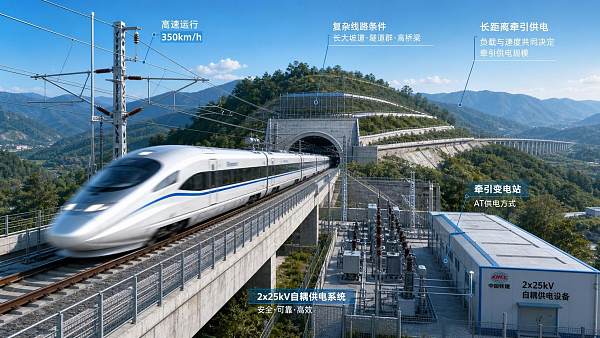
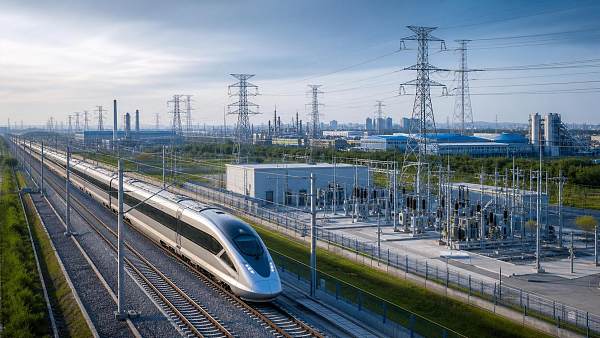
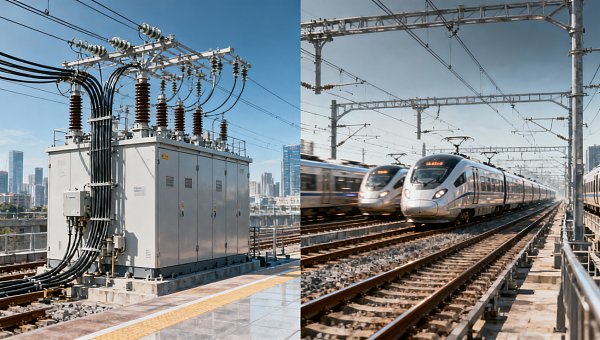
In high-speed corridors, rail carbon neutrality depends on more than train efficiency. Aerodynamics, traction package design, power conversion losses, and substation performance all shape operational emissions.
Civil works matter just as much. Tunnels, viaducts, and large station structures can create major embodied carbon loads. Future investment should therefore weigh line speed benefits against infrastructure carbon intensity and expected ridership.
Urban metro and transit
Metro projects often deliver strong decarbonization outcomes through modal shift, but only when energy use is tightly managed. Ventilation, platform systems, depot operations, and station HVAC can erode gains if ignored.
For urban networks, rail carbon neutrality should include timetable optimization, regenerative braking capture, occupancy patterns, and integration with renewable-powered city grids.
Signaling and communications upgrades
Digital rail is often underestimated in carbon planning. Yet modern signaling can reduce dwell variability, smooth acceleration, and improve line capacity without carbon-heavy physical expansion.
That makes CBTC and ETCS investments important to rail carbon neutrality. Their value is not only safety and throughput, but also system-wide energy optimization and longer asset productivity.
Track infrastructure and maintenance
Track assets are long-lived, which means small design choices have cumulative carbon consequences. Rail profile durability, sleeper material, tamping intervals, and ballast strategy affect both emissions and cost.
Predictive maintenance platforms strengthen rail carbon neutrality by extending service life, reducing emergency interventions, and lowering unnecessary component replacement.
Common blind spots that weaken rail carbon neutrality claims
Assuming rail is low carbon by default
This assumption hides major differences between projects. A poorly utilized line or carbon-intensive power source can significantly reduce emissions benefits.
Focusing only on operational energy
Embodied carbon from steel, concrete, and electromechanical systems can dominate early project stages. Ignoring those inputs distorts investment comparisons.
Accepting generic supplier sustainability claims
Without traceable production data, carbon claims remain weak. Evidence should link emissions reporting to specific factories, components, and process controls.
Ignoring retrofit pathways
Assets that cannot accept future digital, traction, or power upgrades may lock in higher emissions and force earlier replacement.
Separating compliance from engineering review
Carbon reporting without technical validation creates risk. Durable rail carbon neutrality depends on engineering evidence, not disclosure language alone.
Practical execution steps for stronger future investment decisions
- Build one evaluation matrix that combines capex, lifecycle carbon, energy intensity, standards compliance, and maintenance burden.
- Use scenario modeling for grid decarbonization, ridership growth, and retrofit timing before finalizing long-horizon investment cases.
- Request asset-level data instead of corporate averages when reviewing traction systems, bogies, signaling equipment, and power supply components.
- Tie contract milestones to verified emissions and efficiency KPIs, not only delivery schedules and technical acceptance tests.
- Reassess carbon assumptions after commissioning, because operating conditions often differ from procurement-stage forecasts.
Summary and next action
Rail carbon neutrality is no longer a secondary reporting topic. It is becoming a core filter for infrastructure quality, regulatory durability, and long-term asset value.
The strongest future investments will be those supported by measurable lifecycle evidence, interoperable engineering, transparent supply chains, and credible decarbonization pathways. In practice, that means evaluating every major rail decision through a disciplined checklist rather than broad sustainability assumptions.
Start with a baseline review of lifecycle emissions, energy performance, and standards-backed technical data across rolling stock, signaling, track, and traction power. From there, compare alternatives using the same carbon and resilience metrics. That is the most reliable route to investment decisions aligned with real rail carbon neutrality outcomes.
Search News
Industry Portal
Hot Articles
Popular Tags
Recommended News
 Aug 10, 2026How Is Traction Power Sized for High Speed Rail Speed, Load, and Route Demands?Traction power for high speed rail starts with timetable, load, and route demands—not just top speed. Learn how engineers size substations, margins, and peak capacity for reliable performance.
 Jul 29, 2026Railway Circuit Breaker Wholesale: How Buyers Compare Suppliers, Specs, and CostRailway circuit breaker wholesale buyers compare more than price. Learn how to assess suppliers, certifications, specs, lead times, and total cost to choose reliable rail protection solutions.
![]() Jul 06, 2026How to Evaluate a Railway Transformer OEM: Certifications, Testing, and Supply CapacityRailway transformer OEM selection goes beyond price. Learn how to assess certifications, testing, and supply capacity to reduce project risk and choose a reliable partner.
Jul 06, 2026How to Evaluate a Railway Transformer OEM: Certifications, Testing, and Supply CapacityRailway transformer OEM selection goes beyond price. Learn how to assess certifications, testing, and supply capacity to reduce project risk and choose a reliable partner. Jul 05, 2026What to Check Before Comparing Traction Power Suppliers for Rail and Metro ProjectsTraction power suppliers should be compared on compliance, integration, reliability, and lifecycle cost—not price alone. Learn the key checks before selecting the right rail or metro partner.
 Jul 03, 2026How to Choose a Medical Air Compressor Supplier for Hospitals and Dental ClinicsMedical air compressor supplier selection starts with compliance, air purity, uptime, and service support. Learn how hospitals and dental clinics can reduce risk and choose with confidence.
 Jun 23, 2026DC Chargers Selection Guide: Power Levels, Connector Types, and Installation NeedsDC Chargers selection guide covering power levels, connector types, and installation needs. Learn how to match infrastructure, compliance, and uptime goals for smarter deployment.
 Jun 18, 2026High Speed Rail Power Demand 2026: Grid Load Drivers, Substation Needs, and Planning RisksHigh speed rail power demand 2026 is reshaping rail planning. Explore grid load drivers, substation bottlenecks, and key risks to avoid costly delays and underbuilt power capacity.
 Jun 14, 2026How to Select Industrial Pumps: Flow Rate, Head, Fluid Type, and Maintenance FactorsIndustrial pumps selection starts with the right duty point. Learn how flow rate, head, fluid type, and maintenance factors affect performance, cost, and supplier choice.
 Jun 10, 2026Radiators for Rail Power Systems: How to Compare Types, Capacity, and Maintenance NeedsRadiators for rail power systems compared: explore types, cooling capacity, and maintenance needs to choose reliable, cost-efficient solutions for demanding rail applications.
![]() Jun 09, 2026ESS for Rail Power Systems: Key Sizing Factors, Duty Cycles, and Integration LimitsESS for rail power systems: learn the key sizing factors, duty cycles, and integration limits that shape performance, lifecycle value, and smarter project decisions.
Jun 09, 2026ESS for Rail Power Systems: Key Sizing Factors, Duty Cycles, and Integration LimitsESS for rail power systems: learn the key sizing factors, duty cycles, and integration limits that shape performance, lifecycle value, and smarter project decisions. Jun 07, 2026EV Charging Sourcing Checklist: Supplier Capacity, Compliance, and Cost RisksEV Charging sourcing checklist for buyers: assess supplier capacity, certifications, and hidden lifecycle costs to reduce risk, protect delivery, and choose with confidence.
 Jun 01, 2026Why are utility scale projects hard to connect?Utility scale projects face grid bottlenecks, complex studies, permitting delays, and rail power risks. Learn how to reduce connection delays and protect delivery.
 Jun 01, 2026Do photovoltaic systems pay off after incentives drop?Photovoltaic systems can still deliver ROI after incentives drop—learn how costs, self-consumption, tariffs, and risk planning shape smarter solar investments.
 May 23, 2026What rail carbon neutrality means for future investmentRail carbon neutrality is reshaping future investment. Explore a practical checklist for lifecycle emissions, standards, energy efficiency, and resilient rail asset value.
 May 16, 2026Is rail carbon neutrality realistic without grid upgrades?Rail carbon neutrality sounds achievable, but without grid upgrades it often falls short. Discover the infrastructure, power, and strategy gaps shaping realistic rail decarbonization.
 May 03, 2026EPC rail contractors: the risk points hidden in turnkey bidsEPC rail contractors may make turnkey bids look simple, but hidden risks can drive major overruns. Discover the scope, compliance, interface, and lifecycle traps financial approvers must check.
 Apr 23, 2026Traction power failures rarely start where they appearTraction power failures rarely start where they appear—discover how rail standards, predictive maintenance, rolling stock, signaling systems, and track maintenance shape rail transit efficiency.
 Apr 23, 2026Traction power supply upgrades can expose legacy weak pointsTraction power supply upgrades can expose hidden risks across signaling systems, rolling stock, ETCS, CBTC, and track maintenance. Learn how predictive maintenance and rail standards improve rail transit efficiency.
 Apr 23, 2026Substation gear replacement can reveal upstream planning gapsSubstation gear replacement exposes gaps in traction power, rail regulatory frameworks, and rail standards. Learn how EPC contractors and procurement directors can improve rail transit efficiency, compliance, and carbon-neutral rail planning.
 Apr 23, 2026Traction power supply margins are shrinking on busy corridorsTraction power supply margins are shrinking on busy rail corridors. Explore rail standards, predictive maintenance, EPC contractor insights, and procurement strategies for resilient urban metro and high-speed rail systems.



Quarterly Executive Summaries Delivered Directly.
Join 50,000+ industry leaders who receive our proprietary market analysis and policy outlooks before they hit the public library.