

Where Rail AI Solutions Still Fail in Daily Operations
Dr. Alistair Thorne
Time
Click Count
Rail AI solutions are already embedded in inspection, dispatch support, condition monitoring, and maintenance planning. Yet for frontline rail users, the real question is not whether AI sounds promising. It is whether the system remains reliable at 05:30 in rain, during a degraded timetable, across mixed fleets, and under pressure from safety, punctuality, and staffing constraints.
The short answer is that many rail AI solutions still fail in daily operations because they are trained for controlled scenarios, not operational complexity. Operators often face false alarms, missing context, poor integration with legacy systems, limited explainability, and workflows that create extra work instead of reducing it.
For users and operators, the practical value of AI depends less on marketing claims and more on how the tool behaves in live conditions. If it cannot support quick decisions, fit established procedures, and earn trust from staff, it will struggle to deliver meaningful operational gains.
Why frontline users are still skeptical of rail AI solutions
Most skepticism does not come from resistance to technology. It comes from direct experience. Operators, maintainers, and control room teams have seen systems that work well in demos but become unreliable when exposed to inconsistent data, changing weather, network disruptions, and asset variations.
In daily rail operations, staff do not judge AI by its model architecture. They judge it by whether it helps them act faster and safer. If a tool produces too many alerts, misses obvious failures, or cannot explain why it made a recommendation, confidence drops very quickly.
This is especially true in rail, where decisions are safety-linked and time-sensitive. A user cannot afford to second-guess a system every few minutes. If the platform adds uncertainty, then even technically advanced rail AI solutions may be treated as optional rather than operationally essential.
False positives still create operational fatigue
One of the most common failures is the false positive problem. AI-based monitoring tools often flag anomalies that are not urgent, not actionable, or not even real faults. In theory, early warning is helpful. In practice, excessive warning volume can exhaust the teams expected to respond.
When maintenance staff repeatedly inspect components that turn out to be healthy, they lose trust in the recommendation engine. Eventually, alerts may be delayed, deprioritized, or ignored. That creates a serious risk, because the one alert that matters most may be buried in noise.
For rail users, the issue is not only technical accuracy. It is workload design. A system that increases unnecessary inspections, additional sign-offs, or repeated checks can consume scarce maintenance windows and shift resources away from higher-value interventions.
False positives also affect operations control. If an AI system regularly predicts service disruption that never materializes, dispatch teams may stop adjusting plans based on its output. Once that trust gap opens, adoption weakens even if the model improves later.
Many systems still cannot handle messy real-world rail data
Rail environments generate large amounts of data, but volume does not equal usability. Many rail AI solutions still depend on incomplete, inconsistent, or poorly labeled datasets. Sensor drift, missing records, incompatible formats, and inconsistent maintenance logs can all reduce model reliability.
This becomes more difficult in networks with mixed rolling stock, legacy assets, multiple OEMs, and phased upgrades. A model trained on one fleet or corridor may perform poorly when transferred to another. What appears accurate in a pilot may weaken significantly at network scale.
Operators often assume that more data automatically improves AI. In reality, poor-quality data can amplify errors. If a system learns from inaccurate fault histories or inconsistent inspection coding, it may produce confident but misleading recommendations.
For frontline teams, this creates a simple operational problem. They receive outputs that look precise but are built on unstable inputs. That is dangerous in rail because confidence without context can encourage poor decisions under time pressure.
Legacy integration remains a major point of failure
Many operators do not work in greenfield environments. They rely on long-established signaling systems, enterprise asset platforms, timetable software, depot tools, and maintenance records that were never designed for AI interoperability. This is where many projects begin to stall.
Even when the AI engine itself performs well, integration failures can limit operational value. Data may arrive too slowly, fail to sync across systems, or require manual re-entry. Staff then end up duplicating work across platforms, which undermines the promise of automation.
For example, an AI maintenance tool may identify a probable component issue, but if that recommendation does not flow directly into work order planning, spare parts allocation, and maintenance scheduling, the benefit becomes fragmented. The insight exists, but the workflow does not.
This gap is one of the biggest reasons rail AI solutions underperform in daily use. Rail operations depend on coordinated action, not isolated analytics. A good prediction that cannot move cleanly into dispatch or maintenance execution has limited practical value.
Black-box recommendations are hard to trust in safety-critical settings
In rail, explainability matters. Users need to know why a system is flagging a fault, predicting a delay, or recommending an intervention. If the interface only displays a risk score without evidence, many operators will hesitate to act on it.
This is not a philosophical objection to AI. It is a safety and accountability issue. Staff may need to justify decisions to supervisors, regulators, or incident investigators. A recommendation that cannot be explained is difficult to defend in a formal operating environment.
Users also need enough transparency to distinguish between a true anomaly and a data artifact. If the model cannot show which parameters changed, how the threshold was crossed, or what similar cases looked like, then experienced staff may trust their own judgment instead.
That does not mean every rail AI solution must expose deep technical detail. It means outputs must be operationally interpretable. A useful system should show evidence, confidence level, affected asset or service, probable cause, and recommended next action in plain language.
AI often struggles during degraded or unusual operating conditions
Rail systems rarely fail under average conditions alone. Trouble often appears during disruption: severe weather, temporary speed restrictions, special events, staffing shortages, or partial equipment failure. These are also the situations where AI can become least reliable.
Many models are optimized using historical patterns from relatively normal operations. When the network moves outside those patterns, performance can drop. A timetable prediction model may lose accuracy during cascading delays. A fault model may misread unusual vibration caused by temporary track conditions.
For frontline users, this matters because the most critical moments are often the least predictable. If rail AI solutions work mainly when operations are already stable, their contribution to resilience is limited. The true test is whether they remain useful when complexity rises sharply.
Operators should therefore be cautious about claims based only on average performance metrics. In rail, edge cases are not marginal. They are operationally decisive. A system that performs well 95 percent of the time may still create serious issues if it fails during the most sensitive five percent.
Poor human-machine workflow design still undermines adoption
Another common failure is not model quality but workflow design. Some AI tools are built around what data scientists want to display rather than what rail staff need to do. The result is cluttered dashboards, unclear alerts, and decision pathways that do not match operational routines.
If an operator has to open multiple screens, interpret unfamiliar indicators, and manually verify data before taking action, the system will feel like an obstacle. In busy depots and control rooms, usability is not secondary. It is central to whether the solution is adopted at all.
Frontline teams need systems that fit the cadence of their work. That includes role-specific views, concise alert prioritization, direct links to standard procedures, and clear escalation rules. Good AI in rail should reduce cognitive load, not add another layer of interpretation.
Training is equally important. Even accurate rail AI solutions can fail if users are not taught what the outputs mean, when to rely on them, and when to override them. Weak onboarding often gets misread as user resistance, when the real problem is implementation quality.
Predictive maintenance is useful, but still not fully predictive
Predictive maintenance remains one of the strongest use cases for rail AI solutions, especially in bogies, traction systems, doors, braking components, and track condition monitoring. However, many deployments still fall short of true predictive performance in everyday use.
Some systems can detect deterioration trends, but they still struggle to estimate timing accurately enough for maintenance planning. Knowing that a component risk is rising is helpful. Knowing whether it needs intervention in three days, three weeks, or three months is far more valuable.
Another problem is actionability. A prediction only helps if the operator can align it with depot capacity, spare part availability, maintenance windows, and service commitments. Without that connection, the output remains informative but operationally incomplete.
Users should therefore distinguish between condition visibility and decision-ready prediction. Many vendors present both under the same label. In reality, a system may be good at identifying patterns without being strong enough to support maintenance planning at network level.
Procurement metrics often miss what users actually need
One reason these failures persist is that procurement and deployment decisions are sometimes based on high-level claims instead of frontline operational criteria. A platform may be selected for innovation value, pilot results, or dashboard sophistication, while day-to-day usability receives less attention.
For users and operators, better evaluation starts with practical questions. How many false alerts occur per week? How often do staff need to manually correct outputs? How does the system behave during service disruption? What evidence supports each recommendation? How quickly can teams act on it?
It is also important to test performance across actual asset diversity. Rail AI solutions should be validated on different routes, equipment ages, seasonal conditions, and maintenance histories. A narrow pilot on ideal assets will not reveal the full operational picture.
Another useful measure is time-to-decision improvement. If the AI does not reduce diagnosis time, planning friction, or unnecessary inspections, then its real value may be smaller than reported. Operational benefit should be measured where users feel it, not only where vendors present it.
What operators should evaluate before trusting rail AI solutions
Before treating any AI tool as mission-critical, operators should evaluate five areas carefully: data quality, integration depth, alert precision, explainability, and workflow fit. These factors usually matter more than headline accuracy percentages in sales material.
First, verify data lineage. Users should know which systems feed the model, how often data refreshes, what happens when data is missing, and how quality issues are flagged. Weak input governance is often the hidden cause behind unreliable output.
Second, test integration under normal and degraded operations. A useful rail AI solution must connect with maintenance systems, dispatch tools, reporting processes, and communication routines. If staff need workarounds, the solution is not yet operationally mature.
Third, review alert quality at user level. Ask whether alerts are prioritized by impact, whether confidence scores are meaningful, and whether staff can close the loop by marking outcomes. Feedback from real users is essential for sustained model improvement.
Fourth, demand explainable outputs. Staff should be able to see why the system is making a recommendation and what evidence supports it. In rail, explainability is not a luxury feature. It is part of safe operational governance.
Fifth, assess whether the tool genuinely reduces workload. The best rail AI solutions do not merely generate insights. They streamline action. If the system adds screens, steps, or uncertainty, then operational value will remain limited regardless of technical sophistication.
The real future is not more AI, but more operationally credible AI
Rail operators do not need more inflated promises. They need AI systems that survive the realities of mixed fleets, aging infrastructure, live timetable pressure, and strict safety expectations. Credibility will matter more than novelty in the next phase of deployment.
The most successful rail AI solutions will likely be those designed around operational discipline rather than abstract automation goals. They will use stronger data governance, narrower and clearer use cases, better human-centered interfaces, and direct integration with action workflows.
That also means success may look less dramatic than vendor narratives suggest. Instead of full autonomy, the near-term win is dependable decision support. If AI can help staff detect faults earlier, reduce unnecessary inspections, prioritize interventions better, and act faster during disruption, that is already meaningful progress.
Rail is a domain where trust is earned slowly. Tools that respect operational reality, support user judgment, and improve reliability without adding confusion will be the ones that endure.
Conclusion: where rail AI solutions still fail, and what users should remember
Rail AI solutions still fail most often in the gap between technical potential and daily operational reality. The recurring weaknesses are clear: false positives, weak data quality, poor legacy integration, limited explainability, fragile performance during disruption, and workflows that do not match frontline needs.
For users and operators, the key lesson is simple. Do not judge AI by claims of intelligence alone. Judge it by whether it improves decisions, reduces effort, and remains trustworthy under the messy conditions that define real rail operations.
When evaluating rail AI solutions, prioritize evidence over vision. Ask how the tool behaves in degraded service, across mixed assets, and inside existing workflows. In rail, practical credibility is the real benchmark. If a system cannot earn trust in daily operations, it is not yet ready for mission-critical use.
Search News
Industry Portal
Hot Articles
Popular Tags
Recommended News
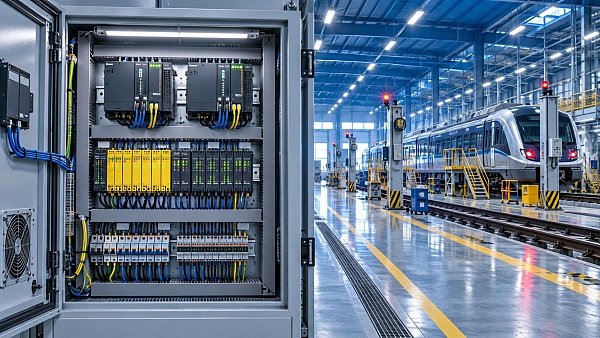
 Sep 27, 2026Selecting PLC Systems for Rail Depots: I/O Capacity, Redundancy, and Safety IntegrationPLC systems for rail depots: evaluate I/O capacity, redundancy, safety integration, and lifecycle support to build resilient, compliant operations.
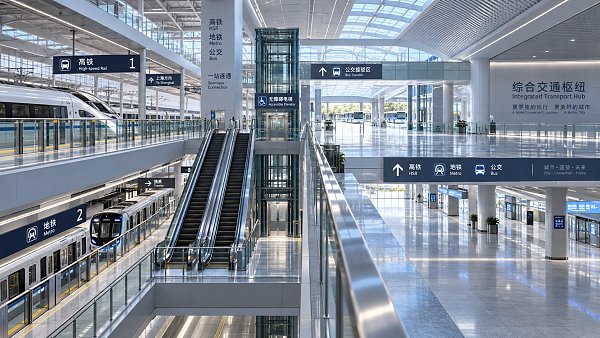
 Sep 23, 2026Integrated Transit Hub Trends Reshaping Passenger Flow and Multimodal Rail ProjectsIntegrated transit hub trends are redefining passenger flow, resilient transfers, and multimodal rail design. Discover practical strategies for smarter, future-ready hubs.
 Sep 09, 2026MetroRail Ridership Data 2026: What Demand Shifts Mean for Capacity PlanningMetroRail ridership data 2026 reveals demand shifts shaping smarter capacity planning. Explore crowding, station bottlenecks, CBTC, fleet, and investment priorities.
 Jul 31, 2026Transit Systems Passenger Safety: Key Risk Factors and Practical Protection MeasuresTransit systems passenger safety explained clearly: explore top risk factors, human-error contexts, standards, and practical protection measures that improve safer rail and urban transit operations.
 Jul 14, 2026Retail Technology Solutions for Multi-Store Operations: POS, Inventory, and Customer DataRetail technology solutions for multi-store operations: unify POS, inventory, and customer data to improve visibility, accuracy, and growth across every location.
 Jul 11, 2026Rail Urban Mobility Projects: What to Review Before Budgeting for Metro and Monorail ExpansionRail urban mobility projects demand more than headline cost estimates. Discover what to review before budgeting metro and monorail expansion, from lifecycle costs to signaling, procurement, and ridership risk.
 Jul 10, 2026Rail Infrastructure Platform Comparison: Which Data Features Matter for Project Planning?Rail infrastructure platform comparison for project planning: discover the data features that matter most, from technical benchmarks to tender visibility, lifecycle insight, and supply chain risk.
![]() Jul 06, 2026Cloud Software vs On-Premise Systems: Which Option Fits Security and Budget Needs?Cloud software or on-premise systems? Explore security, lifecycle cost, compliance, and scalability trade-offs to choose the best fit for budget-sensitive infrastructure programs.
Jul 06, 2026Cloud Software vs On-Premise Systems: Which Option Fits Security and Budget Needs?Cloud software or on-premise systems? Explore security, lifecycle cost, compliance, and scalability trade-offs to choose the best fit for budget-sensitive infrastructure programs.![]() Jul 06, 2026Ultra Bright Window Display Buying Guide: Brightness, Pixel Pitch, and Storefront FitUltra bright window display buying guide covering brightness, pixel pitch, and storefront fit. Compare visibility, cost, and reliability to choose the right solution.
Jul 06, 2026Ultra Bright Window Display Buying Guide: Brightness, Pixel Pitch, and Storefront FitUltra bright window display buying guide covering brightness, pixel pitch, and storefront fit. Compare visibility, cost, and reliability to choose the right solution. Jul 05, 2026How to Select Metro Tunnel Ventilation Fans: Airflow, Pressure, Noise, and Fire SafetyMetro tunnel ventilation fans: learn how to compare airflow, pressure, noise, and fire safety to choose compliant, efficient systems for safer, smarter metro projects.
 Jul 02, 2026How to Evaluate a Rail Urban Mobility Platform for Metro Planning and OperationsRail urban mobility platform evaluation guide for metro planning and operations. Learn key criteria, risks, and vendor questions to choose a scalable, compliant solution.
 Jun 23, 2026Foldable Screen Technology for Mobile Devices: How It Works and What Limits DurabilityFoldable screen technology for mobile devices explained: discover how flexible OLEDs and hinge systems work, what causes crease and durability limits, and what buyers should check before choosing.
 Jun 22, 2026How the Agro-Industry Uses Metro Logic Tools for Cold Chain and Distribution PlanningAgro-industry cold chain planning gets smarter with metro logic tools. Learn how to reduce spoilage, improve distribution timing, and build more reliable, cost-efficient networks.
 Jun 20, 2026How to Read TENS Waveform Frequency Metrics for Pain Relief Device Evaluationtens waveform frequency metrics explained for smarter pain relief device evaluation. Learn how frequency stability, modulation, and load behavior affect comfort, consistency, and real-world performance.
 Jun 19, 2026Smart Retail Analytics Use Cases: Reducing Stockouts and Improving Store LayoutSmart retail analytics helps retailers reduce stockouts, optimize store layout, and improve conversion with real-time insights, predictive demand signals, and scalable operational control.
 Jun 17, 2026Tablet PCs for Industrial Procurement: How to Compare Durability, OS, and Lifecycle CostTablet PCs for industrial procurement: compare durability, OS fit, supplier support, and lifecycle cost to choose devices that reduce downtime, improve uptime, and deliver long-term value.
 Jun 16, 2026Health Developments Affecting Metro Systems: What Operators Should Track in Public SpacesHealth developments are reshaping metro operations. Discover what operators should track in public spaces to improve safety, compliance, resilience, and passenger trust.
 Jun 13, 2026How to Evaluate a Facade Lighting Manufacturer: Materials, IP Ratings, Controls, and Project SupportFacade lighting manufacturer selection guide: compare materials, IP ratings, controls, compliance, and project support to reduce risk, improve reliability, and choose with confidence.
 Jun 10, 2026Smart Systems in Rail Transit: Key Functions, Use Cases, and Integration ChallengesSmart Systems in rail transit improve safety, uptime, and control. Explore key use cases, integration challenges, and how to match solutions to complex rail scenarios.
 Jun 08, 2026Sustainable Technology in Rail Projects: Which Solutions Cut Energy Use First?Sustainable technology in rail projects cuts energy fastest through traction upgrades, smarter control, power optimization, and predictive maintenance—see which solutions deliver value first.
 Jun 05, 2026Integrated Transit Hub Trends: What Project Planners Should Watch in Passenger Flow DesignIntegrated transit hub trends are reshaping passenger flow design. Learn what planners should watch in adaptability, resilience, digital control, and multimodal transfer performance.
 May 26, 2026Is rail urban mobility changing how cities plan growthRail urban mobility is reshaping how cities plan growth, linking transit, land use, and resilience. Explore why rail-led development is becoming essential for efficient, low-carbon urban expansion.
 May 24, 2026What is changing fastest in rail Middle East markets this yearRail Middle East markets are shifting fast this year, driven by localization, digital rail, and stricter procurement. See what changes matter most and how suppliers can stay competitive.
 May 23, 2026How rail connectivity changes route value in growing citiesRail connectivity transforms route value in growing cities by improving access, reliability, and development potential. Discover what makes rail corridors worth investing in.









Quarterly Executive Summaries Delivered Directly.
Join 50,000+ industry leaders who receive our proprietary market analysis and policy outlooks before they hit the public library.