

Rail urban mobility plans often ignore interchange bottlenecks
Dr. Alistair Thorne
Time
Click Count
Rail urban mobility plans often prioritize expansion over the interchange bottlenecks that undermine rail transit efficiency. For procurement directors, EPC contractors, and technical evaluators, solving these weak links is essential to carbon-neutral rail goals, regulatory compliance, and stronger transit systems. From urban metro and high-speed rail to CBTC, ETCS, rolling stock, and track maintenance, data-led benchmarking reveals where infrastructure, signaling systems, and operational design must align.
In many metropolitan rail programs, new route-kilometers attract political attention, while interchange design receives only secondary review. Yet the passenger experience is often determined not by line speed, but by transfer friction: walking distances of 250–600 meters, vertical circulation delays of 3–8 minutes, poor timetable integration, and platform crowding that reduces effective capacity during peak hours.
For B2B stakeholders, interchange bottlenecks are not only operational issues. They directly affect rolling stock utilization, signaling headway performance, station retrofit costs, safety compliance, and the commercial bankability of network expansion. A line that meets design speed targets but fails at transfer nodes can still underperform in ridership, lifecycle cost, and public acceptance.
This is where a benchmarking-led perspective matters. G-RTI supports decision-makers by connecting infrastructure planning, signaling logic, maintenance readiness, and supply-chain evaluation across high-speed rail, urban metro, traction power, and track systems. Interchange performance must be treated as a measurable asset class, not an afterthought in system-wide rail urban mobility plans.
Why interchange bottlenecks persist in modern rail urban mobility plans
Interchange bottlenecks persist because planning models often prioritize macro indicators such as line coverage, station count, and corridor expansion timelines. Those metrics are useful, but they can obscure transfer realities inside stations and between modes. A network may add 20–40 kilometers of new rail while still leaving its busiest transfer hub constrained by undersized concourses, limited escalator redundancy, or outdated signaling interfaces.
A second reason is that responsibilities are fragmented. Civil designers may optimize structural layouts, signaling teams may focus on safe headways, and operators may emphasize timetable resilience. When these teams work in sequence rather than through an integrated interchange strategy, weak links emerge. The result is often a technically compliant system that performs below its theoretical capacity during the busiest 2–3 hours of the day.
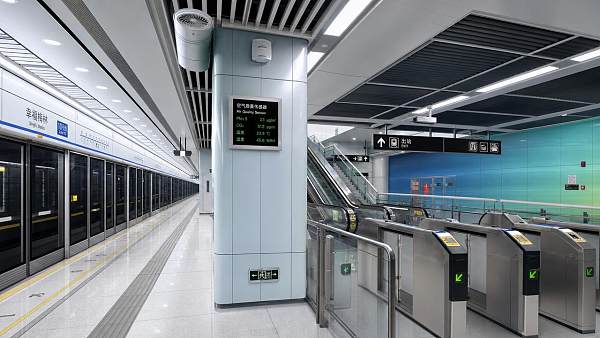
In retrofit-heavy cities, constraints become even sharper. Legacy stations built 20–50 years ago were not designed for current passenger volumes, platform screen doors, or digital passenger information systems. Even where CBTC or ETCS upgrades improve train movement, the transfer node may remain constrained by stairs, corridor widths, fire egress limits, or mechanical systems that cannot support heavier passenger throughput.
Commercial pressure also plays a role. Expansion projects are easier to package in tenders and public budgets than interchange optimization programs, which may involve multi-package contracts, night possessions, utility relocation, and service continuity risks. However, ignoring the bottleneck can create a hidden cost multiplier, especially when operators later need urgent retrofits under tighter timelines and more disruptive conditions.
For technical evaluators and procurement teams, the issue is not whether an interchange is important, but whether it has been measured in a way that supports procurement scope, system integration, and lifecycle accountability. The table below shows common planning gaps and their downstream consequences.
The key takeaway is that interchange bottlenecks rarely come from a single defect. They are usually the result of partial optimization across civil works, signaling, MEP systems, and operations. That is why rail urban mobility plans need transfer-node benchmarking early in concept design, not only after construction packages are defined.
Three recurring blind spots in project development
- Peak-load assumptions are often averaged across the day, masking 15-minute crowding spikes that drive real bottlenecks.
- Transfer quality is treated as a passenger-service issue, when it is also a capacity, safety, and procurement issue.
- Design packages may specify equipment performance but not interchange-level service thresholds such as maximum transfer time or circulation recovery time.
How bottlenecks affect signaling, rolling stock, and infrastructure performance
Interchange inefficiency does not stay inside the station envelope. It propagates into train operations, fleet planning, maintenance cycles, and network reliability. For example, if platform crowding adds 12–25 seconds to average dwell time during peak periods, a metro line designed for 90-second headways may struggle to maintain that pattern consistently, even with advanced CBTC in place.
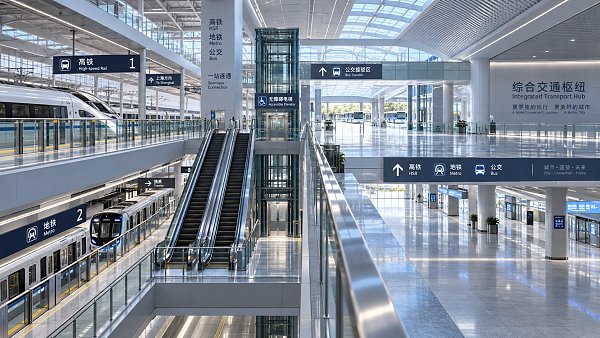
On mixed networks, the effect can be more complex. High-speed rail terminals connected to urban metro systems require precise passenger dispersal, ticketing coordination, baggage screening flows in some jurisdictions, and resilient vertical transport. When these interfaces fail, station throat efficiency, platform occupation time, and turnback performance can all deteriorate. The issue is not only train control technology, but how infrastructure and passenger movement interact in real time.
Rolling stock specification is also affected. A line serving overloaded interchanges may require door configurations, interior layouts, and acceleration profiles tuned for high turnover rather than pure seated comfort. Procurement teams that assess trains without considering interchange behavior risk mismatches between vehicle design and actual passenger exchange conditions. This is particularly relevant on urban corridors with station spacing below 1.5 kilometers.
Track and maintenance planning can suffer as well. When interchange bottlenecks force uneven service recovery, operators may run more short-turn services or irregular dispatch patterns. That can increase wear concentration in specific switches, crossings, power supply zones, and depot circulation areas. Over a 10–15 year lifecycle, these hidden patterns can change maintenance budgets materially.
Technical interfaces that should be assessed together
A practical evaluation framework should map how passenger transfer conditions influence train movement, asset stress, and station resilience. Instead of reviewing station layout, signaling, and fleet procurement separately, owners should align them through measurable service conditions. The following comparison highlights major cross-system interactions.
The conclusion for business evaluators is straightforward: interchange performance must be embedded in technical due diligence. It influences whether a signaling upgrade delivers its promised headway, whether rolling stock choices fit real station conditions, and whether maintenance assumptions remain valid under peak-demand stress.
A useful benchmark range
While each system differs, many operators treat transfer penalties above 5 minutes, dwell time variability above 15%, or sustained platform crowding at critical nodes as early warnings that network benefits from expansion may not be fully realized. These are not universal limits, but they provide a disciplined starting point for procurement and design review.
What procurement and technical teams should measure before approving rail interchange solutions
A robust interchange assessment should begin with measurable indicators, not qualitative impressions. Procurement directors, EPC contractors, and technical evaluators need a framework that converts transfer quality into tender requirements, factory acceptance priorities, and interface responsibilities. If the specification only asks for compliant subsystems, the project may still miss network-level performance.
At minimum, teams should define 4 categories of indicators: passenger transfer efficiency, operational stability, asset maintainability, and compliance readiness. These categories help bridge the gap between civil design, digital systems, and commercial evaluation. They are particularly important where suppliers from different regions must align with ISO/TS 22163, IEC 62278, EN 50126, and local fire-life-safety regulations.
Interchange measurement should also be phased. In concept design, the emphasis is on node capacity, walking geometry, and mode integration. During tendering, the focus shifts to equipment redundancy, interface definitions, and testing obligations. During commissioning, the key questions are peak-load validation, recovery scenarios, and maintenance access. A single late-stage audit cannot substitute for this 3-stage approach.
For distributors, agents, and commercial partners, this discipline matters because buyers increasingly ask not only what component is offered, but how it performs inside a constrained interchange environment. Vendors that can support transfer-node use cases, interface data, and lifecycle service planning often gain an advantage over those selling isolated products.
Priority indicators for evaluation
- Maximum transfer time under peak conditions, often modeled in 5-minute or 15-minute demand windows.
- Platform clearance and passenger dispersion time after train arrival.
- Escalator, lift, and stair redundancy levels, especially for degraded-mode operation.
- Maintenance access windows, night possession requirements, and spare-part compatibility across suppliers.
- Interface accountability between station systems, signaling logic, and rolling stock behavior.
Recommended procurement checkpoints
A practical procurement review should include at least 6 checkpoints: transfer simulation assumptions, passenger information integration, vertical transport availability, emergency egress compatibility, maintainability of critical assets, and validation under service disruption scenarios. These checkpoints often reveal whether an attractive bid truly supports rail urban mobility goals or simply satisfies a narrow package scope.
When bids involve imported equipment, another checkpoint is regulatory translation. A product may meet one market’s baseline requirements but still need redesign for EMC, fire performance, software assurance, or interoperability in another region. G-RTI’s benchmarking value lies in connecting these technical and commercial filters so procurement teams can compare offers on more than price and delivery time.
Implementation strategies that reduce interchange bottlenecks without delaying expansion
The assumption that interchange upgrades always delay expansion is often overstated. In practice, owners can reduce transfer-node risk through phased implementation. Some measures are design-led, such as better platform allocation, cross-platform interchange where geometry allows, or revised concourse circulation. Others are systems-led, including passenger information optimization, timetable coordination, and train stopping accuracy improvements.
A good strategy separates low-disruption actions from heavy civil interventions. For instance, digital wayfinding, revised passenger distribution logic, and timetable synchronization can often be introduced in 3–9 months. Mechanical upgrades such as escalator replacement, platform door retrofits, or corridor widening may take 12–24 months and require staged possessions. This tiered approach helps protect service continuity while improving node performance.
On high-volume urban metro systems, cross-functional control rooms can also improve interchange resilience. When station operations, signaling controllers, and maintenance teams share real-time data, they can respond faster to crowd accumulation, escalator failure, or service bunching. Even a 1–2 minute reduction in incident response time can significantly reduce cascading congestion at major hubs.
For EPC contractors and system integrators, the most effective delivery model is often an interface-led package structure. Instead of treating civil, MEP, signaling, and passenger systems as isolated scopes, the project should define a transfer performance baseline and assign clear responsibility for testing. This reduces the common problem where each supplier meets its own specification while the interchange as a whole remains underperforming.
A phased delivery path
- Diagnose the bottleneck using passenger-flow mapping, dwell-time review, and asset reliability records over at least 4–8 operating weeks.
- Prioritize actions by impact versus disruption, distinguishing software, operational, and civil interventions.
- Integrate interchange KPIs into tender documents, acceptance testing, and maintenance planning.
- Validate performance after implementation using repeat peak-window testing rather than single off-peak inspections.
This process is especially relevant for cities balancing carbon-neutral targets with fiscal pressure. Interchange optimization can improve perceived travel time and network attractiveness without always requiring entirely new corridors. In some cases, a transfer improvement program can unlock more usable capacity from existing infrastructure before large-scale expansion is commissioned.
Common commercial and technical mistakes in interchange-focused rail projects
One common mistake is treating interchange upgrades as isolated station beautification. New finishes, screens, or ticketing interfaces may improve appearance, but they do little if vertical circulation capacity, platform management, and signaling-linked dwell behavior remain unchanged. Buyers should distinguish cosmetic modernization from throughput-oriented investment.
A second mistake is underestimating maintenance access. Interchange hubs operate with little tolerance for downtime, and replacing a failed escalator drive, platform door controller, or communications device may require access windows of only 2–4 nighttime hours. If maintainability is not designed into the project, service reliability suffers long after the initial upgrade is complete.
A third mistake is fragmented tendering without interface governance. Separate contracts can be commercially efficient, but only if owners specify interface matrices, test responsibility, and degradation scenarios. Without that discipline, disputes may arise over who owns passenger flow sensors, data exchange, stopping accuracy, or platform clearance logic.
Finally, some projects rely on generic passenger forecasts without stress-testing demand surges tied to events, weather disruptions, or service diversions. Major hubs often experience periodic loads far above average conditions. If design only reflects mean demand, the bottleneck returns quickly, sometimes within the first 12 months of operation.
Risk-control checklist for buyers and evaluators
The following matrix can support technical and commercial review before award. It is especially useful for international procurement where suppliers, regulators, and operators may use different documentation standards.
These checks help buyers avoid false economies. A low initial bid can become expensive if the project later requires rework, operational restrictions, or prolonged commissioning. Strong interchange planning improves not only passenger outcomes, but also contractual clarity and lifecycle predictability.
FAQ for project teams and channel partners
How should interchange efficiency be compared across different rail projects?
Use normalized indicators rather than raw station size alone. Compare transfer time, dwell-time consistency, vertical circulation resilience, and recovery under degraded mode. A smaller station can outperform a larger hub if passenger routing and system integration are better controlled.
Which projects should prioritize interchange assessment first?
Projects with headways below 120 seconds, transfer-heavy ridership, legacy station retrofits, or multimodal integration with airport, commuter, or high-speed rail services should assess interchange risk early. These environments face the fastest penalties from poor transfer design.
What is a realistic timeline for improvement?
Operational and digital measures may show results in one or two timetable cycles. Medium-complexity retrofit work often requires 6–18 months. Heavy civil modifications at constrained hubs can extend beyond 24 months, especially when possession windows are limited.
Why do distributors and agents need this knowledge?
Because buyers increasingly ask how equipment supports a whole interchange environment. Suppliers who can explain compatibility with station flow, maintenance windows, compliance pathways, and interface data are better positioned in technical and commercial discussions.
Rail urban mobility plans fail when they treat interchange bottlenecks as secondary details instead of network-defining constraints. Transfer nodes shape ridership experience, signaling stability, fleet productivity, and maintenance cost across urban metro and high-speed rail ecosystems. For information researchers, technical evaluators, business assessors, and channel partners, the most reliable approach is data-led benchmarking that connects infrastructure, signaling, rolling stock, and lifecycle service into one decision framework.
G-RTI supports this approach by translating technical complexity into actionable procurement and benchmarking insight across HSR systems, urban transit, CBTC/ETCS, track infrastructure, and traction power. If your team is reviewing transfer-node risk, preparing tenders, or comparing suppliers for international rail projects, now is the time to get a clearer benchmark. Contact us to discuss project-specific requirements, request a tailored evaluation framework, or learn more about practical rail interchange solutions.
Search News
Industry Portal
Hot Articles

Popular Tags
Recommended News
 Oct 15, 2026Urban Metro Lifecycle Costs: What to Budget Beyond Initial ConstructionUnderstand urban metro transit lifecycle cost beyond construction. Explore operating budgets, maintenance, renewals, and supplier risks to build a funding plan that keeps your metro affordable.
 Oct 26, 2026When does urban mass transit demand justify a new metro line?When does urban mass transit demand justify a new metro line? Explore corridor demand, capacity, alternatives, and lifetime costs to make smarter transit investment decisions.
 Sep 27, 2026Selecting PLC Systems for Rail Depots: I/O Capacity, Redundancy, and Safety IntegrationPLC systems for rail depots: evaluate I/O capacity, redundancy, safety integration, and lifecycle support to build resilient, compliant operations.
 Sep 23, 2026Integrated Transit Hub Trends Reshaping Passenger Flow and Multimodal Rail ProjectsIntegrated transit hub trends are redefining passenger flow, resilient transfers, and multimodal rail design. Discover practical strategies for smarter, future-ready hubs.
 Sep 09, 2026MetroRail Ridership Data 2026: What Demand Shifts Mean for Capacity PlanningMetroRail ridership data 2026 reveals demand shifts shaping smarter capacity planning. Explore crowding, station bottlenecks, CBTC, fleet, and investment priorities.
 Jul 31, 2026Transit Systems Passenger Safety: Key Risk Factors and Practical Protection MeasuresTransit systems passenger safety explained clearly: explore top risk factors, human-error contexts, standards, and practical protection measures that improve safer rail and urban transit operations.
 Jul 14, 2026Retail Technology Solutions for Multi-Store Operations: POS, Inventory, and Customer DataRetail technology solutions for multi-store operations: unify POS, inventory, and customer data to improve visibility, accuracy, and growth across every location.
 Jul 11, 2026Rail Urban Mobility Projects: What to Review Before Budgeting for Metro and Monorail ExpansionRail urban mobility projects demand more than headline cost estimates. Discover what to review before budgeting metro and monorail expansion, from lifecycle costs to signaling, procurement, and ridership risk.
 Jul 10, 2026Rail Infrastructure Platform Comparison: Which Data Features Matter for Project Planning?Rail infrastructure platform comparison for project planning: discover the data features that matter most, from technical benchmarks to tender visibility, lifecycle insight, and supply chain risk.
![]() Jul 06, 2026Cloud Software vs On-Premise Systems: Which Option Fits Security and Budget Needs?Cloud software or on-premise systems? Explore security, lifecycle cost, compliance, and scalability trade-offs to choose the best fit for budget-sensitive infrastructure programs.
Jul 06, 2026Cloud Software vs On-Premise Systems: Which Option Fits Security and Budget Needs?Cloud software or on-premise systems? Explore security, lifecycle cost, compliance, and scalability trade-offs to choose the best fit for budget-sensitive infrastructure programs.![]() Jul 06, 2026Ultra Bright Window Display Buying Guide: Brightness, Pixel Pitch, and Storefront FitUltra bright window display buying guide covering brightness, pixel pitch, and storefront fit. Compare visibility, cost, and reliability to choose the right solution.
Jul 06, 2026Ultra Bright Window Display Buying Guide: Brightness, Pixel Pitch, and Storefront FitUltra bright window display buying guide covering brightness, pixel pitch, and storefront fit. Compare visibility, cost, and reliability to choose the right solution. Jul 05, 2026How to Select Metro Tunnel Ventilation Fans: Airflow, Pressure, Noise, and Fire SafetyMetro tunnel ventilation fans: learn how to compare airflow, pressure, noise, and fire safety to choose compliant, efficient systems for safer, smarter metro projects.
 Jul 02, 2026How to Evaluate a Rail Urban Mobility Platform for Metro Planning and OperationsRail urban mobility platform evaluation guide for metro planning and operations. Learn key criteria, risks, and vendor questions to choose a scalable, compliant solution.
 Jun 23, 2026Foldable Screen Technology for Mobile Devices: How It Works and What Limits DurabilityFoldable screen technology for mobile devices explained: discover how flexible OLEDs and hinge systems work, what causes crease and durability limits, and what buyers should check before choosing.
 Jun 22, 2026How the Agro-Industry Uses Metro Logic Tools for Cold Chain and Distribution PlanningAgro-industry cold chain planning gets smarter with metro logic tools. Learn how to reduce spoilage, improve distribution timing, and build more reliable, cost-efficient networks.
 Jun 20, 2026How to Read TENS Waveform Frequency Metrics for Pain Relief Device Evaluationtens waveform frequency metrics explained for smarter pain relief device evaluation. Learn how frequency stability, modulation, and load behavior affect comfort, consistency, and real-world performance.
 Jun 19, 2026Smart Retail Analytics Use Cases: Reducing Stockouts and Improving Store LayoutSmart retail analytics helps retailers reduce stockouts, optimize store layout, and improve conversion with real-time insights, predictive demand signals, and scalable operational control.
 Jun 17, 2026Tablet PCs for Industrial Procurement: How to Compare Durability, OS, and Lifecycle CostTablet PCs for industrial procurement: compare durability, OS fit, supplier support, and lifecycle cost to choose devices that reduce downtime, improve uptime, and deliver long-term value.
 Jun 16, 2026Health Developments Affecting Metro Systems: What Operators Should Track in Public SpacesHealth developments are reshaping metro operations. Discover what operators should track in public spaces to improve safety, compliance, resilience, and passenger trust.
 Jun 13, 2026How to Evaluate a Facade Lighting Manufacturer: Materials, IP Ratings, Controls, and Project SupportFacade lighting manufacturer selection guide: compare materials, IP ratings, controls, compliance, and project support to reduce risk, improve reliability, and choose with confidence.
 Jun 10, 2026Smart Systems in Rail Transit: Key Functions, Use Cases, and Integration ChallengesSmart Systems in rail transit improve safety, uptime, and control. Explore key use cases, integration challenges, and how to match solutions to complex rail scenarios.
 Jun 08, 2026Sustainable Technology in Rail Projects: Which Solutions Cut Energy Use First?Sustainable technology in rail projects cuts energy fastest through traction upgrades, smarter control, power optimization, and predictive maintenance—see which solutions deliver value first.
 Jun 05, 2026Integrated Transit Hub Trends: What Project Planners Should Watch in Passenger Flow DesignIntegrated transit hub trends are reshaping passenger flow design. Learn what planners should watch in adaptability, resilience, digital control, and multimodal transfer performance.
 May 26, 2026Is rail urban mobility changing how cities plan growthRail urban mobility is reshaping how cities plan growth, linking transit, land use, and resilience. Explore why rail-led development is becoming essential for efficient, low-carbon urban expansion.






Quarterly Executive Summaries Delivered Directly.
Join 50,000+ industry leaders who receive our proprietary market analysis and policy outlooks before they hit the public library.