

How to compare rail Tier-1 suppliers beyond price
Dr. Alistair Thorne
Time
Click Count
When evaluating rail Tier-1 suppliers, price alone rarely reflects long-term project value. Procurement teams must compare technical compliance, lifecycle cost, delivery reliability, certification readiness, and after-sales support to reduce risk across complex rail programs. This guide explains how to assess rail Tier-1 suppliers through a more strategic lens, helping buyers make decisions that align with performance, safety, and global market requirements.
Understanding what rail Tier-1 suppliers represent
In the rail industry, Tier-1 suppliers are not simply component vendors with strong pricing. They are system-critical partners that deliver high-value assemblies, integrated subsystems, or engineering-intensive equipment directly into rolling stock, signaling, traction power, metro, or track infrastructure programs. Depending on the project, rail Tier-1 suppliers may provide bogies, traction systems, braking modules, doors, signaling hardware, onboard electronics, communication systems, or maintenance software that must operate safely over long service cycles.
Because rail assets often remain in operation for twenty to thirty years or longer, the supplier decision affects far more than the purchase order. It influences certification progress, system compatibility, fleet availability, spare-part planning, maintenance cost, and even operator reputation. For procurement professionals, this means supplier comparison should be treated as a risk and value assessment, not a short-term price negotiation.
This is especially relevant in international rail programs where Asian manufacturing competitiveness must align with the regulatory expectations of Europe, North America, and the Middle East. A low quoted cost can quickly lose its appeal if the supplier struggles with EN standards, ISO/TS 22163 process discipline, IEC safety requirements, localization rules, or project documentation quality.
Why the market pays close attention to supplier comparison beyond price
Rail procurement has become more demanding because projects are larger, interfaces are more complex, and performance expectations are rising. High-speed rail, urban metro expansion, CBTC deployment, ETCS integration, and predictive maintenance platforms all require dependable industrial partners. Buyers are no longer comparing only unit cost; they are comparing execution confidence.
Several market conditions explain this shift. First, regulatory scrutiny is higher. Safety cases, RAMS evidence, test reports, and traceability records are essential in many rail tenders. Second, supply chain volatility has exposed the danger of selecting suppliers that cannot protect lead time or raw-material continuity. Third, operators increasingly evaluate total lifecycle performance, including energy efficiency, maintainability, digital diagnostics, and obsolescence planning. Fourth, public infrastructure projects face political and public accountability, so delays and reliability failures can become strategic issues rather than routine commercial problems.
For these reasons, comparing rail Tier-1 suppliers beyond price is now a standard practice among sophisticated procurement teams, EPC contractors, and rolling stock manufacturers.
Core dimensions for evaluating rail Tier-1 suppliers
A practical comparison model should cover both technical and commercial realities. Buyers need to determine whether a supplier can deliver compliant products, support integration, and remain dependable throughout the contract and operating life of the asset.
These criteria help turn supplier selection into a structured decision. They also create a more defensible procurement record when projects are subject to audit, public tender review, or multi-party engineering approval.
Technical compliance is the first filter, not a later check
Many procurement teams make the mistake of allowing commercial discussions to advance before technical readiness is fully validated. In rail, this can be expensive. A supplier may offer an attractive quote for a traction converter, signaling cabinet, door system, or bogie assembly, yet still lack the evidence needed to support project acceptance.
When comparing rail Tier-1 suppliers, buyers should verify whether the supplier has already delivered similar applications at the same speed class, load profile, climate condition, or regulatory environment. A metro platform door supplier with strong domestic references may not be ready for severe desert conditions. A traction motor manufacturer with industrial credentials may still need substantial adaptation for 400 km/h rail duty cycles. Capability must be judged against application specifics, not general reputation.
Documentation quality is another strong indicator. Mature rail Tier-1 suppliers provide design dossiers, test procedures, interface control documents, software change logs where relevant, and clear deviation management processes. If documentation is inconsistent during bidding, project execution will likely be difficult later.
Lifecycle cost often reveals the real commercial difference
The lowest purchase price may produce the highest total cost of ownership. This is common in rail because equipment performance affects maintenance windows, labor demand, vehicle energy use, and service interruption risk. Procurement teams should therefore compare lifecycle cost using a multi-year horizon rather than a simple capex lens.
For example, one supplier may offer a lower-cost braking subsystem but require more frequent replacement parts, specialized tools, or longer service downtime. Another may quote higher upfront pricing yet provide longer overhaul intervals and stronger diagnostic capability. The second option can be more economical over the fleet life. Similar logic applies to bearings, door mechanisms, onboard electronics, point machines, and power supply equipment.
A useful evaluation method includes energy consumption, preventive maintenance intervals, mean time between failures, spare-parts package assumptions, software support duration, and obsolescence strategy. This allows rail Tier-1 suppliers to be compared on measurable operational impact rather than procurement price alone.
Reliability, delivery, and industrial resilience matter as much as engineering
Rail programs depend on synchronized project sequencing. A late subsystem can delay factory acceptance tests, vehicle integration, commissioning, and route opening. That is why delivery reliability should be treated as a strategic factor when assessing rail Tier-1 suppliers.
Procurement professionals should examine manufacturing footprint, capacity utilization, critical sub-supplier exposure, inventory strategy, and business continuity planning. If a supplier depends on a single source for semiconductors, castings, insulation materials, or software modules, that dependency should be visible in the risk review. Buyers should also ask whether the supplier has experience supporting localization, final assembly in-market, or documentation in multiple regulatory jurisdictions.
Past on-time delivery performance is valuable, but context matters. A supplier that performs well on standard metro components may still struggle on custom HSR applications. Procurement teams should request project-specific references and investigate how the supplier handled changes, testing bottlenecks, and nonconformance events.
Different rail applications require different comparison priorities
Not all rail Tier-1 suppliers should be evaluated with the same weighting. The criticality of the subsystem changes the procurement emphasis. Safety-related and integration-heavy systems deserve stricter review than more standardized categories.
This application-based view is helpful because it aligns procurement evaluation with operational risk. It also supports more realistic weighting in tender scoring and supplier shortlisting.
Practical steps procurement teams can use
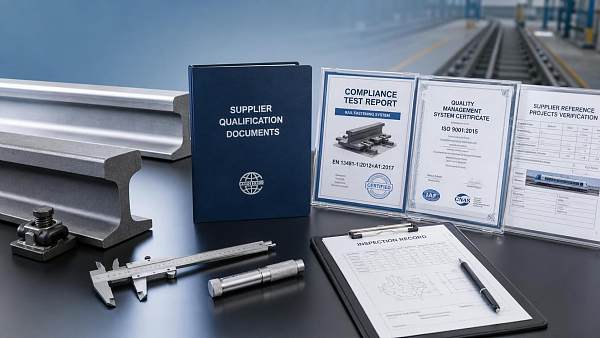
A disciplined process improves the quality of comparison across rail Tier-1 suppliers. First, define mandatory compliance gates before commercial review. Second, create a weighted scorecard that includes technical fit, lifecycle economics, delivery resilience, quality maturity, and service capability. Third, request evidence, not just claims. Certifications, project references, validation reports, and failure response records are more useful than polished presentations.
Fourth, involve engineering, quality, operations, and maintenance teams early. Rail supplier selection should not be left to procurement in isolation because the downstream consequences affect multiple functions. Fifth, conduct factory and process audits where the subsystem is project-critical. Sixth, compare risk-adjusted value. A supplier with a slightly higher price but lower certification risk and stronger field support may represent the best commercial outcome.
It is also useful to ask each supplier how they manage design changes, obsolescence, software version control, and spare-parts continuity over the expected service life. These topics frequently separate mature rail Tier-1 suppliers from suppliers that are competitive only at the quotation stage.
Common mistakes to avoid during comparison
One common mistake is using the same evaluation template for all subsystems, even when the technical and safety implications are different. Another is overvaluing brand recognition without checking project fit. A third is assuming that international certification automatically guarantees local compliance or fast approval in every market. Procurement teams should also avoid underestimating documentation effort, interface management burden, and post-commissioning service expectations.
Finally, buyers should not compare rail Tier-1 suppliers based on headline cost while ignoring warranty structure, training scope, spare stock commitments, and response-time obligations. These details directly influence operational performance after delivery.
A more strategic way to choose rail Tier-1 suppliers
The best supplier decision usually comes from combining technical evidence, lifecycle economics, and execution confidence into one clear framework. In modern rail programs, value is created when a supplier can meet standards, integrate smoothly, deliver on time, support maintenance teams, and remain responsive through the life of the asset. Price remains important, but it should be interpreted within a larger picture of safety, performance, and long-term risk.
For procurement professionals working across high-speed rail, urban transit, signaling, track systems, or traction power, this broader evaluation approach leads to stronger tender outcomes and fewer downstream surprises. If your team is reviewing rail Tier-1 suppliers across regions or technical categories, building decisions around verified benchmarks and application-specific evidence will consistently produce better results than price-led selection alone.
Search News
Industry Portal
Hot Articles

Popular Tags
Recommended News
 Aug 01, 2026How to Qualify Rail Suppliers: A Practical Checklist for References and Vendor ReviewRail supplier references and qualified suppliers start with proof, not promises. Use this practical vendor review checklist to verify compliance, capability, and delivery risk before you buy.
 Jul 28, 2026Rail Infrastructure Data Procurement Guide: How to Compare Sources, Quality, and CostRail infrastructure data procurement guide for buyers comparing data sources, quality, and cost. Learn how to assess coverage, verification, updates, and total value before you buy.
 Jul 26, 2026What Is MBR Filtration and When Is It the Right Choice for Wastewater Treatment?MBR filtration explained: learn when this compact wastewater treatment solution is the right choice for stable effluent quality, reuse goals, and space-constrained projects.
 Jul 25, 2026How to Evaluate Industry Applications for Rail Systems by Use Case and Operating NeedsIndustry applications for rail systems: learn how to assess use case fit, duty cycle, compliance, integration, and lifecycle cost to reduce risk and choose smarter solutions.
 Jul 22, 2026How to Evaluate Vacuum System Pump Capacity Metrics for Reliable System SizingVacuum system pump capacity metrics explained: learn how to compare pumping speed, ultimate pressure, leakage tolerance, and duty cycle for reliable sizing and better lifecycle performance.
 Jul 20, 2026What Is Logistics Infrastructure and How Does It Shape Freight Efficiency?Logistics infrastructure drives freight speed, reliability, and cost control. Learn how rail, terminals, signaling, and digital systems improve efficiency and resilience.
 Jul 19, 2026How Rail Predictive Maintenance Analytics Helps Cut Failures and Plan Smarter RepairsRail predictive maintenance analytics helps rail teams cut failures, predict risks, and plan smarter repairs. Learn how to reduce downtime, improve safety, and control lifecycle costs.
 Jul 17, 2026How to Choose a Waste Recycling Line Manufacturer for Capacity, Material Mix, and ComplianceWaste recycling line manufacturer selection guide: compare real capacity, material mix fit, compliance, and lifecycle cost to choose a reliable supplier with confidence.
 Jul 16, 2026How to Evaluate a MES Software Manufacturer for Integration, Support, and ScalabilityMES software manufacturer selection starts with integration, support, and scalability. Learn how to compare vendors, reduce risk, and choose a platform built for traceability and growth.
 Jul 15, 2026Rail Technical Benchmarking in Europe: How Operators Compare Reliability and Asset KPIsRail technical benchmarking Europe explained: discover how operators compare reliability, maintenance design, signaling resilience, and asset KPIs to make smarter rail investment decisions.
 Jul 15, 2026Rail Systems Benchmarking Framework: What Metrics Matter for Network PerformanceRail systems benchmarking framework: discover the metrics that truly drive network performance, reliability, lifecycle cost, and compliance for smarter rail investment decisions.
 Jul 15, 2026How to Interpret Martindale Abrasion Test Results for Fabric Durability DecisionsMartindale abrasion test results reveal more than rub counts. Learn how to read fabric durability data correctly, compare reports with confidence, and choose materials that reduce wear risk and lifecycle cost.
: What Limits Apply and How Hospitals Measure Compliance") Jul 14, 2026ICU Noise Level Standards (dB): What Limits Apply and How Hospitals Measure ComplianceICU noise level standards (dB) explained: learn accepted ICU sound limits, how hospitals measure compliance, and what drives non-compliance to improve patient safety and care quality.
Jul 14, 2026ICU Noise Level Standards (dB): What Limits Apply and How Hospitals Measure ComplianceICU noise level standards (dB) explained: learn accepted ICU sound limits, how hospitals measure compliance, and what drives non-compliance to improve patient safety and care quality. Jul 14, 2026Sustainable Packaging Design: 7 Factors to Balance Recyclability, Cost, and Shelf AppealSustainable packaging design made practical: explore 7 key factors to balance recyclability, total cost, compliance, product protection, and shelf appeal for smarter packaging decisions.
 Jul 14, 2026EPS Sandwich Panels Wholesale: How to Compare Density, Fire Rating, and Lead TimeEPS sandwich panels wholesale buyers should compare density, fire rating, and real lead time—not just price. Learn how to avoid compliance risks, delays, and costly sourcing mistakes.
 Jul 13, 2026European IVDR Grace Period Updates: What Device Manufacturers Must Review NowEuropean IVDR grace period updates: learn what device manufacturers must review now, from classification and notified body timing to portfolio risk, to protect market access and avoid costly disruption.
 Jul 13, 2026Sustainable Agriculture Benefits Explained: Soil Health, Water Savings, and Yield StabilitySustainable agriculture benefits explained: discover how healthier soil, smarter water use, and more stable yields help farms reduce risk, improve resilience, and perform better over time.
 Jul 13, 2026Office Stationery Wholesale: How to Compare MOQ, Lead Time, and Private Label OptionsOffice stationery wholesale made simple: compare MOQ, lead time, and private label options to reduce risk, improve supply continuity, and choose the right supplier faster.
 Jul 12, 2026How to Choose an Outdoor Furniture Distributor for Hospitality and Retail ProjectsOutdoor furniture distributor selection for hospitality and retail projects: learn how to compare supply reliability, compliance, customization, and after-sales support with confidence.
 Jul 11, 2026How Rail Project Intelligence Reports Support Bid Planning and Market Entry DecisionsRail project intelligence reports help teams assess bid feasibility, compliance risk, and market entry timing—turning complex rail opportunities into smarter, lower-risk growth decisions.
 Jul 11, 2026How to Evaluate a Rail Data Platform Provider for Multi-Line Asset and Project VisibilityRail data platform provider selection starts with visibility you can trust. Learn how to compare data accuracy, benchmarking depth, and multi-line project control for better rail decisions.
 Jul 10, 2026How Rail Infrastructure Benchmarking Reports Help Compare Capex, Delivery Risk, and Network ReadinessRail infrastructure benchmarking reports help decision-makers compare capex, delivery risk, and network readiness with greater clarity—discover smarter, lower-risk rail investment insights.
 Jul 10, 2026What an EPC Rail Contractors Database Should Include Before You Shortlist BiddersEPC rail contractors database essentials: discover the must-have data fields, compliance checks, and risk signals to shortlist stronger bidders and reduce tender mistakes.
 Jul 10, 2026Rail Supplier Evaluation for Global Sourcing: Criteria, Scorecards, and Red FlagsRail supplier evaluation global sourcing guide covering criteria, scorecards, and red flags to reduce risk, improve compliance, and choose reliable rail partners with confidence.









Quarterly Executive Summaries Delivered Directly.
Join 50,000+ industry leaders who receive our proprietary market analysis and policy outlooks before they hit the public library.