

Rail carbon neutrality goals are shifting supplier selection
Dr. Alistair Thorne
Time
Click Count
Rail carbon neutrality is no longer a policy slogan—it is becoming a decisive procurement filter across global transit projects. For commercial evaluators, supplier selection now depends not only on cost, quality, and delivery, but also on verified emissions performance, compliance readiness, and lifecycle efficiency. This shift is reshaping how rail buyers assess manufacturing partners, technical capabilities, and long-term project risk in an increasingly regulated international market.
For procurement teams working across rolling stock, track systems, signaling, traction power, and metro infrastructure, the implications are practical rather than abstract. A supplier that cannot provide product carbon data, energy-efficiency evidence, or auditable compliance records may now score lower than a technically acceptable competitor with better transparency. In cross-border projects, this affects tender qualification, contractual risk allocation, and long-term asset value.
Within this context, Global Rail & Transit Infrastructure (G-RTI) plays a strategic role. By benchmarking rail hardware, software, and structural systems against international frameworks such as ISO/TS 22163, IEC 62278, and EN 50126, G-RTI helps commercial evaluators compare suppliers on more than headline price. It supports decisions where rail carbon neutrality is tied to compliance, operational efficiency, and market access.
Why rail carbon neutrality now influences commercial scoring
In many rail tenders, carbon performance has moved from a supplementary question to a scored requirement. Buyers increasingly ask for cradle-to-gate emissions data, recycled material content, energy consumption curves, and end-of-life recovery plans. Even when carbon is not the top criterion, it can influence 10%–25% of the non-price evaluation in projects where public funding, green finance, or national decarbonization targets apply.
This shift is strongest in projects with long asset lives. A traction transformer, bogie frame, interlocking system, or rail fastening package may remain in service for 20–35 years. Commercial evaluators therefore look beyond initial capex and consider the emissions impact of manufacturing, transport, maintenance frequency, retrofit flexibility, and disposal. Rail carbon neutrality is becoming a proxy for long-term operating discipline and supplier maturity.
Another driver is regulatory convergence. European procurement regimes, Middle Eastern green infrastructure programs, and urban transit modernization plans in Asia increasingly require documented sustainability inputs. A supplier serving 3 regions may face 3 different disclosure formats, but the common expectation is clear: carbon claims must be measurable, traceable, and compatible with contractual review.
What commercial evaluators are really testing
In practice, buyers are not only testing whether a supplier supports rail carbon neutrality in principle. They are testing whether the supplier can prove operational readiness. That includes document control, sub-tier visibility, factory energy management, logistics planning, and the ability to update carbon declarations when engineering changes occur during the project lifecycle.
- Availability of lifecycle or product carbon documentation within 2–4 weeks of request
- Evidence of material traceability across at least 3 supply-chain tiers for critical components
- Energy-efficiency test records for systems such as traction, HVAC, signaling rooms, or maintenance equipment
- Corrective action capability when carbon-related compliance gaps are identified during tender review or factory audit
A supplier may still be technically strong, but if its data systems are weak, the commercial risk increases. Delayed documentation can affect bid timelines by 7–21 days. Missing sub-supplier declarations can trigger legal reviews, redesigns, or re-sourcing actions. For evaluators under schedule pressure, weak carbon governance now directly affects confidence in delivery reliability.
The supplier criteria that matter most in a low-carbon rail market
When rail carbon neutrality becomes part of supplier selection, commercial teams need a more disciplined evaluation framework. Cost remains essential, but it must be balanced with verifiable emissions controls, process capability, and regional compliance. The best procurement models usually score suppliers across 4 to 6 dimensions so that one strong price offer does not hide major lifecycle or compliance exposure.
For rail and transit infrastructure, these dimensions vary by package. In traction power, efficiency under load and grid interface losses may matter most. In track infrastructure, recycled steel content, maintenance interval, and transport footprint can be decisive. In signaling and communication systems, power consumption, electronics sourcing transparency, and upgradeability often carry greater weight than raw material intensity alone.
The table below outlines a practical commercial screen that can be used during prequalification, bid clarification, or final negotiation. It is especially relevant for evaluators comparing suppliers from different manufacturing regions and regulatory backgrounds.
The key takeaway is that rail carbon neutrality should not be isolated as a sustainability checklist. It should be integrated into the same scoring logic used for quality assurance, technical risk, and total cost of ownership. Suppliers that can connect these areas usually present lower hidden cost over a 15–30 year project horizon.
Typical red flags during supplier review
Commercial evaluators should be cautious when suppliers provide only corporate-level sustainability statements without package-level data. Another red flag is a mismatch between claimed low-carbon performance and actual production reality, such as energy-intensive processes with no metering at line level, or outsourced machining with limited subcontractor visibility.
Common warning signs
- Carbon declarations that cannot be linked to a specific product family or revision level
- No documented plan for managing design changes that alter weight, materials, or power demand
- Lead times beyond 16–20 weeks for core documentation needed in regulated bids
- Claims of “green manufacturing” without metered baseline data or annual improvement targets
These warning signs do not automatically disqualify a supplier, but they justify a deeper review. In many cases, the strongest commercial outcome comes from identifying documentation and process gaps early, then deciding whether corrective actions can be completed within the bid or mobilization window.
How rail buyers should compare suppliers across lifecycle risk
A low purchase price can lose its advantage if it leads to higher maintenance energy use, shorter overhaul intervals, or difficult component replacement. For commercial evaluators, rail carbon neutrality is most useful when translated into lifecycle risk categories. This makes the concept actionable for finance, engineering, operations, and legal teams reviewing the same package from different angles.
A practical comparison should examine the full chain from raw materials to in-service performance. For example, a track component with a lower embodied carbon profile may also reduce possession time if it has a 20% longer maintenance interval. A signaling equipment supplier with efficient electronics and modular upgrade paths may lower both energy consumption and replacement waste over a 10–15 year period.
The following table shows how commercial teams can map carbon-related supplier claims to procurement risk and asset value outcomes. This is especially useful when comparing offers that appear technically compliant but differ in operational maturity.
This approach helps avoid a common procurement mistake: treating carbon as an isolated reporting issue rather than a cost and risk variable. In large rail packages, even a 3%–5% difference in lifecycle energy demand or maintenance intervention can materially alter the value case over two decades.
A 5-step review process for evaluators
- Define package-level carbon expectations before issuing RFQ or tender clarifications.
- Request supplier evidence in a comparable format, including system boundaries and revision dates.
- Check whether low-carbon claims align with technical performance, maintenance, and compliance data.
- Score residual risk where documentation is incomplete, delayed, or dependent on unstable sub-suppliers.
- Include contract mechanisms for data updates, audit rights, and change-management obligations.
When this process is applied consistently, rail carbon neutrality becomes easier to operationalize. It also improves communication between procurement, engineering, and project controls teams, which often work with different assumptions unless the evaluation structure is clearly defined.
Where G-RTI adds value in cross-border rail supplier assessment
Commercial evaluators often face a difficult comparison problem: a technically advanced supplier in one region may offer strong manufacturing scale, while another supplier in a different market may offer better compliance familiarity but weaker cost competitiveness. G-RTI helps narrow this gap by benchmarking suppliers and rail subsystems against recognized standards and practical performance criteria relevant to high-speed rail, metro, signaling, track, and traction power.
This is particularly important when projects involve Asian manufacturing for European, American, or Middle Eastern applications. Rail carbon neutrality requirements are not identical across these markets, yet buyers still need a common basis for review. G-RTI supports that basis by connecting technical benchmarking, regulatory interpretation, and supply-chain visibility in a form that commercial teams can use during bid analysis and supplier shortlisting.
For example, a procurement director evaluating traction motors, bogie systems, CBTC hardware, or predictive maintenance software does not only need a catalog comparison. The team needs to know whether the supplier can align with regional documentation, manage engineering changes, and maintain performance under real project conditions over 10, 20, or 30 years.
Benchmarking areas that improve decision quality
- Mechanical integrity and durability indicators for safety-critical rail components
- Digital readiness for data-sharing, predictive maintenance, and technical traceability
- Structural and system compliance alignment with international operating and assurance frameworks
- Commercial intelligence on tender patterns, regional requirements, and supply-chain positioning
By combining these perspectives, G-RTI helps evaluators avoid making decisions based solely on price or isolated technical claims. That is increasingly relevant as rail carbon neutrality pushes procurement toward evidence-based selection, especially in projects where infrastructure funding, public accountability, and long-term operational efficiency are tightly linked.
Why this matters for Tier-1 and EPC decision cycles
Tier-1 manufacturers and EPC contractors typically work within compressed bid windows, often 4–8 weeks for initial evaluation and another 2–6 weeks for clarification. In that period, a reliable benchmark source can reduce rework, shorten comparison cycles, and identify supplier gaps before they become contractual liabilities. That efficiency matters when dozens of subsystem interfaces must be reviewed in parallel.
The commercial benefit is not only faster selection. It is also better negotiation leverage. When evaluators understand how a supplier performs on carbon transparency, standards alignment, and lifecycle efficiency, they can negotiate documentation commitments, milestone conditions, and service obligations with greater precision.
FAQ for commercial evaluators managing carbon-sensitive rail procurement
How should buyers weigh rail carbon neutrality against price?
The most effective approach is not to replace price scoring but to frame carbon within total value. In many tenders, a 5% price advantage can be offset by higher lifecycle energy use, shorter maintenance intervals, or additional compliance work. A balanced model often assigns 15%–30% of non-price scoring to lifecycle, sustainability, and compliance readiness, depending on asset type and funding conditions.
What documents should suppliers be ready to provide?
At minimum, suppliers should be able to provide product-level carbon or environmental declarations where applicable, material composition details for critical items, energy-efficiency test information, manufacturing process summaries, and a description of how design changes are controlled. For regulated projects, buyers may also expect a document response cycle of less than 10 working days for standard clarifications.
Which rail packages are most affected by this trend?
The impact is broad, but it is especially visible in traction power equipment, rolling stock subsystems, track materials, signaling electronics, station energy systems, and maintenance technologies. Packages with high energy demand, heavy material use, or long service lives typically receive the closest scrutiny because their emissions and cost effects remain visible for 15–35 years.
What is the biggest mistake in evaluating low-carbon claims?
The biggest mistake is accepting generic sustainability messaging without linking it to product-specific evidence and operational capability. A credible rail carbon neutrality position must show how data is collected, how it is updated, and how it connects to quality, maintenance, and delivery performance. If those links are missing, the buyer may inherit risk that only becomes visible after contract award.
Rail carbon neutrality is changing supplier selection because it now affects market access, compliance confidence, lifecycle economics, and project resilience at the same time. For commercial evaluators, the priority is to move from broad sustainability language to measurable supplier evidence, structured scoring, and risk-based comparison across the full rail asset lifecycle.
G-RTI supports that transition by combining technical benchmarking, standards awareness, and cross-border supply-chain intelligence for high-speed rail, metro, signaling, track infrastructure, and traction power. If your team is reviewing suppliers for a carbon-sensitive transit project, now is the right time to strengthen the evaluation model before tender risk becomes contract risk.
Contact us to discuss your sourcing priorities, request a tailored benchmarking view, or explore more rail procurement solutions aligned with today’s low-carbon market demands.
Search News
Industry Portal
Hot Articles

Popular Tags
Recommended News
 Jul 28, 2026Rail Infrastructure Data Procurement Guide: How to Compare Sources, Quality, and CostRail infrastructure data procurement guide for buyers comparing data sources, quality, and cost. Learn how to assess coverage, verification, updates, and total value before you buy.
 Jul 26, 2026What Is MBR Filtration and When Is It the Right Choice for Wastewater Treatment?MBR filtration explained: learn when this compact wastewater treatment solution is the right choice for stable effluent quality, reuse goals, and space-constrained projects.
 Jul 25, 2026How to Evaluate Industry Applications for Rail Systems by Use Case and Operating NeedsIndustry applications for rail systems: learn how to assess use case fit, duty cycle, compliance, integration, and lifecycle cost to reduce risk and choose smarter solutions.
 Jul 22, 2026How to Evaluate Vacuum System Pump Capacity Metrics for Reliable System SizingVacuum system pump capacity metrics explained: learn how to compare pumping speed, ultimate pressure, leakage tolerance, and duty cycle for reliable sizing and better lifecycle performance.
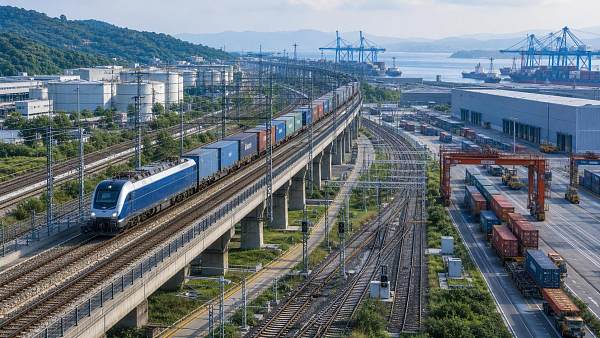
 Jul 20, 2026What Is Logistics Infrastructure and How Does It Shape Freight Efficiency?Logistics infrastructure drives freight speed, reliability, and cost control. Learn how rail, terminals, signaling, and digital systems improve efficiency and resilience.
 Jul 19, 2026How Rail Predictive Maintenance Analytics Helps Cut Failures and Plan Smarter RepairsRail predictive maintenance analytics helps rail teams cut failures, predict risks, and plan smarter repairs. Learn how to reduce downtime, improve safety, and control lifecycle costs.
 Jul 17, 2026How to Choose a Waste Recycling Line Manufacturer for Capacity, Material Mix, and ComplianceWaste recycling line manufacturer selection guide: compare real capacity, material mix fit, compliance, and lifecycle cost to choose a reliable supplier with confidence.
 Jul 16, 2026How to Evaluate a MES Software Manufacturer for Integration, Support, and ScalabilityMES software manufacturer selection starts with integration, support, and scalability. Learn how to compare vendors, reduce risk, and choose a platform built for traceability and growth.
 Jul 15, 2026Rail Technical Benchmarking in Europe: How Operators Compare Reliability and Asset KPIsRail technical benchmarking Europe explained: discover how operators compare reliability, maintenance design, signaling resilience, and asset KPIs to make smarter rail investment decisions.
 Jul 15, 2026Rail Systems Benchmarking Framework: What Metrics Matter for Network PerformanceRail systems benchmarking framework: discover the metrics that truly drive network performance, reliability, lifecycle cost, and compliance for smarter rail investment decisions.
 Jul 15, 2026How to Interpret Martindale Abrasion Test Results for Fabric Durability DecisionsMartindale abrasion test results reveal more than rub counts. Learn how to read fabric durability data correctly, compare reports with confidence, and choose materials that reduce wear risk and lifecycle cost.
: What Limits Apply and How Hospitals Measure Compliance") Jul 14, 2026ICU Noise Level Standards (dB): What Limits Apply and How Hospitals Measure ComplianceICU noise level standards (dB) explained: learn accepted ICU sound limits, how hospitals measure compliance, and what drives non-compliance to improve patient safety and care quality.
Jul 14, 2026ICU Noise Level Standards (dB): What Limits Apply and How Hospitals Measure ComplianceICU noise level standards (dB) explained: learn accepted ICU sound limits, how hospitals measure compliance, and what drives non-compliance to improve patient safety and care quality. Jul 14, 2026Sustainable Packaging Design: 7 Factors to Balance Recyclability, Cost, and Shelf AppealSustainable packaging design made practical: explore 7 key factors to balance recyclability, total cost, compliance, product protection, and shelf appeal for smarter packaging decisions.
 Jul 14, 2026EPS Sandwich Panels Wholesale: How to Compare Density, Fire Rating, and Lead TimeEPS sandwich panels wholesale buyers should compare density, fire rating, and real lead time—not just price. Learn how to avoid compliance risks, delays, and costly sourcing mistakes.
 Jul 13, 2026European IVDR Grace Period Updates: What Device Manufacturers Must Review NowEuropean IVDR grace period updates: learn what device manufacturers must review now, from classification and notified body timing to portfolio risk, to protect market access and avoid costly disruption.
 Jul 13, 2026Sustainable Agriculture Benefits Explained: Soil Health, Water Savings, and Yield StabilitySustainable agriculture benefits explained: discover how healthier soil, smarter water use, and more stable yields help farms reduce risk, improve resilience, and perform better over time.
 Jul 13, 2026Office Stationery Wholesale: How to Compare MOQ, Lead Time, and Private Label OptionsOffice stationery wholesale made simple: compare MOQ, lead time, and private label options to reduce risk, improve supply continuity, and choose the right supplier faster.
 Jul 12, 2026How to Choose an Outdoor Furniture Distributor for Hospitality and Retail ProjectsOutdoor furniture distributor selection for hospitality and retail projects: learn how to compare supply reliability, compliance, customization, and after-sales support with confidence.
 Jul 11, 2026How Rail Project Intelligence Reports Support Bid Planning and Market Entry DecisionsRail project intelligence reports help teams assess bid feasibility, compliance risk, and market entry timing—turning complex rail opportunities into smarter, lower-risk growth decisions.
 Jul 11, 2026How to Evaluate a Rail Data Platform Provider for Multi-Line Asset and Project VisibilityRail data platform provider selection starts with visibility you can trust. Learn how to compare data accuracy, benchmarking depth, and multi-line project control for better rail decisions.
 Jul 10, 2026How Rail Infrastructure Benchmarking Reports Help Compare Capex, Delivery Risk, and Network ReadinessRail infrastructure benchmarking reports help decision-makers compare capex, delivery risk, and network readiness with greater clarity—discover smarter, lower-risk rail investment insights.
 Jul 10, 2026What an EPC Rail Contractors Database Should Include Before You Shortlist BiddersEPC rail contractors database essentials: discover the must-have data fields, compliance checks, and risk signals to shortlist stronger bidders and reduce tender mistakes.
 Jul 10, 2026Rail Supplier Evaluation for Global Sourcing: Criteria, Scorecards, and Red FlagsRail supplier evaluation global sourcing guide covering criteria, scorecards, and red flags to reduce risk, improve compliance, and choose reliable rail partners with confidence.
 Jul 09, 2026Contract Furniture Buying Guide: How to Evaluate Durability, Compliance, and Lifecycle CostContract Furniture buying guide: learn how to assess durability, compliance, and lifecycle cost to reduce risk, avoid costly replacements, and choose smarter long-term solutions.














Quarterly Executive Summaries Delivered Directly.
Join 50,000+ industry leaders who receive our proprietary market analysis and policy outlooks before they hit the public library.