

Rail technical specifications often hide costly gaps
Dr. Alistair Thorne
Time
Click Count
Rail technical specifications can look complete on paper yet still conceal gaps that trigger costly delays, compliance risks, and lifecycle overruns. For procurement teams managing complex transit projects, identifying what is missing matters as much as reviewing what is listed. This article explains where hidden specification gaps emerge, how they affect supplier evaluation and project delivery, and what decision-makers should verify before tendering or approval.
In rail procurement, the cost of an unclear requirement rarely appears during the first document review. It usually appears 6 to 18 months later, when design interfaces fail, testing protocols conflict, or imported components do not align with local standards. For buyers handling rolling stock, signaling, traction power, track systems, or maintenance packages, the real risk is not only a weak supplier. It is an incomplete specification baseline.
This matters even more in cross-border sourcing. A component that performs well in one market may still fail documentation, fire safety, electromagnetic compatibility, software assurance, or maintainability requirements in another. That is why procurement teams increasingly rely on technical benchmarking, standards mapping, and lifecycle validation before tender release. For organizations working across Europe, the Middle East, the Americas, and Asia, that discipline is no longer optional.
Where Hidden Gaps in Rail Technical Specifications Usually Appear
Most specification failures do not come from a total absence of data. They come from partial data. A tender may define voltage, axle load, speed class, and environmental range, yet omit interface tolerances, maintenance access criteria, cybersecurity obligations, or RAM targets. In practice, these missing elements can shift supplier bids by 8% to 20% and extend engineering clarification cycles by 4 to 12 weeks.
Performance Requirements Without Operating Context
A common issue in rail technical specifications is listing target performance without defining duty cycle, route profile, passenger density, or climatic stress. A traction package designed for 160 km/h regional service may not suit a metro line with frequent acceleration and braking intervals of 90 to 150 seconds. The same rated output can produce very different thermal and maintenance outcomes.
Procurement teams should verify at least 5 operating inputs: service speed, acceleration profile, altitude, temperature range, and daily running hours. For urban transit, a 20-hour operating window creates different reliability expectations than an intercity line with 8 to 12 active hours. If these usage conditions are absent, supplier proposals become difficult to compare on an equal basis.
Standards Referenced but Not Fully Interpreted
Many documents mention ISO/TS 22163, EN 50126, IEC frameworks, or local safety codes, but stop short of defining the exact compliance scope. That creates room for ambiguity. One supplier may submit design conformity evidence, while another assumes only manufacturing process compliance is required. Both may claim alignment, but their deliverables are not equivalent.
This problem is especially critical in signaling, software, braking, and fire safety packages. If the specification does not define required test reports, validation stages, independent assessment thresholds, or document language, procurement review becomes inconsistent. A buyer may believe the standard reference is enough, yet the tender still lacks an enforceable compliance matrix.
Typical omission points
- Environmental classes stated, but ingress protection or vibration test levels not defined
- Software functions listed, but cybersecurity patch management responsibilities omitted
- Mechanical dimensions included, but installation tolerances of ±1 mm to ±3 mm not stated
- Lifecycle targets discussed, but spare parts support period not fixed at 10, 15, or 20 years
Interface Definitions That Stop at the Component Level
Rail systems fail at interfaces more often than at isolated components. A bogie, door system, converter, CBTC module, or switch machine may meet standalone requirements, yet integration can break down if cable routing, communication protocol, mounting envelope, or fault logic is not clearly specified. These are the gaps that create redesign loops after contract award.
For procurement personnel, interface control documents should be treated as a core bid deliverable, not a post-award detail. On complex projects with 20 to 50 subsystem interfaces, even one undefined boundary can affect commissioning schedule, depot tooling, training plans, and acceptance testing.
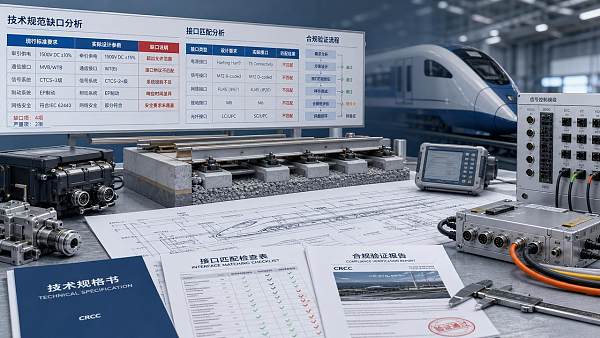
The table below highlights where rail technical specifications often appear sufficient but still leave room for expensive interpretation.
The pattern is clear: headline parameters are usually present, while operational assumptions, interface details, and verification criteria are not. That is exactly where cost exposure grows. G-RTI’s benchmarking approach is valuable here because it compares not just headline specifications, but the technical completeness behind them.
Why Procurement Teams Should Treat Specification Gaps as Commercial Risk
For buyers, hidden gaps in rail technical specifications are not only engineering issues. They directly affect tender competitiveness, contract clarity, and total cost of ownership. A low bid based on narrow assumptions may later require variation orders, import substitutions, redesign work, or additional testing. That can erase any initial price advantage within 1 or 2 project milestones.
Bid Comparison Becomes Distorted
If the specification baseline is incomplete, suppliers estimate scope differently. One bidder may include 15-year spare support, local language manuals, EMC testing, and depot training. Another may not. On paper, the second offer looks cheaper. In reality, the two bids do not cover the same obligation set.
This is why technical-commercial normalization is essential before award. Procurement teams should build a side-by-side deviation matrix with at least 4 categories: compliance, exclusions, assumptions, and lifecycle support. Without that structure, the award decision can lean too heavily on acquisition cost instead of operational fit.
Compliance Risk Moves Downstream
An undefined requirement does not disappear. It simply resurfaces later in design review, factory acceptance testing, site commissioning, or safety approval. At that stage, schedule pressure is higher and corrective options are fewer. A missing fire performance document or unapproved software process can delay a package by 30 to 90 days.
For international projects, regulatory interpretation can be even tougher. European, American, and Middle Eastern buyers often require evidence packages in different formats, even when the same component has already been delivered elsewhere. Procurement decisions must therefore consider documentation maturity, not just hardware capability.
Lifecycle Cost Increases Faster Than Purchase Price
When rail technical specifications do not define maintainability targets, spare availability, diagnostic access, or obsolescence planning, the cost impact usually appears during years 3 to 10 of service. Mean time to repair can rise, depot inventory expands, and proprietary dependencies increase. These are silent budget multipliers that rarely appear in the initial evaluation sheet.
A practical rule is to evaluate every package against 3 cost layers: acquisition, commissioning, and lifecycle support. If the third layer remains vague, the sourcing process is incomplete. This is especially relevant for traction systems, signaling software, condition monitoring tools, and high-cycle mechanical components.
Commercial warning signs for procurement
- More than 10 technical clarifications after final tender issue
- Supplier deviations concentrated in testing, software, or interfaces
- Warranty terms defined, but spare strategy absent beyond 24 months
- Compliance references included, but no traceable evidence list attached
What Procurement Should Verify Before Tendering or Approval
A stronger specification review process does not always require more pages. It requires better verification logic. Procurement teams should use a structured checklist that tests completeness across performance, compliance, interfaces, serviceability, and commercial execution. In large transit programs, this can reduce late-stage technical queries by 20% to 40%.
Five Verification Blocks That Prevent Expensive Ambiguity
Before issuing a tender or approving a supplier, buyers should confirm that the specification package covers five blocks in measurable terms. Each block needs more than narrative language. It should include thresholds, evidence expectations, or decision gates that suppliers can price against consistently.
1. Functional performance
Check service speed, load case, environmental class, design life, and operating duty. A 30-year infrastructure asset and a 15-year electronic module do not share the same support logic. Document those differences early.
2. Standards and approval scope
List which standards apply, to what depth, and through which evidence route. Certificates alone are rarely enough. Buyers may need test reports, design calculations, hazard logs, software process records, or independent assessment outputs.
3. Interface and integration definition
Confirm mechanical, electrical, software, and communication boundaries. Define ownership for each interface. If there are 12 external interfaces and only 5 are assigned clearly, the package is not ready for procurement.
4. Maintenance and supportability
Set targets for preventive maintenance interval, diagnostic access, critical spare lead times, and support duration. Common support windows range from 10 to 20 years depending on subsystem category.
5. Delivery and documentation readiness
Specify what must be delivered at bid stage, design review, FAT, SAT, and final handover. This reduces disputes over whether a document was expected before shipment, before energization, or before trial running.
The following table can be used as a procurement-facing review frame for rail technical specifications before release or supplier approval.
This framework helps buyers separate technically mature offers from superficially compliant ones. It is also where technical benchmarking platforms such as G-RTI add practical value, especially for teams comparing suppliers across different manufacturing regions and regulatory environments.
How G-RTI Supports Smarter Rail Specification Review
Procurement teams do not always lack data. More often, they lack normalized data. Specifications arrive from different consultants, operators, suppliers, and jurisdictions, each using different assumptions and documentation habits. G-RTI addresses that challenge by benchmarking rail systems across mechanical, digital, and structural performance dimensions, then aligning those findings with international and market-specific requirements.
Benchmarking Beyond Catalogue Parameters
A supplier datasheet may describe output, dimensions, and standards references, but procurement decisions need more than catalogue data. They need to know how a subsystem performs within a full project environment. G-RTI helps buyers examine whether a traction motor, bogie, signaling module, or maintenance platform is documented for the right market, lifecycle, and integration burden.
This is particularly useful when projects involve Asian manufacturing sources serving European, American, or Middle Eastern compliance frameworks. The gap is often not raw production capability. It is evidence structure, verification alignment, and specification interpretation. That difference can decide whether a package moves smoothly into procurement or stalls in clarification.
Support for Multi-Billion-Dollar Transit Programs
Large HSR, metro, and signaling projects typically involve 3 to 7 major technical packages and dozens of subsystem dependencies. In such settings, even small specification gaps can cascade across schedule, budget, and safety approval. G-RTI’s focus on HSR systems, urban metro, CBTC and ETCS, track maintenance, and traction power gives procurement directors a more disciplined view of what should be verified before decisions are locked in.
For buyers, the practical value is speed with control. Better benchmarking can shorten supplier screening, improve clarification quality, and reduce the chance that a low-cost bid hides future contractual exposure. That is especially important where tender windows are tight and evaluation teams must make defensible decisions within 2 to 6 weeks.
A Better Procurement Outcome Starts With Better Questions
The best rail technical specifications do not merely describe a product. They define a project-ready requirement set. They state how the asset will operate, what evidence proves compliance, how interfaces will be managed, and how support will continue after handover. When those questions are asked early, procurement moves from reactive clarification to controlled selection.
If your team is reviewing tenders, pre-qualifying suppliers, or mapping cross-market compliance for rail systems, G-RTI can help you identify hidden gaps before they become commercial claims or delivery delays. Contact us to discuss your project, request a tailored benchmarking perspective, or explore more rail procurement solutions built around verifiable technical data.
Search News
Industry Portal
Hot Articles

Popular Tags
Recommended News
 May 20, 2026Rail technical specifications often hide costly gapsRail technical specifications often hide costly gaps in compliance, interfaces, and lifecycle planning. Learn what procurement teams must verify before tendering to avoid delays and overruns.
 May 16, 2026How to read rail technical specifications without missing risksRail technical specifications guide: learn how to spot compliance, interface, lifecycle, and certification risks early so you can evaluate faster, avoid costly gaps, and make safer rail procurement decisions.
 May 13, 2026Where rail European standards slow projects and where they helpRail European standards can delay rail projects through documentation, interfaces, and approvals, but they also improve safety, interoperability, and lifecycle value. Discover where they slow progress and where they create long-term advantage.
 May 09, 2026Why rail multi-disciplinary teams still miss system conflictsRail multi-disciplinary teams still miss system conflicts when interfaces, software, and operations drift apart. Discover the hidden risks delaying rail projects and how to spot them early.
 May 07, 2026Rail Urban Mobility Upgrades That Outdate Legacy SignallingRail urban mobility upgrades are reshaping city transit with CBTC, digital interlocking, and smarter diagnostics. See how to assess safer, higher-capacity signalling modernization.
 May 01, 2026Rail Global Mobility Trends Pushing New ETCS PrioritiesRail global mobility is reshaping ETCS priorities around interoperability, safety, and compliance. Learn how to reduce risk, improve procurement decisions, and future-proof rail projects.
 Apr 23, 2026ETCS migration issues that surface late in testingETCS migration issues that surface late in testing can derail ETCS systems, CBTC signaling, and rail regulatory compliance. Learn how EN 50126, IEC 62278, and smart procurement reduce risk.
 Apr 23, 2026CBTC rollout risks that are easy to underestimateCBTC rollout risks in urban metro and rail infrastructure often hide in signaling systems, ETCS, traction power, and predictive maintenance interfaces—learn how procurement teams can cut delays and compliance costs.
 Apr 23, 2026ETCS systems need more than interoperability on paperETCS systems need more than paper compliance. Explore ETCS interoperability, rail standards, predictive maintenance, and signaling systems to cut risk, improve rail transit efficiency, and support smarter procurement.
 Apr 23, 2026CBTC signaling issues often begin with timing assumptionsCBTC signaling issues often begin with hidden timing assumptions. Explore rail standards, ETCS, predictive maintenance, and procurement insights to improve urban metro and high-speed rail efficiency.
 Apr 23, 2026CBTC ETCS systems comparison is harder than feature lists suggestETCS and CBTC signaling systems comparison goes beyond feature lists—explore rail standards, procurement risk, lifecycle support, and smarter choices for urban metro and high-speed rail.








Quarterly Executive Summaries Delivered Directly.
Join 50,000+ industry leaders who receive our proprietary market analysis and policy outlooks before they hit the public library.