

ETCS migration issues that surface late in testing
Dr. Alistair Thorne
Time
Click Count
ETCS migration issues often emerge late in testing, when signaling systems must prove compliance with rail European standards, EN 50126, and IEC 62278 under real operating conditions. For EPC contractors, rolling stock manufacturers, and rail procurement directors, these failures can delay high-speed rail and urban metro transit projects, disrupt rail regulatory compliance, and expose hidden risks across CBTC, traction power supply, track maintenance, and predictive maintenance strategies.
Why do ETCS migration issues appear late instead of early?
In most rail modernization programs, ETCS migration is not a single equipment upgrade. It is a staged operational transition involving onboard units, balises, radio interfaces, interlockings, traffic management logic, legacy signaling coexistence, and route-specific operating rules. Problems stay hidden until late testing because many dependencies only become visible when the full chain is exercised under near-service conditions.
A design package may look complete on paper after 3 core reviews: system architecture, interface definition, and safety allocation. Yet late-stage failures often arise during dynamic integration over 2–4 test phases, when data consistency, braking curves, fallback modes, and driver-machine interaction are validated together. Isolated subsystem approval does not guarantee corridor-level readiness.
For technical evaluators, the key issue is not only whether each component conforms to specification, but whether the migration strategy preserves operational safety and timetable resilience. For commercial teams, the late discovery of defects can trigger variation claims, milestone disputes, and additional possession windows, all of which expand cost exposure beyond the original budget envelope.
This is where G-RTI adds value. By benchmarking signaling and rail infrastructure interfaces against international standards and practical deployment patterns across HSR, metro, traction power, and maintenance domains, G-RTI helps decision-makers identify migration risks before the final test campaign absorbs schedule contingency.
Typical late-surface ETCS migration failure points
- Inconsistent trackside and onboard data sets, especially where national values, speed profiles, and temporary restrictions are updated on different control cycles.
- Boundary issues between ETCS and legacy systems, including transition zones, fallback operation, and degraded mode authorizations.
- Incomplete interface validation with traction power, axle counters, interlockings, and telecom layers that perform correctly alone but fail under traffic load.
- Human factors gaps, such as driver procedures, maintenance reset sequences, and control center responses that were not fully simulated during early engineering.
A practical judgment rule for procurement teams
If a supplier’s ETCS migration plan focuses mainly on hardware delivery, software version alignment, and lab tests, but lacks route migration logic, possession planning, and operational scenario coverage, late-stage defects are likely. In most projects, at least 5 check items should be reviewed before field testing starts: interface ownership, data governance, degradation scenarios, safety evidence structure, and test environment representativeness.
Which migration scenarios create the highest testing risk?
Not all ETCS migration programs carry the same risk profile. Brownfield rail corridors usually present more hidden testing issues than greenfield routes because the project team must preserve live operations while introducing new signaling logic. Mixed fleets, mixed traffic, and mixed standards create a layered risk environment that often remains underestimated until route testing accelerates.
Urban metro projects that combine CBTC interfaces with ETCS-related migration logic can face different constraints from high-speed rail lines. Metro operators typically prioritize dense headways, depot transitions, and platform turnaround reliability. HSR operators focus more heavily on braking supervision, cross-border interoperability, and long-distance fault recovery. Procurement criteria should therefore differ by operating model rather than by equipment list alone.
Distributors and commercial partners should also watch for supply-chain timing risk. A migration plan may appear technically sound but still fail in testing if software baselines, onboard retrofit windows, balise programming, and wayside commissioning are delivered out of sequence. Even a 2–6 week mismatch between rolling stock readiness and infrastructure readiness can move defects from manageable to critical.
The table below highlights where ETCS migration issues most often surface late in testing and what each stakeholder should review before approving final test readiness.
The decision takeaway is straightforward: late ETCS migration issues are usually scenario-driven, not component-driven. G-RTI supports this analysis by comparing route types, integration burdens, and procurement implications across global transit markets, helping buyers avoid treating every migration package as if it carried the same testing profile.
How to classify testing risk before it becomes a claim issue
A practical approach is to sort projects into 3 bands: low complexity, managed complexity, and high interaction complexity. If the project includes mixed fleet retrofit, live traffic coexistence, and multi-party software governance, it belongs in the highest band. In such cases, the commercial contingency plan should be linked to interface maturity, not only to hardware delivery milestones.
What standards and evidence should teams verify before final ETCS testing?
Late-stage testing problems are often described as technical surprises, but they usually reflect incomplete evidence management. EN 50126 and IEC 62278 are not box-ticking references. They provide a lifecycle framework for railway system reliability, availability, maintainability, and safety. In ETCS migration, that means the team must show not only design intent, but traceable evidence across hazards, interfaces, verification, validation, and operational constraints.
A recurring weakness is the gap between safety documentation and executable testing. The safety case may define assumptions that are not fully represented in the route test plan. For example, possession conditions, degraded telecom behavior, or maintenance reset assumptions may be documented but not stress-tested. When this gap persists into late phases, the project can pass documentation reviews and still fail operational readiness.
Technical assessors should require a clear compliance map covering at least 4 layers: system lifecycle requirements, subsystem interface evidence, operational rule alignment, and maintenance readiness. Commercial evaluators should verify whether compliance responsibilities are contractually split across rolling stock, signaling, telecom, and infrastructure entities, because fragmented accountability is one of the most common causes of testing delay.
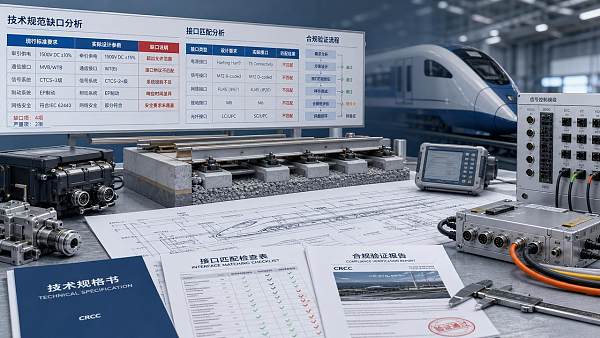
The following table can be used as a practical checklist when reviewing ETCS migration compliance readiness before dynamic testing or trial running.
This checklist matters because compliance readiness is not the same as document completeness. G-RTI’s benchmarking approach is especially useful where buyers need to compare suppliers not just by declared compliance, but by the quality of evidence management, interface discipline, and real-world migration readiness.
Four questions to ask before signing off test readiness
- Which assumptions in the safety case still depend on field verification rather than completed evidence?
- Who owns each interface baseline when software, telecom, and infrastructure updates occur during the final 30–90 days before dynamic testing?
- Have degraded modes been tested as operating scenarios rather than only described in procedures?
- Can the team prove that maintenance and operations staff are prepared for transition and recovery actions?
How should procurement and technical teams evaluate ETCS migration readiness?
The biggest procurement mistake is to compare ETCS migration offers mainly on equipment scope and unit pricing. In late testing, the cost drivers are usually engineering hours, interface rework, retesting, and access constraints. A lower initial bid may become more expensive if the supplier lacks migration governance, configuration discipline, or cross-domain test planning capability.
Technical and business teams should build a joint evaluation matrix covering 5 dimensions: standards compliance evidence, integration capability, data and software governance, route commissioning method, and commercial risk allocation. This is particularly important for distributors and agents who must assess whether a principal’s offer is truly executable in the destination market.
A mature ETCS migration supplier or consortium should be able to explain how route testing will progress from lab validation to site integration, shadow running, dynamic validation, and acceptance support. If these stages are vague, the project is exposed. A realistic preparation period can range from 8–20 weeks depending on route complexity, possession availability, and fleet retrofit burden.
The table below summarizes the procurement signals that help separate a well-prepared ETCS migration package from one that is likely to surface issues late in testing.
For buyers in cross-border or export-oriented projects, G-RTI provides a strong advantage by translating technical benchmarks into procurement logic. That means teams can compare not only compliance claims, but also execution maturity, likely retest burden, and supply-chain fit across Europe, the Middle East, the Americas, and Asian manufacturing sources.
A 6-point procurement checklist
- Confirm whether the offer includes migration engineering or only product supply.
- Request route-specific test logic for at least 3 operating scenarios and 2 degraded scenarios.
- Review who controls onboard and wayside data updates during commissioning.
- Check whether acceptance criteria are linked to evidence, not assumptions.
- Verify if operations and maintenance teams are included before final testing begins.
- Assess whether contractual milestones leave room for retesting without immediate dispute escalation.
Common misconceptions, late-risk warnings, and implementation advice
One common misconception is that successful factory tests mean migration risk is already under control. In ETCS programs, factory tests are necessary but insufficient. They validate components and predefined interfaces, while late migration issues often emerge from field conditions, timetable constraints, telecom behavior, temporary rules, and human actions that are hard to reproduce in a controlled environment.
Another misconception is that compliance with standards automatically ensures smooth commissioning. Standards define the framework, but migration readiness depends on execution discipline. A project can be formally aligned with EN 50126 and IEC 62278 and still suffer delays if hazard assumptions, data updates, and acceptance responsibilities are not controlled across the last 4–8 weeks before route trials.
A third risk area is fragmented responsibility. When trackside suppliers, onboard integrators, telecom providers, and infrastructure managers each assume another party is verifying the final interface, the defect may only surface in integrated testing. This is where independent benchmarking and evidence mapping become commercially important, not just technically helpful.
Teams can reduce late ETCS migration issues by building a disciplined implementation model: freeze core baselines early, maintain a controlled change log, stage test environments realistically, and include operations and maintenance personnel before acceptance testing. In many projects, these governance steps deliver more risk reduction than adding new hardware buffers late in the schedule.
FAQ: practical questions buyers and evaluators ask
How early should ETCS migration readiness be assessed?
It should begin well before final integration, ideally from the architecture and interface definition stage, then be refreshed at each major test gate. A practical review rhythm is every 4–6 weeks during active integration, with a stricter baseline freeze in the last 30–60 days before dynamic testing.
What is the most overlooked late-testing issue in brownfield ETCS migration?
Transition management between ETCS and legacy signaling is often underestimated. The hardware may function correctly, but route logic, temporary restrictions, driver behavior, and degraded mode procedures can conflict under real traffic conditions. These issues usually need integrated route scenarios, not isolated component tests.
What should distributors or agents ask their principals before offering a migration package?
They should ask for route-specific commissioning methodology, software and data governance rules, standards evidence structure, and a realistic schedule for test support. It is also wise to verify whether local regulatory interpretation, operating language, and maintenance procedures have been considered for the target market.
How can commercial teams reduce claim risk when ETCS issues surface late?
Tie milestones to defined readiness evidence, not only installation progress. Include hold points for interface approval, data baseline confirmation, and operational procedure validation. Where possible, create a shared defect classification method so the parties can distinguish design defects from sequencing or readiness failures.
Why work with G-RTI when evaluating ETCS migration risk?
G-RTI supports rail decision-makers who need more than general market commentary. Our value lies in connecting technical benchmarking, international standards, supply-chain intelligence, and procurement judgment across five major pillars: HSR systems, urban metro and transit, advanced signaling and communication, track infrastructure and maintenance, and traction power supply.
For ETCS migration issues that surface late in testing, we help teams examine the full decision chain: interface maturity, standards alignment, regional compliance interpretation, route commissioning logic, and vendor execution readiness. This matters for information researchers building market understanding, technical assessors reviewing risk, business evaluators comparing proposals, and channel partners seeking reliable principals.
You can consult G-RTI for practical support on 6 high-value topics: ETCS migration benchmarking, supplier shortlisting, compliance mapping to EN 50126 and IEC 62278, route-specific risk screening, delivery schedule review, and cross-market sourcing assessment. We also help compare signaling, rolling stock, maintenance, and traction interfaces when projects span multiple packages or regions.
If you are preparing a tender, evaluating a retrofit program, screening a supplier, or investigating why ETCS migration issues are surfacing late in testing, contact G-RTI with your route type, target standards, expected delivery window, and integration scope. We can support parameter confirmation, solution selection, compliance review, implementation sequencing, sample documentation assessment, and quotation-stage technical clarification.
Search News
Industry Portal
Hot Articles

Popular Tags
- rail infrastructure
- urban metro transit
- traction power supply
- rolling stock manufacturers
- rail procurement
- IEC 62278
- EN 50126
- rail regulatory compliance
- rail procurement directors
- rail European standards
- high-speed rail
- urban metro
- signaling systems
- CBTC
- ETCS
- track maintenance
- traction power
- rolling stock
- predictive maintenance
- EPC contractors
Recommended News
 Jul 14, 2026How Rail Transit Efficiency in Southeast Asia Improves with CBTC and Predictive MaintenanceRail transit efficiency Southeast Asia improves with CBTC and predictive maintenance, boosting capacity, reliability, and ROI for smarter rail modernization.
![]() Jul 07, 2026CBTC Signaling Interoperability Explained: Key Interfaces, Risks, and Integration ChecksCBTC signaling interoperability explained with key interfaces, major risks, and integration checks to help metro teams reduce delays, prove safety, and strengthen multi-vendor project delivery.
Jul 07, 2026CBTC Signaling Interoperability Explained: Key Interfaces, Risks, and Integration ChecksCBTC signaling interoperability explained with key interfaces, major risks, and integration checks to help metro teams reduce delays, prove safety, and strengthen multi-vendor project delivery. Jun 28, 2026Rail European Standards Signaling: ETCS, Interlocking, and Compliance BasicsRail European standards signaling explained clearly: learn ETCS, interlocking, and compliance basics to reduce approval risk, improve safety evidence, and support faster rail project delivery.
 Jun 08, 2026CBTC vs Fixed Block Signaling: Key Criteria for Metro Upgrade DecisionsCBTC vs fixed block signaling: compare capacity, safety, lifecycle cost, retrofit burden, and procurement risk to choose the right metro upgrade path with confidence.
 May 31, 2026How to Choose an ETCS On-Board Equipment Factory?Choose the right ETCS on-board equipment factory with expert tips on certification, integration, testing, lifecycle support, and risk-based supplier evaluation.
 May 27, 2026How rail policy foresight helps avoid costly CBTC delaysRail policy foresight helps rail teams prevent costly CBTC delays by spotting compliance, supplier, and approval risks early—learn how to protect schedule, budget, and project delivery.
 May 25, 2026How ETCS systems reduce signal risk on busy rail corridorsETCS systems cut signal risk on busy rail corridors with continuous speed supervision, safer movement authority control, and stronger compliance—discover how they boost capacity and reliability.
 May 23, 2026Rail regulatory compliance is harder than many teams expectRail regulatory compliance is harder than it seems. Learn how standards, supplier validation, traceability, and cross-border approvals impact risk, cost, and delivery.
 May 20, 2026Rail technical specifications often hide costly gapsRail technical specifications often hide costly gaps in compliance, interfaces, and lifecycle planning. Learn what procurement teams must verify before tendering to avoid delays and overruns.
 May 16, 2026How to read rail technical specifications without missing risksRail technical specifications guide: learn how to spot compliance, interface, lifecycle, and certification risks early so you can evaluate faster, avoid costly gaps, and make safer rail procurement decisions.
 May 13, 2026Where rail European standards slow projects and where they helpRail European standards can delay rail projects through documentation, interfaces, and approvals, but they also improve safety, interoperability, and lifecycle value. Discover where they slow progress and where they create long-term advantage.
 May 09, 2026Why rail multi-disciplinary teams still miss system conflictsRail multi-disciplinary teams still miss system conflicts when interfaces, software, and operations drift apart. Discover the hidden risks delaying rail projects and how to spot them early.
 May 07, 2026Rail Urban Mobility Upgrades That Outdate Legacy SignallingRail urban mobility upgrades are reshaping city transit with CBTC, digital interlocking, and smarter diagnostics. See how to assess safer, higher-capacity signalling modernization.
 May 01, 2026Rail Global Mobility Trends Pushing New ETCS PrioritiesRail global mobility is reshaping ETCS priorities around interoperability, safety, and compliance. Learn how to reduce risk, improve procurement decisions, and future-proof rail projects.
 Apr 23, 2026ETCS migration issues that surface late in testingETCS migration issues that surface late in testing can derail ETCS systems, CBTC signaling, and rail regulatory compliance. Learn how EN 50126, IEC 62278, and smart procurement reduce risk.
 Apr 23, 2026CBTC rollout risks that are easy to underestimateCBTC rollout risks in urban metro and rail infrastructure often hide in signaling systems, ETCS, traction power, and predictive maintenance interfaces—learn how procurement teams can cut delays and compliance costs.
 Apr 23, 2026ETCS systems need more than interoperability on paperETCS systems need more than paper compliance. Explore ETCS interoperability, rail standards, predictive maintenance, and signaling systems to cut risk, improve rail transit efficiency, and support smarter procurement.
 Apr 23, 2026CBTC signaling issues often begin with timing assumptionsCBTC signaling issues often begin with hidden timing assumptions. Explore rail standards, ETCS, predictive maintenance, and procurement insights to improve urban metro and high-speed rail efficiency.
 Apr 23, 2026CBTC ETCS systems comparison is harder than feature lists suggestETCS and CBTC signaling systems comparison goes beyond feature lists—explore rail standards, procurement risk, lifecycle support, and smarter choices for urban metro and high-speed rail.














Quarterly Executive Summaries Delivered Directly.
Join 50,000+ industry leaders who receive our proprietary market analysis and policy outlooks before they hit the public library.