

Why rail Asian manufacturing is reshaping supply risk
Dr. Alistair Thorne
Time
Click Count
As supply chains face tighter regulations, geopolitical volatility, and cost pressure, rail Asian manufacturing is changing how global transit programs assess risk.
The debate is no longer about low-cost sourcing alone. It is about resilience, compliance, technical reliability, and delivery confidence across fragmented international networks.
For rail systems, these pressures are especially sharp. Projects involve long lifecycles, strict certifications, safety-critical interfaces, and multi-country supplier dependencies.
That is why rail Asian manufacturing now plays a larger strategic role. It is reshaping supply risk by combining scale, engineering maturity, localization flexibility, and faster industrial response.
Rail supply risk is shifting from cost exposure to system exposure
Traditional sourcing models measured risk through price variance, freight delays, and single-factory dependence. Those metrics remain important, but they are no longer sufficient.
Today, supply risk in rail includes certification gaps, software interoperability, traceability failures, cybersecurity concerns, and weak after-sales technical support.
In this context, rail Asian manufacturing is gaining influence because many suppliers now offer more than components. They deliver integrated capability across design, testing, and production.
This matters for rolling stock, signaling, traction power, bogies, braking systems, doors, cable assemblies, and predictive maintenance platforms.
The result is a new sourcing equation. Risk is increasingly tied to whether suppliers can meet operational, regulatory, and lifecycle performance requirements at speed.
Several market signals show why rail Asian manufacturing is rising
Multiple trends are pushing rail Asian manufacturing into the center of global transit supply decisions.
- Rail expansion is accelerating in ASEAN, the Middle East, Europe, and selected North American corridors.
- Public tenders increasingly require technical transparency, carbon reporting, and origin documentation.
- Lead times for legacy suppliers remain unstable after energy shocks and regional industrial bottlenecks.
- Digital rail systems require tighter integration between hardware, software, and maintenance data.
- Operators want lifecycle value, not only initial capex savings.
These signals explain why buyers are reassessing sourcing maps. They are looking for partners able to combine manufacturing depth with international compliance readiness.
That is where rail Asian manufacturing stands out. It increasingly supports both mass production and specification-driven adaptation for export markets.
The drivers behind this trend are industrial, regulatory, and strategic
The rise of rail Asian manufacturing is not based on one advantage. It is driven by a combination of structural strengths.
This is especially relevant in high-speed rail, metro systems, advanced signaling, track equipment, and traction power supply.
As a result, rail Asian manufacturing is becoming a supply risk mitigation option, not simply an alternative source of lower-cost production.
How rail Asian manufacturing changes risk across the project lifecycle
The impact appears at every stage of a transit project, from bid preparation to long-term maintenance.
During specification and tendering
More suppliers can respond to detailed technical requirements, helping reduce overdependence on a narrow qualified pool.
That wider field can lower schedule risk when project owners demand customized interfaces, regional standards, or accelerated delivery windows.
During manufacturing and delivery
Rail Asian manufacturing often improves flexibility through modular production, multi-plant coordination, and stronger component ecosystems.
This can reduce disruption when a sub-tier supplier fails, a material price spikes, or logistics routes become unstable.
During commissioning and operations
The biggest shift is lifecycle support. Buyers now expect diagnostics, spare parts continuity, software updates, and documented maintenance logic.
Suppliers in rail Asian manufacturing that provide digital documentation and technical service networks can reduce operational uncertainty significantly.
The benefits are real, but the new risk profile requires sharper evaluation
A stronger role for rail Asian manufacturing does not remove risk automatically. It changes the risk categories that must be monitored.
- Documentation quality must match project audit requirements.
- Interface management must be verified across civil, electrical, and digital systems.
- Cybersecurity and software governance need closer review for connected assets.
- Local content rules may alter sourcing structures and final assembly choices.
- Warranty response capability should be assessed beyond contract language.
In other words, success depends on disciplined benchmarking. The right question is not whether to use rail Asian manufacturing, but how to qualify it correctly.
What deserves closer attention now
Several issues deserve priority when evaluating rail Asian manufacturing within a modern risk framework.
- Traceability from raw material to assembled subsystem.
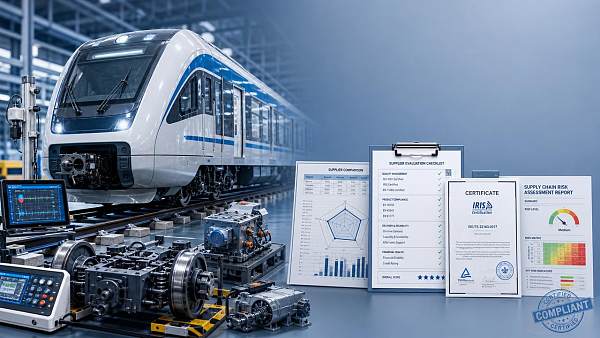
- Validation against IRIS, EN 50126, IEC 62278, and project-specific safety cases.
- Factory process stability, not only sample performance.
- Interoperability with existing rolling stock, CBTC, ETCS, or depot systems.
- Lifecycle support readiness, including parts stocking and digital maintenance records.
- Geographic diversification within the supplier’s own production network.
These factors help distinguish a capable export platform from a supplier that only offers short-term price appeal.
A practical response starts with better benchmarking and scenario planning
A stronger sourcing model should compare technical capability, compliance readiness, and resilience indicators at the same time.
This approach turns rail Asian manufacturing into a structured resilience lever. It reduces uncertainty without ignoring engineering and governance realities.
Why the next supply advantage will come from verified industrial intelligence
The global rail market is entering a period where transparency matters as much as production scale.
Rail Asian manufacturing will continue to expand its role because it aligns with three urgent needs: capacity, adaptability, and speed.
Yet the strongest outcomes will come from verified benchmarking, standards-based comparison, and closer visibility into technical and commercial risk.
That is where specialized intelligence platforms become essential. They help connect supplier capability with project requirements across high-speed rail, metro, signaling, track, and traction systems.
For organizations navigating complex rail procurement, the next step is clear: map exposure, benchmark suppliers deeply, and evaluate rail Asian manufacturing through a lifecycle risk lens.
With structured data and technical insight, supply decisions become faster, safer, and far more resilient in a volatile global market.
Search News
Industry Portal
Hot Articles

Popular Tags
Recommended News
 Oct 05, 2026How to Read Rolling Stock Technical Specifications Before Fleet ProcurementTechnical specifications guide smarter rolling stock procurement. Learn to assess traction, braking, availability, interfaces, and lifecycle risk before choosing a fleet.
 Oct 02, 2026Emergency Medical Equipment on Passenger Trains: What Should Safety Managers Specify?Emergency medical equipment for passenger trains: learn how safety managers can specify AEDs, first-aid kits, access, compliance, and maintenance for reliable readiness.
 Sep 26, 2026How to Select Auto Body Parts That Match Vehicle Fitment, Safety, and Repair QualityAuto body parts selection guide: match fitment, safety, materials, and repair quality to reduce rework, protect vehicle performance, and choose confidently.
 Sep 19, 2026Can Hydrogen Trains Replace Diesel on Non-Electrified High-Speed Rail Routes?Impact of hydrogen trains on HSR: discover where hydrogen can replace diesel, when electrification wins, and how rail leaders can assess cost, range, and emissions.
 Aug 02, 2026How to Specify Sheet Metal for Rail Equipment: Thickness, Finish, and FormabilitySheet metal specification for rail equipment starts with function. Learn how to choose the right thickness, finish, and formability to improve durability, manufacturability, and lifecycle performance.
 Jul 21, 2026What Is a BMS in Rail Systems and How Does It Improve Battery Safety and Performance?BMS in rail systems improves battery safety, uptime, and performance by monitoring cells, preventing faults, and optimizing lifecycle value. Learn what to check before selecting one.
 Jul 12, 2026Rail Specification Support for Retrofit: What to Review Before Fleet ModernizationRail specification support for retrofit starts with interfaces, compliance, and lifecycle risk. Learn what to review before fleet modernization to avoid costly delays and weak supplier choices.
 Jul 12, 2026Rail Procurement Directors Guide: How to Compare Lifecycle Cost, Lead Time, and ComplianceRail procurement directors guide to comparing lifecycle cost, lead time, and compliance. Learn how to reduce sourcing risk, benchmark suppliers, and make faster, standards-aligned rail buying decisions.
 Jul 11, 2026Machinery Procurement Checklist: How to Compare Capacity, Downtime Risk, and Lifecycle CostMachinery procurement checklist: compare real capacity, downtime risk, and lifecycle cost to choose equipment that cuts hidden costs, improves reliability, and supports smarter buying decisions.
 Jul 02, 2026Rail Asian Manufacturing: Key Supply Chain Trends and Sourcing Risks to WatchRail Asian manufacturing trends are reshaping global sourcing. Discover key supply chain risks, compliance challenges, and smart sourcing insights for rail buyers.
 Jun 29, 2026Train Toilet Modules Wholesale: What Buyers Should Check Before Comparing SuppliersTrain toilet modules wholesale buyers should compare compliance, lifecycle cost, maintenance access, and delivery reliability—not just price. Learn what to check before choosing suppliers.
 Jun 28, 2026Powertrain Systems Selection Guide: Key Performance Metrics for Rail VehiclesPowertrain systems selection for rail vehicles starts with the metrics that matter most. Explore performance, efficiency, reliability, and lifecycle risk to make smarter fleet decisions.
 Jun 25, 2026What Carbon Fiber Is Used for in Rail Components: Strength, Weight, and Design Trade-OffsCarbon fiber in rail components delivers lighter weight, corrosion resistance, and design flexibility. Explore where it outperforms metal, key trade-offs, and best-fit rail applications.
 Jun 25, 2026Rail Tier-1 Suppliers Explained: Selection Criteria, Qualification, and Supply Chain RisksRail Tier-1 suppliers are critical to rail project success. Learn how to assess qualification, technical fit, lifecycle support, and supply chain risks to make smarter sourcing decisions.
 Jun 11, 2026HSR Decarbonization Trends: What Is Driving Energy, Materials, and Fleet Upgrades?HSR decarbonization trends are reshaping high-speed rail investment through energy systems, lightweight materials, and fleet upgrades. Discover what is driving faster, smarter, lower-carbon decisions.
 Jun 08, 2026Impact of Hydrogen Trains on HSR: Capacity, Range, and Infrastructure Trade-OffsImpact of hydrogen trains on HSR: explore capacity, range, and infrastructure trade-offs to see where hydrogen fits—and where electrified or hybrid rail may deliver better value.
 Jun 03, 2026IRIS Certification Standards in Rail: Audit Scope and Supplier Readinessiris certification standards rail guidance for audit scope, supplier readiness, ISO/TS 22163 alignment, and practical steps to reduce risk and win rail tenders.
 May 28, 2026Is rail Asian manufacturing still the low cost choiceRail Asian manufacturing is no longer just about low prices. Compare cost, compliance, lead times, and supply chain risk to find the best-value sourcing strategy.
 May 27, 2026When rail global mobility becomes a real fleet planning issueRail global mobility is now a core fleet planning challenge. Discover a practical checklist to assess interoperability, lifecycle cost, compliance, and readiness before procurement decisions lock in risk.
 May 24, 2026How to compare rail Tier-1 suppliers without missing key risksRail Tier-1 suppliers should be compared beyond price. Learn a practical risk-based framework to assess compliance, supply resilience, service support, and lifecycle value.
 May 23, 2026What rail engineering integrity reveals about hidden riskRail engineering integrity reveals hidden risk before failure appears—across design, maintenance, signaling, and infrastructure. Learn how to spot weak links early and protect safety, uptime, and asset value.
 May 22, 2026Why rail Asian manufacturing is reshaping supply riskRail Asian manufacturing is reshaping rail supply risk with stronger compliance, lifecycle support, and faster delivery. See why transit buyers are rethinking sourcing now.
 May 21, 2026How to compare rail Tier-1 suppliers without missing riskRail Tier-1 suppliers can look equal on paper, but hidden risk drives cost and delay. Learn a practical framework to compare certification, resilience, reliability, and lifecycle support.
 May 20, 2026What rail market analysis says about demand shifts nowRail market analysis reveals how demand is shifting toward compliant, lifecycle-efficient rail solutions. Explore key segments, buyer priorities, and growth opportunities for distributors now.


Quarterly Executive Summaries Delivered Directly.
Join 50,000+ industry leaders who receive our proprietary market analysis and policy outlooks before they hit the public library.