

Why rail Asian manufacturing is reshaping lead times
Dr. Alistair Thorne
Time
Click Count
Why is rail Asian manufacturing becoming a decisive force in global project planning? For commercial evaluators, the answer is increasingly practical rather than theoretical: shorter production cycles, tighter supplier coordination, stronger cost discipline, and improving alignment with international rail compliance requirements. In today’s procurement environment, where delivery windows are compressed and project penalties can be severe, the ability of Asian suppliers to reduce lead times is no longer a secondary sourcing advantage. It is becoming a central factor in bid competitiveness, delivery certainty, and long-term infrastructure value.
For business assessment teams, the key question is not whether Asian manufacturing is cheaper. It is whether it can deliver faster without creating downstream risk in certification, integration, logistics, or lifecycle support. In many rail categories, the answer is increasingly yes—but only when buyers evaluate the right variables. The real shift is that Asian manufacturing ecosystems are no longer competing only on price. They are reshaping how quickly rolling stock components, signaling equipment, power systems, and track assets can move from specification to shipment.
What commercial evaluators are really searching for when they assess lead times
When decision-makers search for insight on why rail Asian manufacturing is reshaping lead times, they are usually trying to answer a set of commercial questions. Can this sourcing model reduce project delays? Which categories benefit most? Where are the hidden schedule risks? And how should procurement teams compare faster production promises against certification and supply chain complexity?
These are not academic concerns. In rail procurement, lead time affects tender strategy, working capital, contract sequencing, installation planning, and liquidated damages exposure. A supplier that can shorten delivery by 8 to 16 weeks may materially improve project economics. But if that same supplier introduces approval delays or interface issues, the apparent lead-time gain can disappear.
That is why commercial evaluators care about the full timeline, not just factory output speed. They need visibility into engineering release, sub-supplier readiness, compliance documentation, factory acceptance testing, export logistics, customs handling, and on-site integration. The strongest Asian manufacturers are changing the market because they increasingly manage these phases as one coordinated system rather than as isolated production steps.
Why lead times are changing: the structural advantages behind Asian rail manufacturing
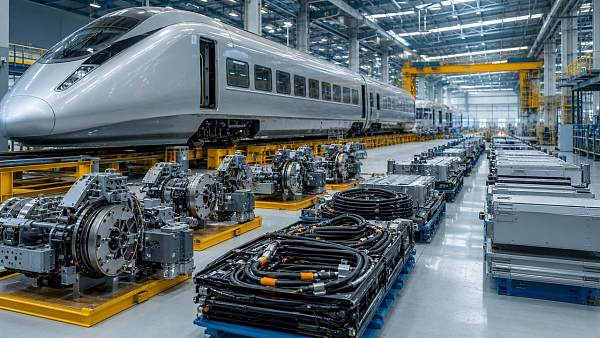
The lead-time advantage in Asia is not caused by one single factor. It comes from manufacturing density, supply chain proximity, scale, and a maturing industrial discipline in rail-related production. In major industrial clusters across China, South Korea, India, and parts of Southeast Asia, component makers, fabrication specialists, electronics suppliers, casting facilities, and testing resources are often located within the same regional ecosystem. That reduces handoff friction and shortens the time between design release and production execution.
For rail projects, this concentration matters. A bogie frame, traction converter cabinet, communication module, brake subsystem, or turnout component may depend on multiple upstream suppliers. In fragmented supply bases, each handoff introduces delay risk. In more integrated Asian clusters, manufacturers can compress procurement cycles, resolve design adjustments faster, and switch capacity more flexibly when demand changes.
Another important factor is production scale. Many Asian rail suppliers serve domestic high-volume transport markets in addition to exports. That means they are not building capability from scratch for each overseas order. Tooling, workforce training, quality routines, and process documentation already exist at industrial scale. For buyers, this often translates into shorter ramp-up times, more predictable fabrication windows, and stronger resilience when project volume increases.
Digital manufacturing readiness also plays a growing role. Advanced planning systems, automated fabrication lines, real-time quality traceability, and digitally connected vendor management have improved production visibility. This does not eliminate risk, but it helps compress time lost to scheduling uncertainty and rework. The result is that rail Asian manufacturing is increasingly able to support tighter delivery commitments than many buyers still assume.
Which rail product categories are seeing the biggest lead-time impact
Not every rail category benefits equally from faster Asian manufacturing. Commercial evaluators should distinguish between equipment that is relatively modular and repeatable, and systems that are highly customized, safety-critical, or approval-intensive. The greatest lead-time gains often appear in components and subsystems where production scale and mature supplier ecosystems can be fully leveraged.
Track infrastructure products are a clear example. Rail fasteners, sleepers, switch components, fabricated steel structures, cable trays, and maintenance equipment often benefit from strong industrial capacity and repeatable manufacturing processes. For these categories, Asian suppliers can frequently provide both shorter fabrication windows and competitive pricing.
Traction power equipment is another area where the advantage is growing. Transformers, switchgear enclosures, cable management systems, auxiliary power units, and prefabricated substation elements can often move through production quickly when sourced from experienced manufacturers with established export programs. Buyers still need to verify standards compliance and utility interface requirements, but lead-time compression can be significant.
Rolling stock subsystems such as interiors, HVAC modules, wiring harnesses, door systems, and certain bogie-related parts may also show strong schedule benefits. However, these gains depend heavily on interface control and homologation requirements. A component may be fast to build but slow to approve if documentation or validation is incomplete.
Signaling and communications equipment requires more caution. Hardware production may be efficient, but system acceptance is often governed by software assurance, cybersecurity review, functional safety requirements, and country-specific signaling architecture. In these cases, manufacturing speed helps, but it is rarely the sole determinant of usable lead time.
Faster production does not automatically mean faster project delivery
One of the most common mistakes in supplier evaluation is to treat manufacturing lead time as equivalent to project lead time. For commercial teams, this is where disciplined assessment creates value. A supplier may quote a 14-week production schedule, but if the project requires extended design review, third-party inspection, EN standard validation, or operator-specific approvals, the real delivery timeline may be far longer.
This is especially relevant in international rail programs serving Europe, North America, or the Middle East. The gap between factory capability and market acceptance can still be substantial. A manufacturer may produce to high technical quality, yet face delays if its documentation package does not align with local expectations for traceability, RAMS evidence, welding qualification, fire safety records, or subsystem verification.
Commercial evaluators should therefore separate lead time into at least five layers: engineering release time, manufacturing time, quality assurance and testing time, export and logistics time, and approval or integration time. The most reliable suppliers are not simply those with fast factories. They are the ones that can show evidence of schedule control across all five layers.
This is where institutional benchmarking becomes valuable. Evaluators should compare quoted delivery times against the supplier’s demonstrated ability to meet standards such as ISO/TS 22163, IEC 62278, EN 50126, and other applicable project frameworks. Speed without structured compliance discipline often shifts risk downstream.
How Asian suppliers are improving credibility with global rail buyers
The strongest change in recent years is not only operational speed, but credibility. Leading Asian manufacturers increasingly understand that global rail buyers do not award major contracts based on price and output alone. They want process maturity, documentation quality, transparent test evidence, and confidence that exported systems can pass scrutiny in regulated markets.
As a result, many suppliers have invested in IRIS-oriented quality management, international welding certification, digital traceability systems, and test facilities aligned with export market expectations. Some have also strengthened bilingual engineering support, local representation, and technical coordination teams that can engage more effectively with EPC contractors, transport authorities, and rolling stock OEMs.
This matters because trust shortens lead time indirectly. If buyers believe a supplier’s data pack, inspection routines, and interface management are robust, approval cycles become smoother. If they do not, every milestone expands. In this sense, the evolution of rail Asian manufacturing is not just an industrial story. It is a governance and assurance story.
For commercial evaluators, the takeaway is clear: the suppliers reshaping lead times are usually those combining industrial scale with certification discipline and export readiness. Low-cost capacity alone is no longer enough to influence serious rail procurement decisions.
What risks business evaluators should examine before relying on shorter lead times
Despite the advantages, faster sourcing from Asia is not risk-free. Evaluators should test whether the promised lead-time gain is real, repeatable, and relevant to the project’s contractual sequence. Several risk areas deserve close attention.
First, check sub-supplier dependency. A final assembler may appear fast, but rely on imported chips, specialty alloys, braking elements, or software modules with longer upstream lead times. If these bottlenecks are not visible, the promised schedule may be optimistic.
Second, assess standards maturity. A supplier may comply technically, but not procedurally. Missing documentation templates, incomplete material traceability, weak configuration control, or limited experience with customer audits can all slow acceptance.
Third, examine logistics resilience. Ocean freight disruption, transshipment delays, customs issues, and port congestion can erode factory lead-time gains. In some cases, rail or multimodal shipping options can reduce uncertainty, but only if packaging, routing, and delivery planning are professionally managed.
Fourth, evaluate change-management capability. Rail projects rarely remain static. Design modifications, quantity changes, and installation interface updates are common. Suppliers that can absorb these changes without destabilizing production provide far more real value than those offering a fast initial quote but limited flexibility.
Finally, consider lifecycle support. A short first delivery is useful, but not if spare parts, field service, or warranty response are weak. For long-life rail assets, total supply reliability matters more than a one-time manufacturing advantage.
How to evaluate whether faster Asian manufacturing creates real commercial value
For business assessment teams, the right approach is to evaluate lead time as part of a total-value model. Start with schedule impact. How many weeks can be saved at the project-critical path level? Does earlier delivery improve commissioning, revenue service entry, or milestone billing?
Then measure cost beyond unit price. Shorter lead times can reduce expediting costs, lower buffer inventory, improve cash conversion, and reduce exposure to delay penalties. In large infrastructure contracts, these indirect gains can rival or exceed the direct purchase savings.
Next, score compliance readiness. Ask whether the supplier can provide project-specific documentation, third-party test support, and a clear validation roadmap. A supplier with a slightly longer quoted manufacturing time but stronger compliance execution may create better commercial outcomes than a faster but less prepared option.
It is also wise to compare category fit. Some procurement packages are ideal for Asian sourcing because they are scalable, modular, and logistics-friendly. Others are too approval-sensitive or too deeply integrated into local engineering ecosystems to gain the same benefit. A segmented sourcing strategy often produces better results than a blanket regional preference.
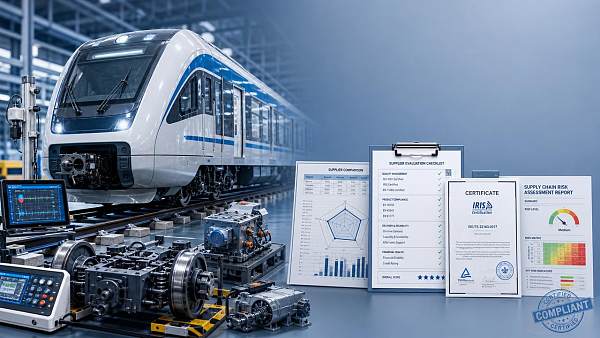
Finally, validate with evidence. Request historical delivery performance, audit findings, non-conformance rates, corrective action records, and examples of successful export projects. Lead-time claims should be treated as benchmarkable data points, not marketing language.
What this means for procurement strategy in the next rail investment cycle
The rise of rail Asian manufacturing is changing more than supplier shortlists. It is affecting how procurement strategies are designed. Commercial teams are increasingly moving from single-stage cost comparison toward multi-factor supplier assessment that combines speed, compliance, resilience, and technical fit.
For global buyers, this creates an opportunity to redesign sourcing models. Instead of treating Asian manufacturers as alternative low-cost vendors, they can be evaluated as strategic delivery partners for selected packages across high-speed rail, metro systems, signaling hardware, traction power, and track infrastructure. The smartest organizations will define where Asian capacity creates schedule leverage and where local or regional sourcing remains essential.
This also increases the value of technical benchmarking platforms and intelligence-based procurement. In a market where supplier capability is evolving quickly, outdated assumptions can lead to missed opportunities or poorly managed risk. Decision-makers need current data on production maturity, standards alignment, and export performance, especially when project values are high and contractual penalties are unforgiving.
For institutions such as G-RTI, this is precisely where market intelligence matters: bridging Asian manufacturing capability with the regulatory and technical expectations of Europe, the Americas, and the Middle East. The lead-time conversation is no longer about geography alone. It is about whether industrial readiness and engineering assurance can be translated into reliable project execution.
Conclusion: lead-time advantage is real, but only when evaluated correctly
Rail Asian manufacturing is reshaping lead times because it combines dense supplier ecosystems, scalable production, improving quality systems, and stronger export discipline. For commercial evaluators, that creates a meaningful opportunity to reduce schedule pressure, improve sourcing flexibility, and strengthen overall project value.
But the advantage should not be judged by quoted factory speed alone. The real question is whether the supplier can convert manufacturing efficiency into contract-ready delivery through compliance, testing, logistics, and lifecycle support. Buyers who assess these factors rigorously will find that Asian manufacturing can be more than a cost option. It can be a schedule strategy.
In the next wave of global rail investment, the winners will not simply be the organizations that buy cheaper or faster. They will be the ones that understand where speed is credible, where risk is manageable, and where technical benchmarking turns procurement decisions into long-term infrastructure performance.
Search News
Industry Portal
Hot Articles

Popular Tags
Recommended News
 Sep 19, 2026Can Hydrogen Trains Replace Diesel on Non-Electrified High-Speed Rail Routes?Impact of hydrogen trains on HSR: discover where hydrogen can replace diesel, when electrification wins, and how rail leaders can assess cost, range, and emissions.
 Aug 02, 2026How to Specify Sheet Metal for Rail Equipment: Thickness, Finish, and FormabilitySheet metal specification for rail equipment starts with function. Learn how to choose the right thickness, finish, and formability to improve durability, manufacturability, and lifecycle performance.
 Jul 21, 2026What Is a BMS in Rail Systems and How Does It Improve Battery Safety and Performance?BMS in rail systems improves battery safety, uptime, and performance by monitoring cells, preventing faults, and optimizing lifecycle value. Learn what to check before selecting one.
 Jul 12, 2026Rail Specification Support for Retrofit: What to Review Before Fleet ModernizationRail specification support for retrofit starts with interfaces, compliance, and lifecycle risk. Learn what to review before fleet modernization to avoid costly delays and weak supplier choices.
 Jul 12, 2026Rail Procurement Directors Guide: How to Compare Lifecycle Cost, Lead Time, and ComplianceRail procurement directors guide to comparing lifecycle cost, lead time, and compliance. Learn how to reduce sourcing risk, benchmark suppliers, and make faster, standards-aligned rail buying decisions.
 Jul 11, 2026Machinery Procurement Checklist: How to Compare Capacity, Downtime Risk, and Lifecycle CostMachinery procurement checklist: compare real capacity, downtime risk, and lifecycle cost to choose equipment that cuts hidden costs, improves reliability, and supports smarter buying decisions.
 Jul 02, 2026Rail Asian Manufacturing: Key Supply Chain Trends and Sourcing Risks to WatchRail Asian manufacturing trends are reshaping global sourcing. Discover key supply chain risks, compliance challenges, and smart sourcing insights for rail buyers.
 Jun 29, 2026Train Toilet Modules Wholesale: What Buyers Should Check Before Comparing SuppliersTrain toilet modules wholesale buyers should compare compliance, lifecycle cost, maintenance access, and delivery reliability—not just price. Learn what to check before choosing suppliers.
 Jun 28, 2026Powertrain Systems Selection Guide: Key Performance Metrics for Rail VehiclesPowertrain systems selection for rail vehicles starts with the metrics that matter most. Explore performance, efficiency, reliability, and lifecycle risk to make smarter fleet decisions.
 Jun 25, 2026What Carbon Fiber Is Used for in Rail Components: Strength, Weight, and Design Trade-OffsCarbon fiber in rail components delivers lighter weight, corrosion resistance, and design flexibility. Explore where it outperforms metal, key trade-offs, and best-fit rail applications.
 Jun 25, 2026Rail Tier-1 Suppliers Explained: Selection Criteria, Qualification, and Supply Chain RisksRail Tier-1 suppliers are critical to rail project success. Learn how to assess qualification, technical fit, lifecycle support, and supply chain risks to make smarter sourcing decisions.
 Jun 11, 2026HSR Decarbonization Trends: What Is Driving Energy, Materials, and Fleet Upgrades?HSR decarbonization trends are reshaping high-speed rail investment through energy systems, lightweight materials, and fleet upgrades. Discover what is driving faster, smarter, lower-carbon decisions.
 Jun 08, 2026Impact of Hydrogen Trains on HSR: Capacity, Range, and Infrastructure Trade-OffsImpact of hydrogen trains on HSR: explore capacity, range, and infrastructure trade-offs to see where hydrogen fits—and where electrified or hybrid rail may deliver better value.
 Jun 03, 2026IRIS Certification Standards in Rail: Audit Scope and Supplier Readinessiris certification standards rail guidance for audit scope, supplier readiness, ISO/TS 22163 alignment, and practical steps to reduce risk and win rail tenders.
 May 28, 2026Is rail Asian manufacturing still the low cost choiceRail Asian manufacturing is no longer just about low prices. Compare cost, compliance, lead times, and supply chain risk to find the best-value sourcing strategy.
 May 27, 2026When rail global mobility becomes a real fleet planning issueRail global mobility is now a core fleet planning challenge. Discover a practical checklist to assess interoperability, lifecycle cost, compliance, and readiness before procurement decisions lock in risk.
 May 24, 2026How to compare rail Tier-1 suppliers without missing key risksRail Tier-1 suppliers should be compared beyond price. Learn a practical risk-based framework to assess compliance, supply resilience, service support, and lifecycle value.
 May 23, 2026What rail engineering integrity reveals about hidden riskRail engineering integrity reveals hidden risk before failure appears—across design, maintenance, signaling, and infrastructure. Learn how to spot weak links early and protect safety, uptime, and asset value.
 May 22, 2026Why rail Asian manufacturing is reshaping supply riskRail Asian manufacturing is reshaping rail supply risk with stronger compliance, lifecycle support, and faster delivery. See why transit buyers are rethinking sourcing now.
 May 21, 2026How to compare rail Tier-1 suppliers without missing riskRail Tier-1 suppliers can look equal on paper, but hidden risk drives cost and delay. Learn a practical framework to compare certification, resilience, reliability, and lifecycle support.
 May 20, 2026What rail market analysis says about demand shifts nowRail market analysis reveals how demand is shifting toward compliant, lifecycle-efficient rail solutions. Explore key segments, buyer priorities, and growth opportunities for distributors now.
 May 19, 2026Why rail Asian manufacturing is winning more contractsRail Asian manufacturing is winning more contracts through faster delivery, stronger compliance, and reliable engineering. See what smart procurement teams should evaluate now.
 May 19, 2026Why rail multi-disciplinary teams prevent costly reworkRail multi-disciplinary teams help prevent costly rework by aligning signaling, power, track, and rolling stock early. See how integrated evaluation improves compliance, cuts risk, and protects rail project budgets.
 May 17, 2026Why rail Asian manufacturing is reshaping sourcing riskRail Asian manufacturing is reshaping sourcing risk with certified quality, faster delivery, and stronger compliance. Discover how to qualify suppliers and build more resilient rail sourcing strategies.













Quarterly Executive Summaries Delivered Directly.
Join 50,000+ industry leaders who receive our proprietary market analysis and policy outlooks before they hit the public library.