

How rail connectivity changes route value in growing cities
Dr. Alistair Thorne
Time
Click Count
In growing cities, rail connectivity does more than move people—it reshapes how routes are valued, planned, and funded. As urban expansion accelerates, decision-makers need to understand how transit links influence accessibility, land use, and long-term infrastructure returns. This article explores why rail connectivity has become a critical factor in evaluating route value across emerging metropolitan networks.
In practical terms, rail connectivity changes route value by altering how quickly, reliably, and efficiently people and goods can reach major destinations. For researchers and planners, that means route value is no longer measured by corridor length alone.
Instead, the strongest routes are usually those that improve network access, reduce transfer penalties, unlock development potential, and fit long-term mobility demand. In growing cities, these factors often matter more than simple construction cost comparisons.
What decision-makers are really asking when they assess rail connectivity
When people search for insights on rail connectivity, they are usually not looking for a generic definition. They want to know why one corridor becomes strategically valuable while another, sometimes nearby, struggles to justify investment.
They also want to understand which routes create lasting economic and transport benefits. In expanding metropolitan areas, budget pressure is high, land is contested, and political expectations are immediate, so route selection must be evidence-based.
For information researchers, the key concern is often evaluation logic. Which indicators reveal true network value? How should direct ridership forecasts be balanced against interchange effects, resilience gains, and future urban expansion?
These questions matter because rail projects lock in capital for decades. A route that looks efficient in a narrow demand model may underperform if it fails to connect housing growth zones, employment districts, logistics nodes, and existing transit lines.
Why rail connectivity has become a stronger driver of route value in growing cities
In slower-growing cities, route value can sometimes be judged through current demand patterns alone. In fast-growing cities, that approach is risky because population growth, decentralizing job clusters, and changing travel behavior can quickly reshape demand.
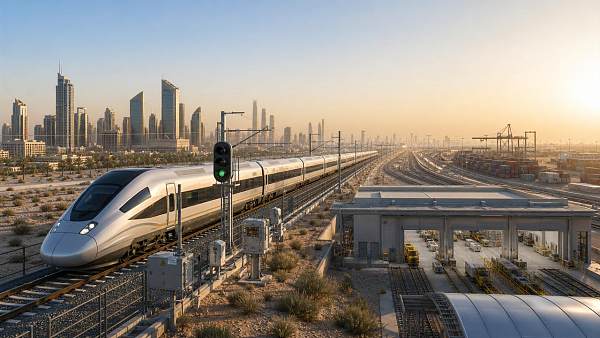
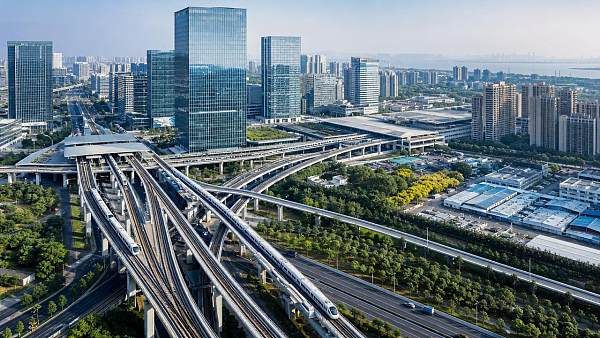
Rail connectivity matters more in this context because it supports network effects. A new line does not only serve its own stations. It also changes the usefulness of other lines, stations, terminals, and development areas across the urban system.
That is why a well-connected route often generates value disproportionate to its physical scale. One interchange can increase reach across multiple districts, while one poorly integrated line can remain isolated despite strong engineering execution.
Connectivity also strengthens reliability at a system level. In a growing city, road congestion tends to worsen over time. Rail corridors with strong connections offer more predictable travel times, which raises their functional and economic value.
For institutional stakeholders, this shift has major implications. Route value is increasingly tied to interoperability, transfer quality, signaling readiness, depot access, and integration with metro, suburban rail, bus, and intercity systems.
How rail connectivity changes route value beyond ridership numbers
Ridership remains important, but it is only one layer of route evaluation. A connected rail route can improve city performance in ways that standard patronage models do not fully capture, especially during early-stage planning.
First, connectivity expands effective accessibility. A station connected to a wider rail and transit network gives users access to many destinations, not just the locations directly on that line. This multiplies practical route value.
Second, connectivity reduces transfer friction. If interchanges are well designed, travelers accept multi-leg journeys more easily. Short walking distances, coordinated schedules, integrated ticketing, and intuitive passenger information all improve route attractiveness.
Third, connectivity raises land and development value. In many growing cities, real estate, commercial clustering, and mixed-use development increasingly follow stations that offer reliable links to wider metropolitan networks rather than isolated corridors.
Fourth, rail connectivity can improve labor market efficiency. Better linked routes allow employers to access larger workforce catchments and workers to reach more jobs within acceptable travel times, strengthening productivity across the urban economy.
Fifth, connected routes often provide better resilience. If one corridor faces disruption, passengers may still reach destinations through alternate lines. In network terms, redundancy adds value even if it is not always obvious in simple demand counts.
Which metrics best reveal the real value of a rail-connected route
For information researchers and transport analysts, the most useful question is not whether connectivity matters, but how to measure it. Strong route evaluation combines transport, economic, operational, and urban development indicators.
Accessibility is one of the most revealing metrics. Instead of measuring only boardings, analysts should examine how many jobs, homes, schools, hospitals, and commercial centers become reachable within defined travel time thresholds.
Interchange utility is another critical measure. A route connected to major hubs, airport links, regional rail, metro lines, or bus rapid transit systems usually delivers more strategic value than a corridor with similar ridership but weak integration.
Travel time reliability should also be included. In congested urban environments, dependable trip times create real user and business value. Routes with strong rail connectivity often outperform road-based alternatives on consistency, not only speed.
Land use leverage is equally important. Analysts should ask whether the route supports transit-oriented development, regeneration zones, logistics parks, or dense residential growth. Connectivity often determines whether these gains actually materialize.
Network centrality can provide deeper insight. In technical planning, centrality measures show how important a route or station is within the broader network structure. Highly connected nodes often produce stronger spillover benefits.
Finally, whole-life operational fit matters. A corridor may look attractive on a map, but if it creates difficult turnbacks, weak depot integration, signaling mismatches, or fragmented power systems, its long-term route value can be reduced.
Why some routes gain value quickly while others remain weak
Not every new rail investment benefits equally from connectivity. Some routes become high-value assets because they solve a clear network problem. Others remain underperforming because they add coverage without creating meaningful connections.
A route gains value quickly when it links major demand anchors. These may include central business districts, industrial areas, universities, ports, airports, or fast-growing housing clusters that already generate large and recurring travel flows.
It also gains value when it closes a missing link in the network. Completing a gap between radial lines, orbital services, or suburban corridors can unlock travel patterns that were previously slow or impossible.
By contrast, a route may remain weak if it terminates in low-activity areas without phased development support. It may also underperform if interchange design is inconvenient, schedules are poorly coordinated, or fares discourage transfers.
Political urgency can also distort route value. Cities sometimes prioritize visible expansion over integrated expansion. A longer line may appear ambitious, but a shorter and better-connected route may produce stronger mobility and economic returns.
How rail connectivity influences funding, procurement, and long-term returns
Rail connectivity does not only affect transport outcomes. It also shapes investment logic, financing confidence, procurement priorities, and asset management strategy. For major infrastructure programs, these implications are increasingly important.
Funders and public authorities want to support projects with durable impact. A route that strengthens metropolitan connectivity is easier to justify because it can produce wider economic effects, stronger ridership resilience, and more balanced urban growth.
From a procurement perspective, connectivity often increases technical requirements. Interfaces between signaling systems, power supply, rolling stock compatibility, platform design, and digital communication architecture become central to project success.
This is where rigorous benchmarking matters. Decision-makers need to test whether suppliers, components, and subsystems can perform within connected, high-demand environments rather than as isolated assets with limited operational complexity.
For example, advanced signaling such as CBTC or ETCS can raise route value by increasing throughput, reducing headways, and supporting safer integration across busy corridors. Similarly, predictive maintenance tools can protect network reliability over time.
Long-term returns also depend on whether the route supports scalable growth. If demand rises, can the corridor absorb more trains, longer consists, or higher service frequency without major reconstruction? Connectivity increases the importance of this question.
What growing cities should prioritize when planning for high-value connectivity
For cities still building out their rail networks, the goal should not be maximum mileage at minimum cost. The goal should be targeted connectivity that improves access, operational coherence, and long-range urban performance.
First, planners should identify where network effects will be strongest. Corridors that connect existing lines, future development zones, and established activity centers usually provide better route value than stand-alone extensions.
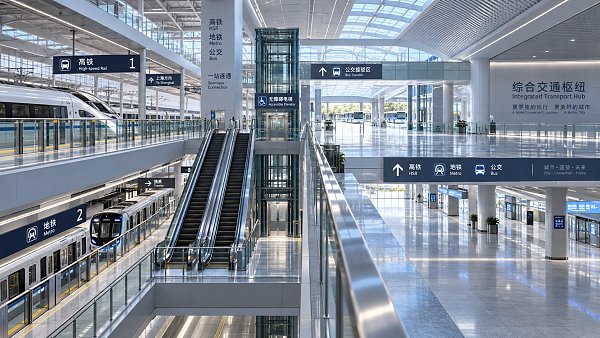
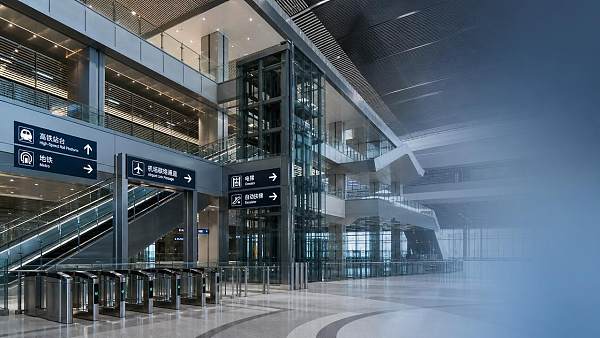
Second, interchange design should be treated as core infrastructure, not a secondary detail. The value of rail connectivity is often won or lost in station layouts, platform transfers, passenger circulation, wayfinding, and timetable coordination.
Third, cities should align rail planning with land use policy. If zoning, housing, commercial planning, and station-area development are disconnected from rail investment, much of the route’s potential value can be delayed or lost.
Fourth, technical standardization should begin early. Compatibility across signaling, traction power, rolling stock, and maintenance systems reduces lifecycle friction and strengthens the operational value of connected routes.
Fifth, scenario analysis is essential. Growing cities should test how route value changes under different population, employment, and policy futures. Rail connectivity is most valuable when it remains useful across multiple urban growth pathways.
A practical framework for evaluating route value through rail connectivity
For researchers and decision support teams, a practical framework can simplify analysis. Start by separating route value into four dimensions: access value, network value, development value, and operational value.
Access value measures how the route improves reach to key destinations. Network value measures its contribution to transfers, redundancy, and system coherence. Development value covers land use and economic uplift. Operational value tests technical sustainability.
Next, score each corridor against measurable indicators. These can include population served, job access gains, interchange count, travel time savings, peak capacity, service reliability, development potential, and compatibility with existing infrastructure.
Then compare not only absolute scores but sensitivity to growth. A corridor with moderate current demand but strong connectivity to future growth zones may ultimately deliver better returns than a line optimized for today’s travel map.
Finally, validate the results with implementation risk. Complex property acquisition, fragmented standards, funding uncertainty, or difficult interface management can delay benefits. A connected route is valuable only if it can be delivered effectively.
Conclusion: in growing cities, connectivity often defines whether a rail route truly matters
As cities expand, the value of a rail route depends less on its length or visibility and more on how well it connects people, districts, and systems. Rail connectivity turns separate corridors into functioning urban networks.
For information researchers, the key takeaway is clear: the most valuable routes are usually those that improve accessibility, strengthen interchanges, support development, and fit long-term operational realities. Ridership matters, but network contribution matters just as much.
In growing cities, rail connectivity is not a secondary design feature. It is a primary determinant of route value, investment credibility, and urban mobility performance. Any serious evaluation should treat it that way from the start.
Search News
Industry Portal
Hot Articles

Popular Tags
Recommended News
 Sep 27, 2026Selecting PLC Systems for Rail Depots: I/O Capacity, Redundancy, and Safety IntegrationPLC systems for rail depots: evaluate I/O capacity, redundancy, safety integration, and lifecycle support to build resilient, compliant operations.
 Sep 23, 2026Integrated Transit Hub Trends Reshaping Passenger Flow and Multimodal Rail ProjectsIntegrated transit hub trends are redefining passenger flow, resilient transfers, and multimodal rail design. Discover practical strategies for smarter, future-ready hubs.
 Sep 09, 2026MetroRail Ridership Data 2026: What Demand Shifts Mean for Capacity PlanningMetroRail ridership data 2026 reveals demand shifts shaping smarter capacity planning. Explore crowding, station bottlenecks, CBTC, fleet, and investment priorities.
 Jul 31, 2026Transit Systems Passenger Safety: Key Risk Factors and Practical Protection MeasuresTransit systems passenger safety explained clearly: explore top risk factors, human-error contexts, standards, and practical protection measures that improve safer rail and urban transit operations.
 Jul 14, 2026Retail Technology Solutions for Multi-Store Operations: POS, Inventory, and Customer DataRetail technology solutions for multi-store operations: unify POS, inventory, and customer data to improve visibility, accuracy, and growth across every location.
 Jul 11, 2026Rail Urban Mobility Projects: What to Review Before Budgeting for Metro and Monorail ExpansionRail urban mobility projects demand more than headline cost estimates. Discover what to review before budgeting metro and monorail expansion, from lifecycle costs to signaling, procurement, and ridership risk.
 Jul 10, 2026Rail Infrastructure Platform Comparison: Which Data Features Matter for Project Planning?Rail infrastructure platform comparison for project planning: discover the data features that matter most, from technical benchmarks to tender visibility, lifecycle insight, and supply chain risk.
![]() Jul 06, 2026Cloud Software vs On-Premise Systems: Which Option Fits Security and Budget Needs?Cloud software or on-premise systems? Explore security, lifecycle cost, compliance, and scalability trade-offs to choose the best fit for budget-sensitive infrastructure programs.
Jul 06, 2026Cloud Software vs On-Premise Systems: Which Option Fits Security and Budget Needs?Cloud software or on-premise systems? Explore security, lifecycle cost, compliance, and scalability trade-offs to choose the best fit for budget-sensitive infrastructure programs.![]() Jul 06, 2026Ultra Bright Window Display Buying Guide: Brightness, Pixel Pitch, and Storefront FitUltra bright window display buying guide covering brightness, pixel pitch, and storefront fit. Compare visibility, cost, and reliability to choose the right solution.
Jul 06, 2026Ultra Bright Window Display Buying Guide: Brightness, Pixel Pitch, and Storefront FitUltra bright window display buying guide covering brightness, pixel pitch, and storefront fit. Compare visibility, cost, and reliability to choose the right solution. Jul 05, 2026How to Select Metro Tunnel Ventilation Fans: Airflow, Pressure, Noise, and Fire SafetyMetro tunnel ventilation fans: learn how to compare airflow, pressure, noise, and fire safety to choose compliant, efficient systems for safer, smarter metro projects.
 Jul 02, 2026How to Evaluate a Rail Urban Mobility Platform for Metro Planning and OperationsRail urban mobility platform evaluation guide for metro planning and operations. Learn key criteria, risks, and vendor questions to choose a scalable, compliant solution.
 Jun 23, 2026Foldable Screen Technology for Mobile Devices: How It Works and What Limits DurabilityFoldable screen technology for mobile devices explained: discover how flexible OLEDs and hinge systems work, what causes crease and durability limits, and what buyers should check before choosing.
 Jun 22, 2026How the Agro-Industry Uses Metro Logic Tools for Cold Chain and Distribution PlanningAgro-industry cold chain planning gets smarter with metro logic tools. Learn how to reduce spoilage, improve distribution timing, and build more reliable, cost-efficient networks.
 Jun 20, 2026How to Read TENS Waveform Frequency Metrics for Pain Relief Device Evaluationtens waveform frequency metrics explained for smarter pain relief device evaluation. Learn how frequency stability, modulation, and load behavior affect comfort, consistency, and real-world performance.
 Jun 19, 2026Smart Retail Analytics Use Cases: Reducing Stockouts and Improving Store LayoutSmart retail analytics helps retailers reduce stockouts, optimize store layout, and improve conversion with real-time insights, predictive demand signals, and scalable operational control.
 Jun 17, 2026Tablet PCs for Industrial Procurement: How to Compare Durability, OS, and Lifecycle CostTablet PCs for industrial procurement: compare durability, OS fit, supplier support, and lifecycle cost to choose devices that reduce downtime, improve uptime, and deliver long-term value.
 Jun 16, 2026Health Developments Affecting Metro Systems: What Operators Should Track in Public SpacesHealth developments are reshaping metro operations. Discover what operators should track in public spaces to improve safety, compliance, resilience, and passenger trust.
 Jun 13, 2026How to Evaluate a Facade Lighting Manufacturer: Materials, IP Ratings, Controls, and Project SupportFacade lighting manufacturer selection guide: compare materials, IP ratings, controls, compliance, and project support to reduce risk, improve reliability, and choose with confidence.
 Jun 10, 2026Smart Systems in Rail Transit: Key Functions, Use Cases, and Integration ChallengesSmart Systems in rail transit improve safety, uptime, and control. Explore key use cases, integration challenges, and how to match solutions to complex rail scenarios.
 Jun 08, 2026Sustainable Technology in Rail Projects: Which Solutions Cut Energy Use First?Sustainable technology in rail projects cuts energy fastest through traction upgrades, smarter control, power optimization, and predictive maintenance—see which solutions deliver value first.
 Jun 05, 2026Integrated Transit Hub Trends: What Project Planners Should Watch in Passenger Flow DesignIntegrated transit hub trends are reshaping passenger flow design. Learn what planners should watch in adaptability, resilience, digital control, and multimodal transfer performance.
 May 26, 2026Is rail urban mobility changing how cities plan growthRail urban mobility is reshaping how cities plan growth, linking transit, land use, and resilience. Explore why rail-led development is becoming essential for efficient, low-carbon urban expansion.
 May 24, 2026What is changing fastest in rail Middle East markets this yearRail Middle East markets are shifting fast this year, driven by localization, digital rail, and stricter procurement. See what changes matter most and how suppliers can stay competitive.
 May 23, 2026How rail connectivity changes route value in growing citiesRail connectivity transforms route value in growing cities by improving access, reliability, and development potential. Discover what makes rail corridors worth investing in.








Quarterly Executive Summaries Delivered Directly.
Join 50,000+ industry leaders who receive our proprietary market analysis and policy outlooks before they hit the public library.