

Is rail urban mobility solving last mile pressure yet
Dr. Alistair Thorne
Time
Click Count
As cities grow denser and trips become more fragmented, rail urban mobility is under pressure to do more than move people between major hubs. It must also reduce the distance, time, and friction between stations and final destinations.
That is why the last mile question now shapes infrastructure value, ridership growth, and urban competitiveness. Rail urban mobility is helping, but the answer depends on station design, land use, digital integration, and surrounding access networks.
For large transit ecosystems, this is not only a passenger issue. It affects project economics, network resilience, policy outcomes, and how effectively cities connect dense corridors with neighborhoods, business clusters, and public services.
Why last mile pressure varies by urban scenario
Not every city faces the same rail urban mobility challenge. A compact city center may struggle with crowding outside stations, while outer districts may lack feeder services, safe walking routes, or convenient transfers.
The real issue is not whether rail exists. It is whether rail urban mobility fits actual movement patterns, including work commutes, school trips, shopping, tourism, healthcare access, and late-evening travel.
This matters because last mile pressure often appears after major rail investment. Tracks, rolling stock, and signaling may perform well, yet the passenger journey still feels incomplete beyond the platform edge.
What creates the gap after passengers leave the station
- Station exits are too far from housing, offices, or service destinations.
- Walking paths are indirect, unsafe, or poorly shaded.
- Bus, tram, bike, and micro-mobility links are not synchronized.
- Wayfinding, ticketing, and real-time information remain fragmented.
- Accessibility features are weak for elderly or mobility-limited users.
In short, rail urban mobility performs best when rail is treated as one layer of a connected urban system, not as an isolated transport asset.
In central business districts, rail urban mobility solves speed but not always convenience
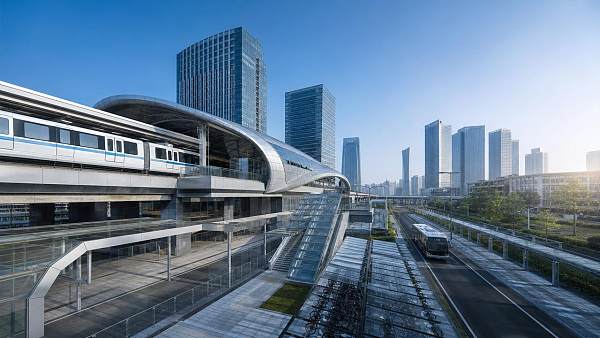
In dense commercial districts, rail urban mobility often excels at moving large passenger volumes quickly. High-capacity metro and commuter rail reduce road congestion and support predictable travel times during peak hours.
Yet last mile pressure persists when stations empty into crowded sidewalks, complex underground passages, or towers with separated entrances. A short physical distance can still feel slow, confusing, and stressful.
Core judgment points for business core scenarios
The key question is whether station access time is predictable from gate to building. If elevator queues, multi-level crossings, or fragmented exits add delay, rail urban mobility loses practical advantage.
Cities improve outcomes by redesigning station plazas, shortening vertical circulation, improving pedestrian signal priority, and integrating entrances with adjacent buildings and public spaces.
In outer residential districts, feeder integration determines whether rail urban mobility works
Suburban and peripheral areas reveal the sharpest last mile challenge. A metro or regional rail station may be efficient, but homes, schools, and retail clusters often sit beyond comfortable walking distance.
Here, rail urban mobility depends on feeder buses, protected cycling routes, park-and-ride design, and low-friction transfers. Without them, private car use remains dominant for first and last mile segments.
What makes suburban access succeed
- Timed transfers between local buses and rail departures.
- Safe walking corridors within 800 to 1200 meters.
- Bike parking and shared mobility near station entrances.
- Unified payment across all connecting modes.
- Service frequency that matches real daily demand, not only peaks.
When these elements align, rail urban mobility becomes a practical alternative to car dependency. When they do not, expensive rail infrastructure captures less value than expected.
For airports, hospitals, and event zones, reliability matters more than distance alone
Some destinations create irregular travel patterns. Airports, medical campuses, stadiums, and convention centers require rail urban mobility that handles luggage, accessibility needs, surge demand, and off-peak operations.
In these cases, the last mile problem may be only 300 meters, yet the operational burden is high. Long corridors, elevation changes, poor signage, or limited weather protection can sharply reduce user satisfaction.
Key factors for special-purpose destinations
Rail urban mobility works better when transfer routes are direct, barrier-free, and easy to understand under stress. Real-time crowd management, escalator redundancy, and intuitive wayfinding become essential.
This is also where digital layers matter. Integrated journey planning, live disruption alerts, and indoor navigation make rail urban mobility feel more complete from origin to destination.
How demand differs across common rail urban mobility scenarios
What practical adaptation improves rail urban mobility fastest
Most cities do not need to rebuild entire rail systems to reduce last mile pressure. They need targeted upgrades around access, integration, and station-area operations.
Priority actions with strong near-term impact
- Map actual passenger paths, not only network diagrams.
- Measure walking, transfer, and dwell time outside fare gates.
- Coordinate schedules across rail, bus, tram, and shuttle services.
- Create one-ticket, one-app, one-information journey flows.
- Upgrade lighting, shade, seating, and weather protection.
- Improve universal accessibility in every transfer segment.
For strategic planning, rail urban mobility should also be benchmarked against international operational and safety frameworks. Infrastructure quality, passenger flow data, and digital interoperability need to be reviewed together.
This is where deeper technical intelligence adds value. A robust view combines rolling stock performance, signaling reliability, maintenance planning, and station interface design within one mobility assessment.
Common misjudgments that keep last mile pressure unsolved
One frequent mistake is assuming station proximity equals accessibility. A destination may be near the rail line but still difficult to reach due to barriers, crossings, grade changes, or unsafe walking conditions.
Another mistake is overvaluing headline speed. Passengers often choose journeys based on total effort, clarity, and reliability. Rail urban mobility succeeds when the entire trip feels simple, not merely fast.
Cities also underestimate governance fragmentation. If rail operators, bus systems, municipal planners, and property developers act separately, the last mile remains everyone’s problem and nobody’s solution.
Finally, some projects focus on peak commuting only. But rail urban mobility must support flexible work hours, weekend movement, tourism, care trips, and inclusive access across changing urban lifestyles.
So, is rail urban mobility solving last mile pressure yet
The honest answer is partly yes. Rail urban mobility is solving last mile pressure where cities treat stations as mobility ecosystems, connect land use to transit, and integrate digital and physical journeys.
It is still falling short where rail investment stops at the platform. The strongest results come from scenario-based planning that matches downtown, suburban, and special-destination needs with different access strategies.
The next step is practical. Review station-area friction points, compare feeder performance, and benchmark infrastructure interfaces across the full passenger journey. That is where rail urban mobility turns from capacity provider into complete urban connector.
For organizations tracking transit modernization globally, evidence-based benchmarking can clarify which rail urban mobility investments will reduce last mile pressure fastest, and which upgrades will create lasting network value.
Search News
Industry Portal
Hot Articles
Popular Tags
Recommended News
 Jul 03, 2026Are IPL Hair Removal Devices Safe for Home Use? Skin Types, Risks, and Key ChecksIPLhairremovaldevices safety explained: learn which skin types and hair colors fit best, key risks to avoid, and the must-check features before buying for safe home use.
 Jun 24, 2026Car Lighting Buying Guide: Halogen vs LED vs HID for Cost and VisibilityCar lighting buying guide comparing halogen, LED, and HID for cost, visibility, lifespan, and compliance. Discover which option delivers the best value for your vehicle or fleet.
 Jun 23, 2026How to Evaluate Commercial Furniture Manufacturers for Large Office ProjectsCommercial furniture manufacturers: learn how to evaluate quality, capacity, compliance, customization, cost, and lead times for large office projects with confidence.
 Jun 20, 2026Diaperbagsbackpack Buying Guide: What to Check for Travel, Storage, and Daily Usediaperbagsbackpack buying guide: discover what to check for smart storage, travel comfort, durable materials, and daily convenience before you buy the right bag.
 Jun 17, 2026Lighting Features for Metro Cars: Which Specs Matter for Safety and Maintenance?Lighting features for metro cars: learn which safety, emergency, durability, and maintenance specs reduce downtime, improve compliance, and support smarter fleet decisions.
 Jun 15, 2026Metro Car Manufacturer Selection Checklist: Capacity, Standards, Lead Times, and SupportMetro car manufacturer selection starts with the right checklist. Compare capacity, standards, lead times, and after-sales support to reduce risk and choose with confidence.
 Jun 07, 2026Injection Molding Defects Explained: Causes of Warping, Sink Marks, and FlashInjection molding defects explained clearly: learn the real causes of warping, sink marks, and flash, plus practical fixes to improve part quality, fit, and long-term reliability.
 May 20, 2026Is rail urban mobility solving last mile pressure yetRail urban mobility is easing last mile pressure in some cities, but results depend on feeder links, station design, and digital integration. Discover what works best.
 May 19, 2026Is rail global mobility reshaping how fleets are plannedRail global mobility is reshaping fleet planning through compliance, interoperability, modular design, and lifecycle resilience. Discover smarter strategies for future-ready rail investment.
 May 13, 2026What rail Asian manufacturing gets right on delivery speedRail Asian manufacturing stands out for delivery speed through scale, supplier coordination, and production discipline. Discover why leading rail suppliers help reduce project risk and keep timelines on track.
 May 12, 2026Rail Urban Mobility Trends That Are Changing Vehicle PlanningRail urban mobility trends are reshaping vehicle planning with smarter capacity design, digital signaling, low-carbon goals, and lifecycle cost control. Discover practical insights for better transit decisions.
 May 06, 2026What Rail Benchmarking Misses in Fast Growing Metro NetworksRail benchmarking often misses growth-stage risks in fast-growing metro networks. Learn how to assess interoperability, lifecycle costs, and expansion resilience more effectively.
 May 01, 2026Rail Urban Mobility Gaps That Slow Last-Mile ConnectionsRail urban mobility gaps weaken last-mile connections through poor interchanges, fragmented data, and weak planning. Discover practical insights to improve access, ridership, and network resilience.
 Apr 23, 2026Why metro cars gain weight even as efficiency targets riseExplore why urban metro rolling stock is getting heavier despite rail transit efficiency goals. Learn how rail standards, CBTC, ETCS, predictive maintenance, bogie systems, and traction power shape smarter procurement decisions.



Quarterly Executive Summaries Delivered Directly.
Join 50,000+ industry leaders who receive our proprietary market analysis and policy outlooks before they hit the public library.