

What rail Asian manufacturing gets right on delivery speed
Dr. Alistair Thorne
Time
Click Count
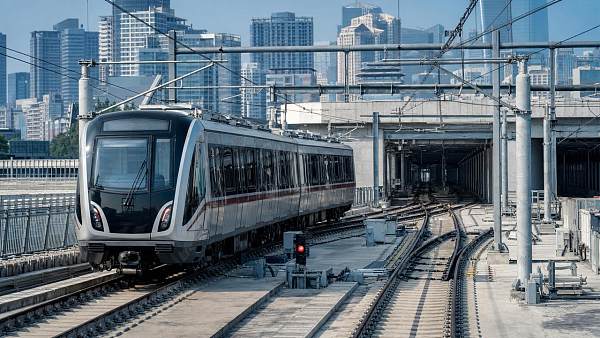
For business evaluators under pressure to balance delivery certainty, compliance, and total project risk, rail Asian manufacturing offers a compelling advantage: speed built on industrial scale, supply-chain coordination, and production discipline.
This article examines what leading Asian rail suppliers get right on delivery speed, and why that matters across complex transit and infrastructure programs with strict timelines.
Understanding delivery speed in rail Asian manufacturing
In rail projects, delivery speed means more than fast factory output. It includes engineering release, supplier alignment, testing cycles, documentation readiness, and shipment reliability.
Rail Asian manufacturing often performs well because delivery is treated as a system capability, not a last-stage logistics task.
That system capability usually combines vertically integrated production, strong vendor ecosystems, and repeatable industrial methods built around large rail volumes.
For high-speed rail, metro, signaling, traction power, and track components, time savings often come from process discipline rather than shortcuts.
What delivery speed really includes
- Shorter design-to-production handoff
- Stable sub-supplier response times
- Parallel quality checks during fabrication
- Earlier preparation of compliance documents
- Better shipment scheduling for oversized rail cargo
Industry signals shaping current attention
Global rail investment is expanding, yet delivery risk remains a critical filter in supplier comparison.
Projects now face compressed commissioning windows, local-content demands, and tighter interface management across multinational engineering teams.
In that environment, rail Asian manufacturing draws interest because it often combines speed with scalable production planning.
What rail Asian manufacturing gets right
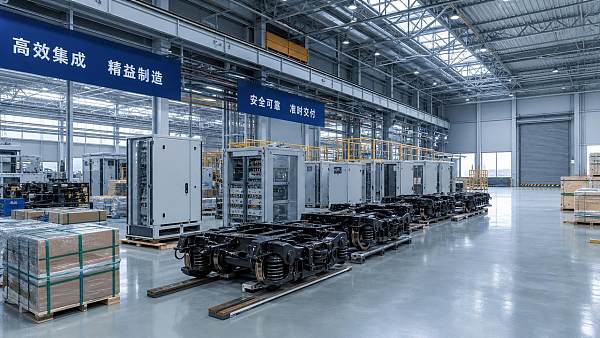
The strongest advantage is industrial clustering. Many rail suppliers operate near forging, casting, machining, electronics, cabling, and testing partners.
That proximity reduces handoff delays, transport loss, and communication gaps between component makers and final assemblers.
1. Scale that supports repeatability
High production volume improves learning curves. Teams refine tooling, sequencing, inspection checkpoints, and packaging routines across repeated rail programs.
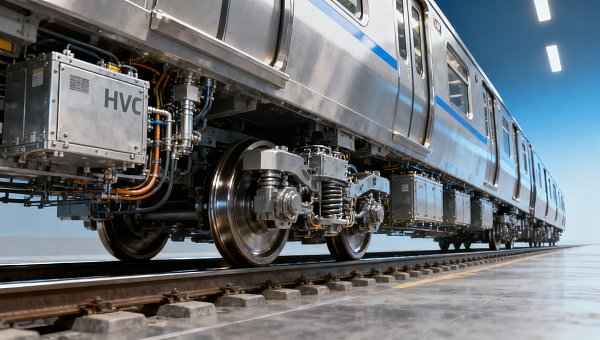
This helps rail Asian manufacturing shorten cycle times while keeping output consistent across bogies, traction systems, doors, HVAC units, or signaling cabinets.
2. Parallel engineering and sourcing
Leading suppliers do not wait for every drawing to be frozen before planning material allocation.
They identify long-lead items early, secure framework supply, and stage alternatives before demand peaks create shortages.
3. Strong domestic supplier ecosystems
Rail Asian manufacturing often benefits from dense supplier networks for steel structures, control electronics, rubber-metal parts, wiring harnesses, and fabricated assemblies.
Shorter domestic transit routes can compress lead times and reduce dependency on fragmented intercontinental sourcing.
4. Production discipline backed by digital visibility
Modern rail factories increasingly use MES, ERP, barcode tracking, and supplier portals to monitor bottlenecks in real time.
The result is faster response to shortages, rework, or inspection exceptions before they damage the overall schedule.
5. Earlier test and documentation planning
Delivery speed fails when goods are complete but certificates, traceability files, or test reports are late.
More mature rail Asian manufacturing programs prepare document packs alongside production, especially for ISO/TS 22163, IEC 62278, and EN 50126 contexts.
Why this matters in business terms
Delivery speed affects more than installation dates. It shapes financing exposure, labor efficiency, interface sequencing, and public project credibility.
When rail Asian manufacturing delivers on time, downstream contractors can stabilize testing plans, site logistics, and commissioning resources.
- Lower risk of idle site teams
- Reduced schedule compression near handover
- Better coordination across civil, MEP, and systems packages
- Fewer expensive late-stage freight upgrades
- Improved confidence in phased network openings
This is especially relevant where penalties, service launch deadlines, or political visibility make time certainty as important as unit cost.
Typical segments where speed performance stands out
Not every product category performs the same way. Delivery speed advantages vary by complexity, standardization level, and certification burden.
How to evaluate delivery speed without oversimplifying
Fast quoted lead time alone is not enough. The better question is whether speed is structurally repeatable under project stress.
Use practical review points
- Check factory loading versus actual installed capacity
- Review long-lead item sourcing plans
- Ask for milestone-level production visibility
- Verify testing resource availability, not just machine lists
- Confirm export packing and shipping readiness
- Examine document control discipline for regulated markets
For rail Asian manufacturing, the most reliable speed advantage appears when technical approvals and production governance are aligned from the start.
Where governance is weak, early gains can disappear during FAT, certification review, or interface reconciliation.
Practical cautions for cross-border rail programs
Delivery speed should never be separated from market-entry readiness. Some suppliers move fast in production but slow down in compliance translation.
Cross-border rail projects should pay attention to these common friction points:
- Mismatch between domestic specifications and overseas codes
- Late localization requests for labeling, manuals, or interfaces
- Insufficient buffer for third-party witnessing
- Port congestion or oversized cargo routing issues
- Version control problems across multinational design teams
The best rail Asian manufacturing partners usually address these risks with front-loaded planning, not reactive expediting.
A grounded next step for evaluation
A useful next step is to compare suppliers through a delivery-readiness matrix rather than headline lead times.
Score production scale, sub-supplier density, certification maturity, test capacity, documentation flow, and export execution together.
That approach reveals why rail Asian manufacturing can outperform on speed when the industrial base is deep and the control systems are mature.
In rail infrastructure, faster delivery is valuable only when it remains auditable, compliant, and repeatable under real project pressure.
The strongest partners are those that convert speed into schedule confidence, not just earlier shipment dates.
Search News
Industry Portal
Hot Articles
Popular Tags
Recommended News
 Jul 03, 2026Are IPL Hair Removal Devices Safe for Home Use? Skin Types, Risks, and Key ChecksIPLhairremovaldevices safety explained: learn which skin types and hair colors fit best, key risks to avoid, and the must-check features before buying for safe home use.
 Jun 24, 2026Car Lighting Buying Guide: Halogen vs LED vs HID for Cost and VisibilityCar lighting buying guide comparing halogen, LED, and HID for cost, visibility, lifespan, and compliance. Discover which option delivers the best value for your vehicle or fleet.
 Jun 23, 2026How to Evaluate Commercial Furniture Manufacturers for Large Office ProjectsCommercial furniture manufacturers: learn how to evaluate quality, capacity, compliance, customization, cost, and lead times for large office projects with confidence.
 Jun 20, 2026Diaperbagsbackpack Buying Guide: What to Check for Travel, Storage, and Daily Usediaperbagsbackpack buying guide: discover what to check for smart storage, travel comfort, durable materials, and daily convenience before you buy the right bag.
 Jun 17, 2026Lighting Features for Metro Cars: Which Specs Matter for Safety and Maintenance?Lighting features for metro cars: learn which safety, emergency, durability, and maintenance specs reduce downtime, improve compliance, and support smarter fleet decisions.
 Jun 15, 2026Metro Car Manufacturer Selection Checklist: Capacity, Standards, Lead Times, and SupportMetro car manufacturer selection starts with the right checklist. Compare capacity, standards, lead times, and after-sales support to reduce risk and choose with confidence.
 Jun 07, 2026Injection Molding Defects Explained: Causes of Warping, Sink Marks, and FlashInjection molding defects explained clearly: learn the real causes of warping, sink marks, and flash, plus practical fixes to improve part quality, fit, and long-term reliability.
 May 20, 2026Is rail urban mobility solving last mile pressure yetRail urban mobility is easing last mile pressure in some cities, but results depend on feeder links, station design, and digital integration. Discover what works best.
 May 19, 2026Is rail global mobility reshaping how fleets are plannedRail global mobility is reshaping fleet planning through compliance, interoperability, modular design, and lifecycle resilience. Discover smarter strategies for future-ready rail investment.
 May 13, 2026What rail Asian manufacturing gets right on delivery speedRail Asian manufacturing stands out for delivery speed through scale, supplier coordination, and production discipline. Discover why leading rail suppliers help reduce project risk and keep timelines on track.
 May 12, 2026Rail Urban Mobility Trends That Are Changing Vehicle PlanningRail urban mobility trends are reshaping vehicle planning with smarter capacity design, digital signaling, low-carbon goals, and lifecycle cost control. Discover practical insights for better transit decisions.
 May 06, 2026What Rail Benchmarking Misses in Fast Growing Metro NetworksRail benchmarking often misses growth-stage risks in fast-growing metro networks. Learn how to assess interoperability, lifecycle costs, and expansion resilience more effectively.
 May 01, 2026Rail Urban Mobility Gaps That Slow Last-Mile ConnectionsRail urban mobility gaps weaken last-mile connections through poor interchanges, fragmented data, and weak planning. Discover practical insights to improve access, ridership, and network resilience.
 Apr 23, 2026Why metro cars gain weight even as efficiency targets riseExplore why urban metro rolling stock is getting heavier despite rail transit efficiency goals. Learn how rail standards, CBTC, ETCS, predictive maintenance, bogie systems, and traction power shape smarter procurement decisions.









Quarterly Executive Summaries Delivered Directly.
Join 50,000+ industry leaders who receive our proprietary market analysis and policy outlooks before they hit the public library.