

What Weak Rail Connectivity Reveals About Network Bottlenecks
Dr. Alistair Thorne
Time
Click Count
Weak rail connectivity rarely stems from a single missing link; it often signals deeper network bottlenecks in signaling, traction power, track capacity, maintenance planning, and cross-border interoperability. For technical evaluators, understanding how rail connectivity breaks down is essential to benchmarking system resilience, identifying hidden performance constraints, and guiding infrastructure decisions that improve throughput, safety, and long-term network efficiency.
What does weak rail connectivity actually mean in technical terms?
In public discussion, rail connectivity is often reduced to whether two cities, terminals, or corridors are physically linked. For technical evaluators, that definition is far too narrow. A corridor may appear connected on a map yet still perform as a fragmented system because train paths cannot be scheduled reliably, traction power is uneven, signaling headways are restrictive, or maintenance windows consume the available capacity.
In practice, weak rail connectivity describes a condition where the network fails to convert infrastructure presence into consistent operational flow. This may show up as chronic delays at junctions, underused cross-border routes, low average speeds, incompatible train control systems, or freight and passenger services competing for the same constrained slots. The issue is not only access, but also transfer quality, interoperability, resilience, and recoverability after disruption.
For organizations such as G-RTI that benchmark system performance across high-speed rail, metro, signaling, track, and power domains, rail connectivity is best understood as a systems integration indicator. When connectivity is weak, it usually reveals that one industrial pillar is limiting the performance of the others.
Why is weak rail connectivity a warning sign of deeper network bottlenecks?
Because railway networks operate as interdependent engineering systems, a visible connectivity problem often originates from hidden constraints. A cross-city link may exist, but if the signaling architecture only supports longer headways, adding more trains becomes impossible without degrading punctuality. A new line may be delivered, but if substations, feeder lines, or regenerative braking interfaces are undersized, traction performance and timetable stability will suffer.
There are five common bottleneck layers behind poor rail connectivity:
- Capacity bottlenecks: flat junctions, terminal throat constraints, mixed traffic conflicts, and overtaking limitations.
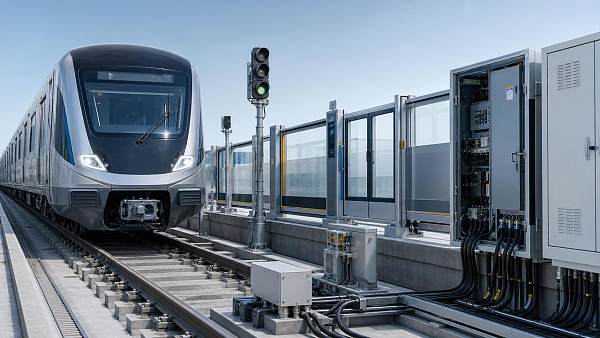
- Signaling bottlenecks: outdated interlockings, fragmented CBTC or ETCS deployment, and inconsistent block logic.
- Power bottlenecks: insufficient traction supply, weak redundancy, voltage instability, or poor load balancing.
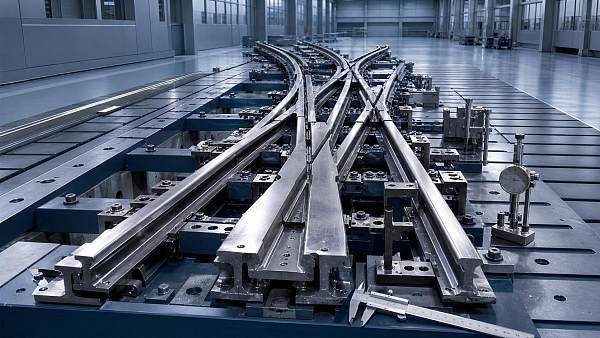
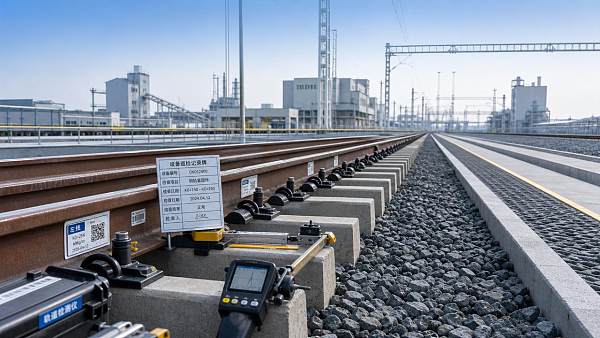
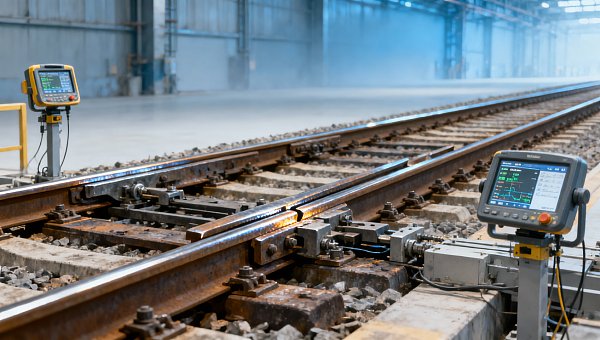
- Asset condition bottlenecks: degraded track geometry, turnout failure rates, and deferred maintenance cycles.
- Interoperability bottlenecks: gauge differences, platform mismatches, certification barriers, and digital communication incompatibility.
A technical evaluator should therefore treat weak rail connectivity not as a standalone symptom but as a network diagnostic clue. It points to where throughput is being lost, where risk is concentrated, and where capex may produce the highest systemic return.
How can technical evaluators tell whether the bottleneck is in track, signaling, or power?
This is one of the most practical questions in rail connectivity assessment. The answer lies in correlating operational symptoms with engineering evidence rather than relying on punctuality data alone. Delays are the outcome; the bottleneck is the mechanism behind them.
If the network shows recurring congestion during timetable peaks, especially near merges, turnbacks, and terminal approaches, the constraint is often geometric or signaling-related. If trains experience speed restrictions, inconsistent acceleration, or performance drops under dense traffic, traction power may be a hidden limiting factor. If service quality erodes after possessions or heavy weather, the underlying problem may be asset condition and maintenance strategy.
The most reliable evaluations combine traffic simulation, infrastructure condition data, signaling architecture review, and power system modeling. Looking at only one layer can lead to expensive misdiagnosis. A line may be blamed for lacking track capacity when the true source of weak rail connectivity is a signaling migration gap or non-optimized possession planning.
Which rail connectivity metrics matter most when benchmarking performance?
Many stakeholders focus on route length or station count, but those are weak proxies. Technical evaluators should prioritize metrics that reveal the network’s ability to sustain safe, predictable, and scalable movement. In benchmarking terms, rail connectivity should be measured through performance transfer, not infrastructure existence alone.
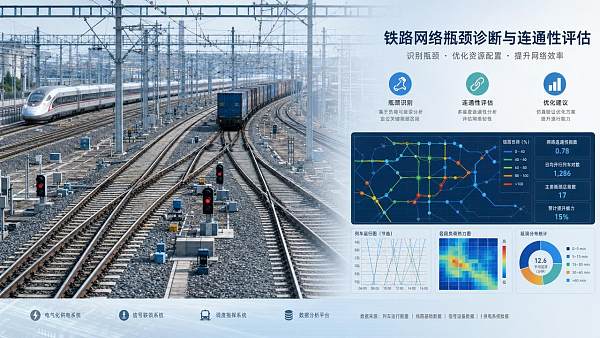
Key metrics include effective line capacity, junction utilization, headway stability, average dwell recovery, delay propagation rate, traction power reserve margin, asset failure frequency, and interoperability readiness. For mixed passenger-freight networks, path heterogeneity is especially important because speed differentials create hidden occupancy losses that reduce practical connectivity even when nominal paths remain available.
Another underused metric is recovery elasticity: how fast the network returns to normal after a disruption. Weak rail connectivity often becomes most visible not during routine operation, but when a minor incident cascades across multiple lines. If one turnout failure paralyzes regional service, the network is technically connected but operationally brittle.
For procurement teams and infrastructure planners, benchmarking against standards and lifecycle expectations is equally important. Evaluations aligned with ISO/TS 22163, IEC 62278, and EN 50126 help ensure that performance claims are not isolated snapshots but part of a credible systems assurance framework.
What are the most common mistakes when interpreting weak rail connectivity?
A frequent mistake is assuming that building a new line automatically solves connectivity problems. New civil infrastructure can increase reach, but if the interfaces with depots, legacy signaling, rolling stock compatibility, and traction supply are unresolved, the network may simply gain a new bottleneck. Connectivity is delivered through integration discipline, not route addition alone.
Another mistake is evaluating rail connectivity through peak demand pressure only. Some corridors fail because demand is too high; others fail because the service plan is structurally inefficient. Sparse but badly synchronized networks can generate long transfer penalties, poor fleet rotation, and weak utilization. In those cases, the issue is not lack of demand but poor systems coordination.
Technical teams also sometimes isolate digital and physical systems. In reality, CBTC, ETCS, telecoms, axle counters, power SCADA, and maintenance analytics all influence how connectivity performs. A line with strong hardware but weak data integration may struggle to manage disruptions, forecast failures, or coordinate possessions efficiently.
Finally, stakeholders may ignore lifecycle cost. Trying to maximize rail connectivity with aggressive timetables on under-maintained assets usually creates short-term capacity gains and long-term reliability losses. For evaluators, sustainable connectivity always includes maintainability, spare strategy, and renewal planning.
How should decision-makers prioritize upgrades when rail connectivity is weak?
The right sequence depends on whether the bottleneck is structural, operational, or interoperability-driven. However, the best upgrade programs tend to follow a logic of constraint removal rather than a logic of asset visibility. In other words, invest first where the network loses the most throughput or resilience per unit of failure.
A practical prioritization model can start with three screening questions. First, which bottleneck produces the highest delay multiplication across the network? Second, which intervention unlocks capacity without creating downstream instability? Third, which upgrade aligns with future operating concepts such as higher service frequency, longer consists, or cross-border harmonization?
- Short term: retiming, dispatching rule updates, maintenance window redesign, temporary power balancing, and selective turnout renewal.
- Medium term: interlocking modernization, ETCS or CBTC expansion, substation reinforcement, siding optimization, and predictive maintenance deployment.
- Long term: grade separation, terminal reconfiguration, dedicated freight or passenger segregation, full interoperability upgrades, and digital twin-based capacity planning.
For technical evaluators, the most valuable proposals are those that demonstrate quantified network effect. A project that improves one node but worsens possession complexity elsewhere may not improve rail connectivity overall. The benchmark should be system throughput, reliability, and lifecycle efficiency together.
How does weak rail connectivity affect procurement, suppliers, and cross-border projects?
Weak rail connectivity changes the procurement conversation from component selection to interface assurance. Buyers can no longer ask only whether a traction motor, bogie, signaling package, or maintenance platform meets local specification. They must ask whether that solution improves interoperability, supports network recovery, and fits the regulatory frameworks of target markets.
This is especially relevant in global procurement environments where Asian manufacturing strength meets European, American, or Middle Eastern compliance requirements. A technically advanced subsystem may still fail to improve rail connectivity if certification pathways are unclear, communication protocols are incompatible, or maintenance competencies are not transferable across operators. G-RTI’s value in this context lies in benchmarking not just hardware performance but also standards alignment, supply chain readiness, and deployment credibility.
For EPC contractors and Tier-1 manufacturers, connectivity-led evaluation also sharpens tender strategy. Projects increasingly reward suppliers that can prove integration capability across mechanical, digital, and structural domains. Winning bids will often come from teams that show how a solution reduces headway constraints, improves power stability, or lowers maintenance-induced capacity loss rather than simply offering isolated equipment efficiency.
Before acting on a rail connectivity problem, what should teams confirm first?
Before launching a redesign, retrofit, or tender, teams should validate the problem definition. Is the weak rail connectivity issue caused by insufficient infrastructure, poor timetable design, maintenance backlog, standards mismatch, or data visibility gaps? Misframing the question leads to misallocated capital.
A sound pre-decision checklist usually includes confirmed traffic forecasts, route conflict analysis, signaling capacity verification, traction load assessment, asset health trends, possession strategy review, and interoperability mapping. It should also test whether the proposed intervention works under degraded mode, not only under ideal operation.
If weak rail connectivity is affecting a specific corridor or project pipeline, the most useful next discussion points are clear and practical: which node is constraining throughput, what standards govern the upgrade path, what lifecycle risks remain unresolved, how long implementation will disrupt service, and which supplier capabilities are critical to integration success. Those are the questions that turn a visible connectivity problem into an evidence-based infrastructure decision.
Search News
Industry Portal
Hot Articles

Popular Tags
Recommended News
 Jun 27, 2026How to Evaluate a Railway Turnout Factory: Capacity, Standards, and QA PointsRailway turnout factory evaluation starts with capacity, standards, and QA. Learn how to verify compliance, traceability, and production reliability before you shortlist suppliers.
 May 16, 2026Where rail engineering integrity fails before systems go liveRail engineering integrity often fails before go-live through hidden gaps in requirements, interfaces, and testing. Discover the key risks and how to prevent costly delays.
 May 12, 2026Why Rail Track Maintenance Quality Issues Keep ReturningRail track maintenance issues keep returning for reasons beyond surface repairs. Discover the root causes, hidden control gaps, and practical fixes that improve safety, traceability, and long-term performance.
 May 01, 2026What Weak Rail Connectivity Reveals About Network BottlenecksRail connectivity issues often expose hidden bottlenecks in signaling, power, track capacity, and interoperability. Discover how experts diagnose constraints and improve network resilience.
 Apr 23, 2026Turnouts and switches wear patterns can mislead inspectionsRail track maintenance and predictive maintenance insights: learn how turnout and switch wear patterns can mislead inspections, affect ETCS, CBTC signaling, and rail infrastructure decisions.
Quarterly Executive Summaries Delivered Directly.
Join 50,000+ industry leaders who receive our proprietary market analysis and policy outlooks before they hit the public library.