

Turnouts and switches wear patterns can mislead inspections
Dr. Alistair Thorne
Time
Click Count
Wear patterns in turnouts and switches can distort inspection results, creating hidden risks for high-speed rail, urban metro transit, and wider rail infrastructure. For EPC contractors, rolling stock manufacturers, and procurement directors, accurate track maintenance and predictive maintenance depend on aligning field observations with rail standards, ETCS, CBTC signaling, and rail regulatory frameworks across European, Middle East, and Asian manufacturing markets.
Why turnout and switch wear patterns often lead to wrong maintenance decisions
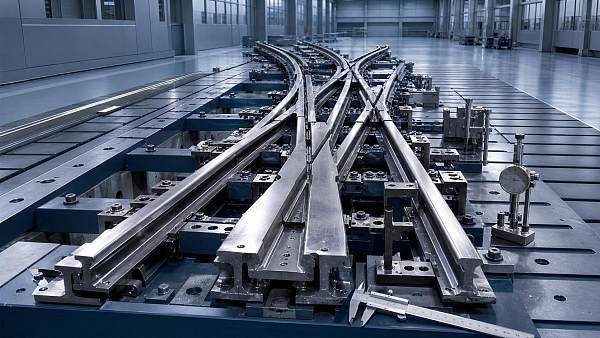
In rail infrastructure, turnouts and switches are among the most inspection-sensitive assets because they combine moving parts, contact stress, vibration, geometry transitions, and signaling interfaces in one location. A worn railhead, damaged switch blade, or repeated contact mark may look familiar to field teams, yet the visual pattern alone does not always show the true root cause. In practice, misleading wear can mask alignment issues, wheel-rail interaction problems, lubrication failures, fastening instability, or traffic mix changes.
This matters even more in high-speed rail and urban metro systems where maintenance windows are short, often limited to 2–4 hours overnight in dense operating corridors. If inspectors classify a wear pattern too quickly, operators may replace the wrong component, defer the real intervention, or misjudge residual life. The result is not only higher maintenance cost, but also elevated risk to ride quality, switch reliability, and route availability.
For information researchers and technical evaluators, the main challenge is separating visible wear from causative wear. A polished contact surface may indicate normal traffic adaptation in one network, but in another it can be an early sign of gauge-face stress concentration. Commercial evaluators face a parallel problem: procurement data often focuses on unit price, while the actual decision should include inspection complexity, spare strategy, compatibility with existing turnout design, and lifecycle maintenance frequency.
G-RTI approaches this issue through cross-market benchmarking. Instead of reading turnout wear as an isolated local defect, the platform compares mechanical behavior, maintenance logic, compliance pathways, and digital inspection maturity across Asian manufacturing sources and regulated European, American, and Middle Eastern rail environments. That perspective is valuable when a project team must judge whether a wear pattern is a local anomaly, a design mismatch, or a maintenance process gap.
What makes visual inspection alone unreliable
Visual inspection remains necessary, but it has limits. On a turnout, at least 5 variables can influence the same visible wear trace: axle load distribution, wheel profile condition, switch actuation behavior, rail steel grade, and drainage or contamination exposure. When two or more variables overlap, similar marks may represent very different operational risks. That is why surface appearance should be correlated with geometry measurement, traffic history, ultrasonic findings where applicable, and maintenance records over a defined period such as 3, 6, or 12 months.
- A bright polished zone can be normal running contact, or it can indicate contact shift caused by poor alignment.
- Edge chipping may suggest material fatigue, but it may also be linked to wheelset condition outside the turnout itself.
- Repeated blade marks can be interpreted as local wear, even when the deeper issue is machine adjustment or locking performance.
- Localized corrugation can be mistaken for rail quality issues, although traffic pattern and vibration resonance may be the dominant drivers.
Which wear patterns are most commonly misread in rail infrastructure projects
Not every turnout defect is equally difficult to interpret. Some patterns are repeatedly misread across mixed fleets, cross-border rail programs, and metro modernization projects. The challenge increases when networks import components from one manufacturing base but apply them under another regulatory or operating framework. A switch designed for one traffic density or lubrication practice may show wear differently under a heavier duty cycle or tighter maintenance interval.
For technical and commercial teams, it helps to classify wear by operational significance rather than by appearance alone. In other words, ask three questions first: Does the pattern affect guidance or load transfer? Does it change actuation reliability? Does it accelerate downstream maintenance cost? These three filters are more useful than cosmetic judgment, especially in tender review and asset renewal planning.
The table below summarizes common turnout and switch wear patterns that can mislead inspections and shows what procurement, engineering, and maintenance teams should verify before defining corrective action.
The practical lesson is simple: a turnout inspection should move from pattern recognition to evidence correlation. If the field team logs only the visible mark, decision-makers may fund reactive replacement. If they add geometry, traffic, actuation, and standards context, they can distinguish routine degradation from a system-level reliability threat. This is especially important in projects involving ETCS, CBTC, or mixed interoperability requirements, where infrastructure condition also affects operational confidence and maintenance planning.
Where misleading wear is most likely to appear
Misleading turnout wear appears most often in four environments: high-throughput urban metro lines, high-speed diverging routes, freight-passenger mixed corridors, and recently renewed sections where old rolling stock interacts with new turnout geometry. In these contexts, inspection teams may face 3 competing pressures at once: limited access time, high service reliability targets, and incomplete lifecycle data. That combination increases the chance of incorrect diagnosis.
Typical trigger conditions
- Traffic density changes over a 6–12 month period without matching updates to inspection criteria.
- Cross-border sourcing where component material grades and maintenance manuals differ by market.
- Digital inspection tools adopted faster than field calibration and training procedures.
- Renewal programs that replace rails or machines, but not the full turnout support system.
For distributors and agents, this also affects after-sales positioning. If a market expects “drop-in replacement” but the real need is system-level fit verification, product claims must be supported with installation conditions, maintenance assumptions, and compliance documents. Otherwise, a component may be blamed for wear that actually originates in the asset environment.
How technical teams should verify turnout wear before replacement or tendering
Before approving replacement, issuing a tender, or locking a supplier shortlist, technical teams should verify turnout and switch wear through a structured process rather than a single inspection note. In most rail projects, a 4-step method works well: field observation, dimensional validation, operational correlation, and maintenance strategy review. This sequence reduces the risk of spending on urgent parts that do not solve the underlying infrastructure problem.
A strong verification process also improves communication between engineering and procurement. Engineers can define whether the issue concerns wear rate, geometric tolerance, actuation reliability, or component compatibility. Commercial teams can then compare offers using measurable decision points instead of broad labels. This is especially useful when evaluating suppliers from multiple regions, where documentation depth and terminology may vary.
A practical 4-step verification workflow
- Record visible wear location, direction, and progression against the turnout layout, not just as a photo archive.
- Measure associated parameters such as gauge, alignment trend, support condition, and if applicable actuation or locking behavior within the same inspection window.
- Review traffic profile over the last 3–12 months, including axle load pattern, speed profile, route setting frequency, and fleet mix.
- Match findings to maintenance standards, renewal thresholds, and available supplier documentation before defining scope.
For B2B decision-makers, the important point is that procurement quality begins with diagnostic quality. If the verification step is weak, even a compliant supplier may enter a contract with the wrong bill of materials, incorrect spare ratio, or unrealistic maintenance expectation. That can affect delivery planning, technical acceptance, and warranty discussions later in the project.
The next table provides a procurement-oriented framework for evaluating turnout wear findings before committing to replacement, refurbishment, or monitoring-only action.
This evaluation method is particularly useful for EPC contractors and procurement directors dealing with multi-country rail supply chains. A lower unit price may look attractive, but if compatibility checks are incomplete or maintenance assumptions differ from the operator’s reality, the total project cost can rise quickly through rework, access delays, or additional certification effort.
What standards, signaling context, and compliance checks should not be overlooked
Turnout and switch wear cannot be assessed in isolation from the wider rail system. In modern rail infrastructure, inspection quality is tied to standards, signaling architecture, safety processes, and maintenance governance. When networks operate under ETCS, CBTC, or other advanced train control environments, turnout reliability has a broader operational impact because infrastructure faults can trigger route restrictions, degraded modes, or timetable disruption beyond the localized asset itself.
Project teams should therefore review at least 3 layers of compliance. First, component and manufacturing consistency. Second, system-level safety and reliability processes. Third, operator-specific maintenance and acceptance rules. G-RTI’s strength is that it benchmarks these layers together, helping decision-makers understand how hardware choices, inspection procedures, and regulatory expectations interact across regions.
Relevant standards and framework logic
Depending on project scope, teams commonly reference frameworks such as ISO/TS 22163 for rail quality management context, IEC 62278 and EN 50126 for lifecycle-oriented reliability, availability, maintainability, and safety logic, plus local operator maintenance standards and infrastructure tolerances. These documents do not provide a single universal wear limit for every turnout, but they shape how evidence is recorded, how risk is reviewed, and how maintenance decisions are justified.
Minimum compliance checklist for inspection review
- Confirm whether the observed turnout wear affects a safety-related function, actuation reliability, or route integrity.
- Check whether maintenance records follow a traceable cycle, such as weekly, monthly, quarterly, and annual review levels.
- Verify that replacement or refurbishment proposals align with the operator’s approved materials, geometry tolerances, and inspection methods.
- Ensure signaling and interlocking interfaces are considered whenever turnout behavior may affect detection, route setting, or degraded operation rules.
For business evaluators, compliance is not only a legal or technical issue. It directly influences tender risk, project timeline, and supplier selection. A supplier with strong component pricing but weak documentation support can create delays of several weeks during approval review. In cross-border rail projects, that delay may be more costly than the original savings on hardware.
How buyers, distributors, and technical evaluators can reduce cost without increasing inspection risk
Budget pressure is common in turnout maintenance, especially when networks manage large installed bases and multiple switch types. Yet cost control should not mean cheaper replacement by default. The better approach is to match intervention level to verified wear significance. In many cases, the real choice is not simply replace versus do nothing. It may involve 3 practical paths: continue monitored service, perform targeted refurbishment, or execute full replacement with compatibility review.
Distributors and agents can add real value when they present options in lifecycle terms. That means showing spare availability, documentation quality, maintenance interval assumptions, and retrofit constraints alongside price. Technical evaluators should also look at access cost. A turnout component that saves money on purchase but requires longer installation possession can become less competitive in a metro system with limited 2–3 hour night windows.
Decision points that influence total cost
- Possession time: shorter installation windows may justify higher component cost if they reduce service disruption.
- Spare strategy: stocking critical parts for 12–24 months can lower emergency sourcing risk in high-utilization corridors.
- Inspection burden: components that require specialized verification tools may increase operating cost over time.
- Approval burden: alternative materials or geometries may trigger additional review and acceptance steps.
When teams use G-RTI intelligence, they can compare supplier capability, standards alignment, and regional market practice before issuing a purchasing decision. This is especially useful in projects linking Asian production strength with European, American, and Middle Eastern compliance expectations. The outcome is not merely lower price exposure, but better predictability in delivery, technical acceptance, and long-term maintenance performance.
Common purchasing mistakes to avoid
A frequent mistake is buying to the visible defect rather than to the asset condition. Another is treating turnout wear as a component issue when the root cause sits in geometry, wheel condition, or maintenance process. A third is assuming that a part qualified in one rail market can be transferred directly to another without checking operating profile and documentation expectations. These errors are avoidable when procurement combines field evidence, standards review, and supply chain benchmarking.
In practical terms, buyers should request at least 5 categories of information before approval: material specification, dimensional compatibility, maintenance guidance, inspection recommendations, and compliance documents relevant to the target market. If any of these are unclear, price comparison alone is not enough to support a sound commercial decision.
FAQ, risk reminders, and why rail decision-makers work with G-RTI
How do I know whether turnout wear is normal or a sign of a deeper infrastructure issue?
You need more than a visual snapshot. Normal wear usually shows stable progression across repeated inspections and remains consistent with traffic type, route setting frequency, and geometry condition. A deeper issue is more likely when wear changes noticeably across 2–3 inspection cycles, appears asymmetrical without operational reason, or coincides with poor actuation behavior, vibration complaints, or recurring maintenance at the same location.
What should technical evaluators focus on during supplier selection?
Focus on fit, evidence, and support. Fit means compatibility with existing turnout geometry, machine interface, and operating conditions. Evidence means clear documentation for material, tolerances, and maintenance assumptions. Support means spare strategy, delivery planning, and acceptance assistance. In many rail projects, these three factors are more decisive than nominal unit price because they shape installation risk and lifecycle predictability.
Are predictive maintenance tools enough to solve misleading wear interpretation?
Not by themselves. Predictive maintenance can improve trend detection, especially when data is collected monthly or in near-real time, but the output is only as reliable as the inspection logic behind it. Digital tools should be linked to mechanical understanding, field calibration, and standards-based review. Otherwise, a network may automate incorrect assumptions instead of improving maintenance accuracy.
What can distributors or agents offer beyond product supply?
They can reduce decision friction by organizing technical files, clarifying market-specific compliance, mapping replacement compatibility, and helping customers compare refurbishment versus replacement options. In rail infrastructure, channel partners become far more valuable when they support 4 areas together: technical clarification, lead-time communication, documentation completeness, and after-sales maintenance coordination.
Why choose G-RTI when assessing turnout and switch wear risk?
G-RTI connects technical benchmarking with procurement reality. The platform covers High-Speed Rail systems, Urban Metro and Transit, Advanced Signaling and Communication, Track Infrastructure and Maintenance, and Traction Power Supply in one integrated view. That matters when turnout wear is not only a maintenance question, but also a sourcing, compliance, and lifecycle planning issue across different rail markets.
If your team is reviewing turnout and switch wear patterns, planning a renewal package, or comparing suppliers across Asian, European, American, or Middle Eastern project frameworks, contact G-RTI for targeted support. You can consult on parameter confirmation, replacement versus refurbishment logic, standards and certification pathways, delivery cycle expectations, spare strategy, tender benchmarking, and custom technical-commercial comparison for your rail infrastructure project.
Search News
Industry Portal
Hot Articles

Popular Tags
- rail infrastructure
- high-speed rail systems
- urban metro transit
- CBTC signaling
- traction power supply
- rolling stock manufacturers
- rail supply chain
- ISO/TS 22163
- IEC 62278
- EN 50126
- high-speed rail
- urban metro
- CBTC
- ETCS
- track maintenance
- traction power
- rolling stock
- predictive maintenance
- EPC contractors
- rail standards
- rail regulatory frameworks
Recommended News
 Jun 27, 2026How to Evaluate a Railway Turnout Factory: Capacity, Standards, and QA PointsRailway turnout factory evaluation starts with capacity, standards, and QA. Learn how to verify compliance, traceability, and production reliability before you shortlist suppliers.
 May 16, 2026Where rail engineering integrity fails before systems go liveRail engineering integrity often fails before go-live through hidden gaps in requirements, interfaces, and testing. Discover the key risks and how to prevent costly delays.
 May 12, 2026Why Rail Track Maintenance Quality Issues Keep ReturningRail track maintenance issues keep returning for reasons beyond surface repairs. Discover the root causes, hidden control gaps, and practical fixes that improve safety, traceability, and long-term performance.
 May 01, 2026What Weak Rail Connectivity Reveals About Network BottlenecksRail connectivity issues often expose hidden bottlenecks in signaling, power, track capacity, and interoperability. Discover how experts diagnose constraints and improve network resilience.
 Apr 23, 2026Turnouts and switches wear patterns can mislead inspectionsRail track maintenance and predictive maintenance insights: learn how turnout and switch wear patterns can mislead inspections, affect ETCS, CBTC signaling, and rail infrastructure decisions.



Quarterly Executive Summaries Delivered Directly.
Join 50,000+ industry leaders who receive our proprietary market analysis and policy outlooks before they hit the public library.