

How EPC rail contractors influence schedule certainty
Dr. Alistair Thorne
Time
Click Count
How EPC rail contractors are becoming the anchor of schedule certainty
For project leaders under pressure to deliver rail programs on time, schedule certainty is more than a metric—it is a strategic advantage.
EPC rail contractors shape that advantage by integrating engineering, procurement, and construction within one accountable delivery model.
In complex rail and transit infrastructure, fragmented responsibility often creates hidden delay drivers long before site works begin.
When design packages, long-lead materials, system interfaces, and civil execution are controlled separately, schedule risk multiplies across every milestone.
That is why EPC rail contractors increasingly influence delivery confidence across high-speed rail, metro, signaling, track, and traction power programs.
Their value is not limited to construction capacity.
It comes from synchronized planning, supplier coordination, interface control, regulatory alignment, and disciplined change management across the project lifecycle.
For global rail markets facing tighter compliance, volatile supply chains, and larger capital commitments, that integrated model is gaining strategic weight.
Why schedule certainty matters more in today’s rail delivery environment
Rail delivery has become more complex, not less.
Projects now combine digital signaling, traction power, depot systems, rolling stock interfaces, and sustainability requirements under aggressive public deadlines.
At the same time, compliance expectations across EN 50126, IEC frameworks, and quality systems such as ISO/TS 22163 are rising.
This creates a strong trend across the broader infrastructure sector.
Owners are moving away from loosely coordinated package delivery and toward models that compress interfaces and centralize accountability.
In that transition, EPC rail contractors become more influential because they can connect technical decisions with schedule impact in real time.
The shift is especially visible in cross-border rail corridors, urban transit expansion, and high-capacity upgrade programs.
These projects rarely fail because of one dramatic event.
They slip because many small coordination failures remain unresolved until they collide on the critical path.
The strongest trend signals behind the rise of EPC rail contractors
Several structural signals explain why EPC rail contractors now have greater influence on schedule certainty.
These signals are not temporary.
They reflect a broader infrastructure reality where fragmented delivery creates unacceptable exposure to cost escalation and political scrutiny.
How EPC rail contractors influence schedule certainty in practical terms
The influence of EPC rail contractors is strongest where schedule risk usually hides: at interfaces, handoffs, and decision bottlenecks.
1. They align engineering maturity with procurement timing
Rail projects often suffer when procurement begins before design assumptions are stable, or when design progress ignores supplier lead times.
EPC rail contractors close that gap by linking model development, approvals, vendor data, and installation sequencing under one schedule logic.
This is critical for switches, substations, telecom equipment, SCADA systems, and signaling hardware with long manufacturing cycles.
2. They reduce interface risk across packages
Schedule certainty weakens quickly when separate contractors dispute access windows, design ownership, or testing responsibilities.
EPC rail contractors manage these dependencies earlier through common baselines, integrated reviews, and consolidated risk registers.
That discipline lowers the chance of late-stage clashes between track geometry, platform works, overhead systems, and signaling clearances.
3. They improve decision speed during disruption
Unexpected events are normal in rail construction.
Ground conditions change, permits slow, shipment dates move, and testing reveals nonconformities.
With fragmented contracting, each issue may trigger claims, debate, and delay.
With EPC rail contractors, the response path is usually shorter because design, sourcing, and field execution sit inside one governance structure.
4. They strengthen commissioning readiness
Many rail schedules look healthy until testing and commissioning begin.
That stage exposes missing documentation, incomplete interfaces, software mismatches, and unresolved punch items.
EPC rail contractors can protect final milestones by planning verification, validation, and system integration from early design stages.
What drives this influence across the wider rail and transit value chain
The growing influence of EPC rail contractors is tied to deeper market forces, not only contracting preference.
- Rail systems are now multi-disciplinary platforms combining civil, electrical, digital, and operational technologies.
- Global supply chains demand stronger procurement intelligence, qualification control, and delivery tracking.
- Safety and interoperability frameworks require earlier evidence management and configuration discipline.
- Funding bodies increasingly prioritize predictable completion over lowest initial package cost.
- Urban rail expansion leaves less tolerance for service disruption and extended possession windows.
Organizations such as G-RTI highlight this pattern through benchmarking across HSR systems, urban metro, signaling, track infrastructure, and traction power supply.
Performance data repeatedly shows that delivery reliability depends on cross-functional integration as much as on component quality.
Where the impact of EPC rail contractors is most visible
The effect of EPC rail contractors varies by business stage, but some pressure points stand out.
This matters across the comprehensive industry landscape because rail projects are often connected to urban growth, industrial policy, and decarbonization targets.
A delayed line affects more than one contract.
It can delay ridership benefits, logistics capacity, land value capture, and broader infrastructure credibility.
What should be examined before relying on EPC rail contractors
Not every integrated contract automatically delivers schedule certainty.
The real question is whether EPC rail contractors have the systems, evidence, and technical depth to manage complexity effectively.
- Check interface management capability across civil works, signaling, power, telecom, and depot systems.
- Review supplier qualification methods for critical equipment and international compliance requirements.
- Assess experience with phased commissioning, brownfield integration, and operational rail environments.
- Confirm digital planning maturity, including progress reporting, risk visibility, and change control workflows.
- Examine how testing, safety assurance, and documentation are embedded into early delivery planning.
These checks help distinguish between contractual integration on paper and true schedule integration in practice.
How to respond to the trend with stronger delivery strategy
A practical response starts with clearer evaluation criteria and more realistic schedule governance.
- Define schedule certainty as a measurable outcome, not only a contract promise.
- Prioritize contractors that can evidence integrated engineering and procurement performance.
- Use technical benchmarking to compare delivery methods across system types and regulatory regions.
- Stress-test baselines against permitting, logistics, access constraints, and interface dependencies.
- Track leading indicators such as design release readiness, supplier expediting status, and commissioning preparedness.
The most resilient rail programs treat EPC rail contractors as schedule integrators, not merely package executors.
That perspective creates better alignment between technical decisions, market realities, and final delivery commitments.
The next step for improving schedule certainty in rail programs
As rail investments expand globally, schedule certainty will remain a defining competitive and institutional concern.
EPC rail contractors influence that outcome because they sit at the junction of design intent, procurement timing, construction sequencing, and commissioning readiness.
The most effective next step is to benchmark delivery capability with the same rigor used for technical specification review.
Using market intelligence, compliance insight, and cross-system performance data can reveal which EPC rail contractors are best positioned to protect critical milestones.
In a market shaped by complexity and scrutiny, certainty is rarely accidental.
It is designed, coordinated, measured, and defended throughout execution.
Search News
Industry Portal
Hot Articles
Popular Tags
Recommended News
 May 17, 2026How EPC rail contractors influence schedule certaintyEPC rail contractors improve schedule certainty by aligning design, procurement, construction, and commissioning. Discover how integrated delivery reduces delays and protects critical rail milestones.
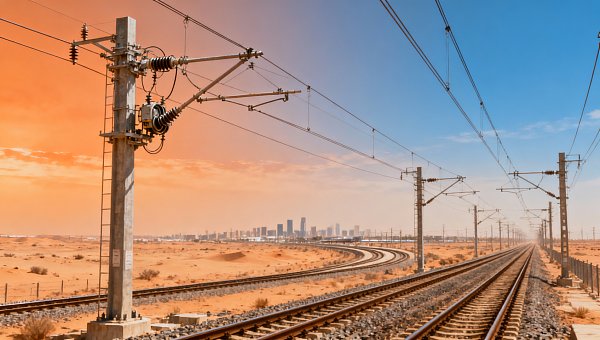
 Apr 23, 2026Catenary systems need tighter tolerance in hotter climatesRail standards and predictive maintenance are reshaping catenary design in hotter climates. See how EPC contractors and procurement leaders can improve rail transit efficiency, compliance, and lifecycle performance.
Quarterly Executive Summaries Delivered Directly.
Join 50,000+ industry leaders who receive our proprietary market analysis and policy outlooks before they hit the public library.