

Catenary systems need tighter tolerance in hotter climates
Dr. Alistair Thorne
Time
Click Count
As hotter climates push catenary systems beyond traditional design limits, tighter tolerance control is becoming essential for high-speed rail, urban metro transit, and traction power supply networks. For EPC contractors, rolling stock manufacturers, and rail procurement directors, this shift affects rail regulatory compliance, track maintenance, predictive maintenance, and alignment with rail standards such as EN 50126, IEC 62278, and ISO/TS 22163.
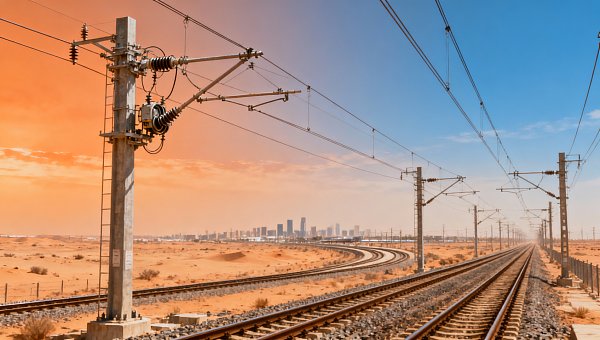
Across desert corridors, tropical urban networks, and high-solar-load depots, the thermal behavior of overhead contact systems is no longer a secondary engineering detail. A 10°C to 20°C rise above historical operating assumptions can change wire tension, sag, uplift response, and pantograph interaction enough to influence both reliability and lifecycle cost. For decision-makers comparing suppliers, specifications, and maintenance models, tolerance discipline is now directly linked to safety, speed stability, and long-term asset performance.
This matters especially for organizations managing cross-border procurement and system integration. In hot-weather rail projects, the wrong tolerance window may not fail immediately, but it often appears later through accelerated wear, more frequent inspections, reduced operating margins, and costly re-tensioning campaigns. For technical evaluators and commercial teams alike, understanding where tighter control is needed helps reduce project risk before installation begins.
Why heat changes the tolerance equation in catenary systems
Catenary systems are designed to maintain a stable contact relationship between the contact wire and the pantograph over long distances, often across 5 km, 20 km, or even 100 km sections. In hotter climates, the thermal expansion of contact wire, messenger wire, droppers, and support components becomes more pronounced. Even when all materials remain within their nominal design range, the combined movement can narrow acceptable installation and operating tolerances.
For high-speed rail operating at 250 km/h to 350 km/h, a few millimeters of additional sag or a small variation in stagger may have a larger effect than it would on a low-speed network. Metro systems face a different challenge: frequent acceleration cycles, dense station spacing, and high service frequency can amplify wear if the overhead line geometry is not tightly controlled. In both cases, heat reduces the margin for installation error.
The issue is not only absolute temperature. Daily thermal cycling also matters. In regions where night-to-day swings reach 15°C to 25°C, repeated expansion and contraction can shift component alignment over time. This creates cumulative tolerance drift, particularly in sections with older fittings, mixed-material assemblies, or inconsistent workmanship during installation.
For procurement teams, this means technical specifications should move beyond broad wording such as “suitable for hot climates.” Instead, tenders need measurable thresholds for wire height variation, registration arm alignment, tensioning performance, and inspection frequency. A tighter tolerance strategy is most effective when it is defined at the design stage, verified at commissioning, and monitored throughout operations.
Typical heat-driven changes that affect performance
- Contact wire sag increase under peak daytime conditions, especially in exposed corridors with strong solar radiation.
- Tension fluctuation in auto-tensioned sections when the compensation range is not optimized for local temperature extremes.
- Registration offset changes at supports, portals, and overlaps, which can alter pantograph contact quality.
- Higher risk of uneven wear where installation tolerance already starts near the upper limit of the accepted range.
Operational implications by rail segment
The table below summarizes how hotter climates change tolerance requirements across common rail applications. It is useful for information researchers and technical assessment teams comparing design priorities across HSR, metro, and conventional electrified lines.
The key takeaway is that hotter climates do not create a single universal problem. They increase the sensitivity of different subsystems in different ways. That is why tolerance policy should be application-specific rather than copied from temperate-climate projects.
Which tolerances become critical as temperatures rise
Not every dimension in an overhead contact system needs to be tightened equally. The most critical tolerances are those that directly affect dynamic current collection and long-term mechanical stability. In practical terms, project teams should focus on wire height, stagger, tensioning range, support geometry, and the consistency of installation across adjacent spans.
In hot-weather design review, even a tolerance that appears acceptable on paper can become marginal once thermal expansion is layered onto wind load, support settlement, and wear. This is why many rail authorities and engineering consultants increasingly prefer tighter field verification bands in exposed zones, maintenance depots, viaduct sections, and desert routes. These are often the locations where the combined effect of heat and geometry variation becomes most visible within the first 12 to 24 months.
For distributors, agents, and solution partners, this creates a commercial shift as well. Buyers are less interested in standalone component claims and more interested in system-level tolerance integrity. A supplier that can document stable performance across temperature bands, installation stages, and maintenance cycles is typically more competitive than one offering only nominal product compliance.
The practical goal is not zero deviation. It is to control deviation tightly enough that the catenary system remains predictable under thermal stress. That usually requires better survey practices, clearer acceptance criteria, and stronger linkage between design assumptions and maintenance strategy.
Priority tolerance checkpoints
1. Contact wire height and sag
Where ambient peaks regularly exceed 40°C, contact wire sag behavior should be reviewed against the local thermal envelope rather than the nominal annual average. A tolerance window that is manageable at 25°C may become operationally tight at 45°C, especially over long spans or under high solar exposure.
2. Stagger and registration accuracy
Stagger consistency is essential for even wear. If thermal movement shifts registration points beyond the expected range, pantograph contact can become less uniform, accelerating strip and wire wear. This is especially relevant in urban curves, station throats, and complex turnout areas.
3. Auto-tensioning and compensation range
Counterweight or tensioning systems need enough effective travel to accommodate thermal expansion across the full operating range. In hot climates, engineers often assess whether the compensation margin remains robust through both peak daytime heat and cooler nighttime conditions, rather than only one design point.
Recommended evaluation matrix for procurement and technical review
A structured review matrix helps procurement and engineering teams align technical performance with commercial decisions. The table below can be adapted during prequalification, bid comparison, or FAT/SAT planning.
This matrix helps separate robust system proposals from compliance-only offers. In large rail tenders, that distinction can materially affect whole-life cost, spare parts planning, and operational risk exposure.
Design, maintenance, and standards alignment for hotter regions
In practice, tighter tolerance control is not a single design adjustment. It is a chain of decisions that starts with climate assumptions, continues through component selection and installation quality, and ends in maintenance execution. If one link is weak, the system may still pass initial acceptance but underperform after one or two hot seasons.
For this reason, standards alignment should be treated as a framework for disciplined engineering rather than a checklist. EN 50126, IEC 62278, and ISO/TS 22163 are often relevant because they reinforce traceability, lifecycle thinking, and process control. They do not prescribe every local tolerance, but they support the structured methods needed to define, validate, and maintain tighter tolerances over time.
Maintenance teams also need a hotter-climate logic. Instead of fixed annual inspection models alone, many networks benefit from season-based or risk-based intervention planning. For example, exposed sections may require inspection every 3 to 6 months during the first year after commissioning, while sheltered segments remain on a 6 to 12 month cycle. This targeted approach improves visibility without inflating maintenance burden across the entire route.
Predictive maintenance has become especially relevant here. Digital measurement of wire wear, temperature response, and contact quality can identify tolerance drift before it turns into a service disruption. For procurement directors, the decision is no longer only about hardware CAPEX; it is also about whether the OCS package supports measurable condition monitoring and data-driven maintenance planning.
A practical 5-step implementation path
- Define local thermal envelope using realistic peak and cycling conditions, not only historical averages.
- Translate climate assumptions into measurable installation and acceptance tolerances for critical geometry points.
- Validate compensation range, support alignment, and system integration before commissioning.
- Set segmented maintenance intervals for high-risk zones such as viaducts, depots, and desert sections.
- Use predictive maintenance data to refine tolerance thresholds during the first 12 to 18 months of operation.
Common implementation gaps
- Applying temperate-climate acceptance criteria to networks where daytime rail corridor temperatures regularly exceed 45°C.
- Treating wire tension calculations as sufficient without field verification of geometry under actual thermal conditions.
- Using the same inspection frequency for low-risk and high-risk sections, which hides localized tolerance drift.
- Separating commercial evaluation from maintenance strategy, leading to low upfront cost but higher lifecycle intervention.
For G-RTI audiences, the strategic value lies in connecting these technical decisions to procurement quality. Benchmarking suppliers against standards, process maturity, and climate-fit tolerance practice creates a more reliable basis for cross-market comparison, particularly where Asian manufacturing output must meet European, American, or Middle Eastern operating expectations.
Procurement guidance, risk control, and frequently asked questions
Commercial teams evaluating catenary systems for hotter climates should avoid narrow price comparisons. A lower bid can become more expensive if it requires more re-tensioning, more manual inspections, or earlier component replacement. The better approach is to compare technical fit, quality assurance process, maintainability, and climate-specific tolerance capability on the same decision grid.
For dealers, agents, and distributors, this also means framing the offer around measurable outcomes: reduced tolerance drift, lower unscheduled intervention rates, clearer acceptance documentation, and smoother compliance with project-level standards. These points are more persuasive in B2B rail procurement than broad claims about product durability.
A strong procurement file usually includes at least 4 decision layers: design suitability, manufacturing consistency, field installation control, and maintenance support. If one layer is underdeveloped, the risk often appears later during operation. In hotter regions, that delay can be as short as one summer cycle.
Procurement checklist for hotter-climate catenary projects
- Request documented thermal design assumptions and the corresponding compensation strategy.
- Ask how installation tolerances are measured, recorded, and reverified during commissioning.
- Confirm whether maintenance intervals change by exposure zone, route type, or speed class.
- Review whether digital monitoring or predictive maintenance interfaces are available.
- Check process quality alignment with the project’s required standards and documentation practices.
FAQ
How much hotter does a climate need to be before tighter tolerance becomes necessary?
There is no single trigger temperature, but tighter control becomes increasingly important where ambient peaks frequently exceed 35°C to 40°C, where solar exposure is intense, or where daily thermal swings reach 15°C or more. Speed class, span length, and route exposure all influence the threshold.
Is this only a concern for high-speed rail?
No. High-speed rail is highly sensitive because of pantograph dynamics, but metro and regional electrified lines also face tolerance-related wear, alignment drift, and maintenance escalation in hotter climates. The impact shows up differently, yet the engineering need remains real across all three segments.
What should buyers ask suppliers first?
Start with three points: the thermal operating assumptions, the installation acceptance method, and the expected maintenance interval under hot-weather service. These questions quickly reveal whether the supplier is offering a climate-ready system or a generic electrification package.
How long does it take to see heat-related tolerance problems after commissioning?
In many cases, early indicators appear within 6 to 18 months, especially in exposed sections with high traffic density. Visible service impacts may take longer, but wire wear patterns, adjustment needs, and measurement drift often emerge during the first one or two hot seasons.
Catenary systems in hotter climates require more than nominal compliance. They require tighter tolerance control across design, installation, commissioning, and maintenance, especially where rail operators need stable performance at high speed, high frequency, or across harsh thermal environments. For information researchers, technical evaluators, and commercial assessment teams, the most effective strategy is to compare suppliers on measurable thermal readiness, tolerance governance, and lifecycle maintainability rather than on upfront price alone.
G-RTI supports this decision process by connecting rail engineering benchmarks, standards alignment, and procurement intelligence across global transit markets. If you are assessing catenary solutions, traction power supply partners, or hot-climate rail infrastructure strategies, contact us to get a tailored benchmarking view, discuss project-specific tolerance risks, and explore more informed sourcing and technical evaluation options.
Search News
Industry Portal
Hot Articles

Popular Tags
- rail infrastructure
- urban metro transit
- traction power supply
- rolling stock manufacturers
- rail procurement
- ISO/TS 22163
- IEC 62278
- EN 50126
- rail regulatory compliance
- rail procurement directors
- high-speed rail
- urban metro
- track maintenance
- traction power
- rolling stock
- predictive maintenance
- EPC contractors
- rail standards
Recommended News
 May 17, 2026How EPC rail contractors influence schedule certaintyEPC rail contractors improve schedule certainty by aligning design, procurement, construction, and commissioning. Discover how integrated delivery reduces delays and protects critical rail milestones.
 Apr 23, 2026Catenary systems need tighter tolerance in hotter climatesRail standards and predictive maintenance are reshaping catenary design in hotter climates. See how EPC contractors and procurement leaders can improve rail transit efficiency, compliance, and lifecycle performance.
Quarterly Executive Summaries Delivered Directly.
Join 50,000+ industry leaders who receive our proprietary market analysis and policy outlooks before they hit the public library.