

Rail bogie systems upgrades can shift lifecycle costs
Dr. Alistair Thorne
Time
Click Count
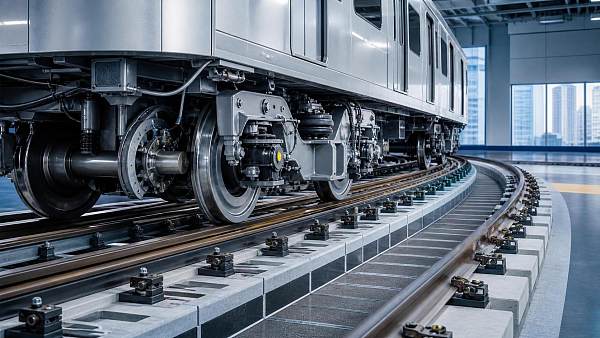
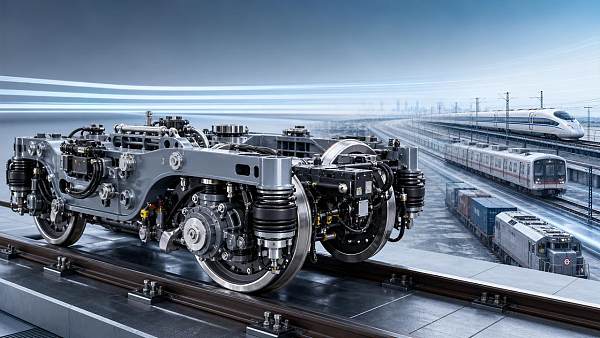
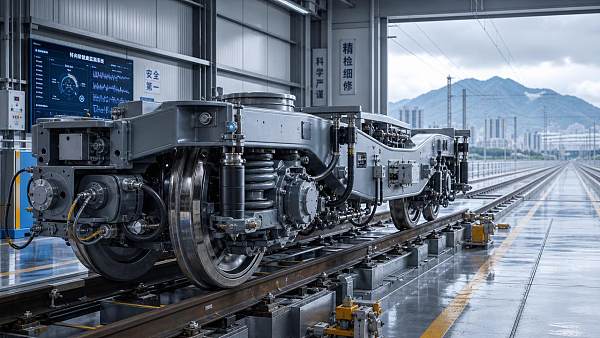
Rail bogie systems upgrades can significantly reshape lifecycle costs across high-speed rail, urban metro transit, and wider transit systems. For EPC contractors, rolling stock manufacturers, and procurement directors, balancing rail standards, predictive maintenance, and rail regulatory frameworks is now essential to improving rail transit efficiency, supporting carbon-neutral rail goals, and strengthening long-term asset performance in increasingly complex global mobility markets.
In practice, bogie decisions are rarely limited to axle load, ride comfort, or top speed. They affect wheel wear, track interaction, vibration behavior, energy use, maintenance intervals, spare parts planning, and fleet availability over 20–35 years of service. For technical evaluators and commercial teams, that means a bogie upgrade must be assessed as a lifecycle strategy rather than a component replacement exercise.
This is especially relevant in cross-border rail procurement, where Asian manufacturing capability is increasingly aligned with European, American, and Middle Eastern compliance expectations. Within that context, G-RTI focuses on benchmarking bogie systems against international engineering, maintenance, and regulatory requirements so decision-makers can compare options on measurable performance, not marketing claims.
Why bogie system upgrades have a disproportionate effect on lifecycle cost
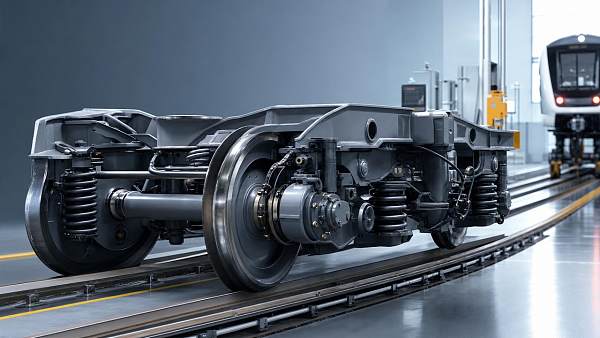
A rail bogie is one of the most cost-sensitive assemblies in any rolling stock platform because it sits at the intersection of mechanical stress, passenger comfort, and maintenance intensity. Even when a bogie accounts for a minority of total vehicle capital expenditure, it can influence 4 major cost categories over the asset life: energy consumption, wheel and rail wear, workshop labor, and service disruption risk.
For example, a metro fleet running 18–20 hours per day may reach maintenance thresholds much faster than an intercity fleet, even at lower operating speeds. If the bogie design reduces unsprung mass, improves suspension tuning, or enables condition monitoring, operators may extend inspection intervals from every 30,000 km toward 45,000–60,000 km, depending on network conditions and regulatory approval. That shift alone can materially alter annual maintenance budgets.
In high-speed rail, bogie performance has even broader financial implications. At 250–350 km/h, stability margins, yaw behavior, braking response, and thermal loads become more sensitive. A design upgrade that lowers vibration, improves bearing reliability, or enhances bogie frame fatigue resistance may reduce unscheduled removals over a 12-month cycle, preserving fleet availability and protecting timetable commitments.
Commercially, this means procurement teams should not compare bogie options only by acquisition price. A 6%–12% premium in upfront bogie cost can be justified if it lowers workshop hours, reduces wheel reprofiling frequency, or cuts spare inventory complexity across a 15-year maintenance contract. In public tender environments, that is often the difference between a low bid and a low lifecycle-cost bid.
Key lifecycle cost levers linked to bogie design
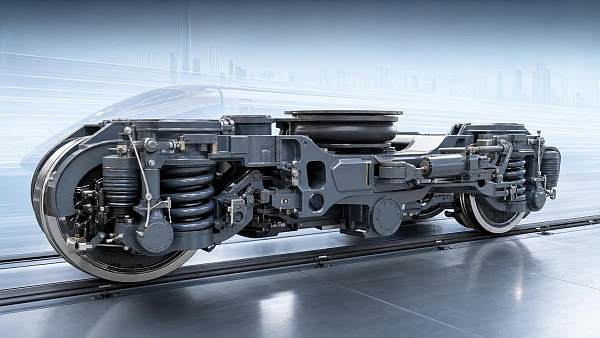
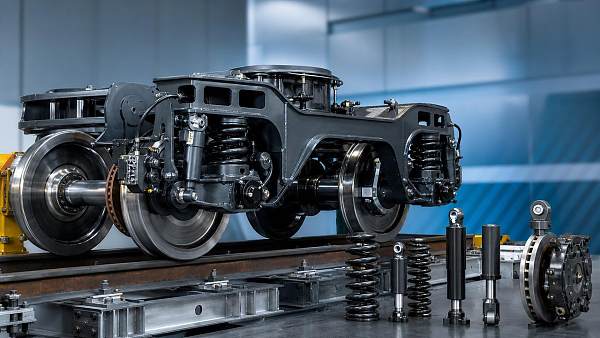
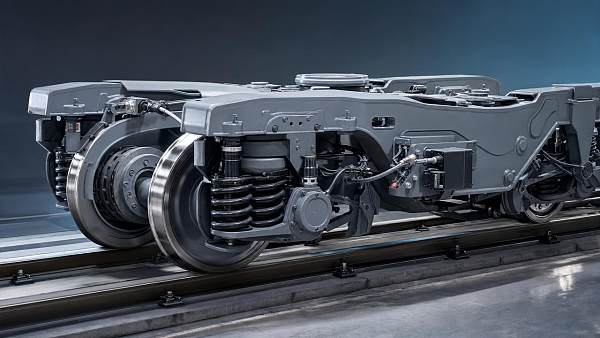
- Primary and secondary suspension characteristics that affect vibration control, ride quality, and component fatigue.
- Axlebox, bearing, and wheelset interface quality that influences inspection frequency and reliability trends.
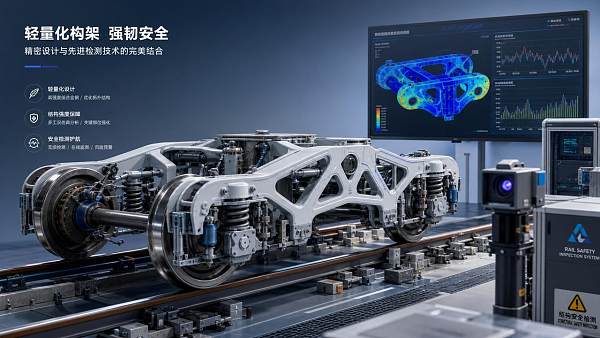
- Bogie frame material, weld quality, and fatigue performance over service lives that can exceed 25 years.
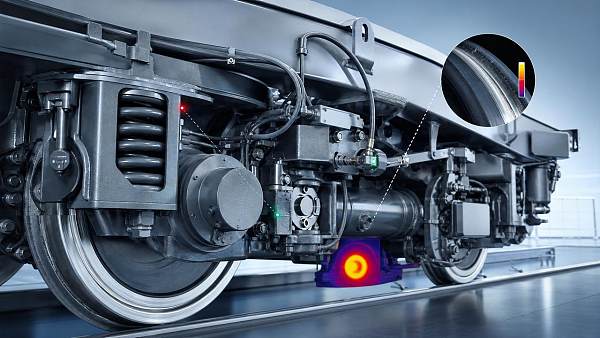
- Sensor integration for predictive maintenance, including temperature, vibration, and load condition signals.
- Compatibility with track condition, curvature profile, environmental exposure, and local maintenance capability.
The strongest lifecycle improvements usually come from combining mechanical redesign with digital visibility. A bogie that is easier to inspect but still blind to early failure modes may deliver partial savings. A bogie equipped with monitoring but based on a maintenance-heavy frame architecture may also underperform. The value is in the integrated system.
Where upgrade value appears across high-speed rail, metro, and mixed transit fleets
Not every railway gains value from the same bogie upgrade path. High-speed rail operators tend to prioritize stability at speed, aerodynamic influence on underframe components, and strict compliance with safety and interoperability frameworks. Metro operators focus more on stop-start duty cycles, curve negotiation, depot turnaround time, and high-frequency maintenance efficiency. Regional and mixed transit fleets often need a balanced approach.
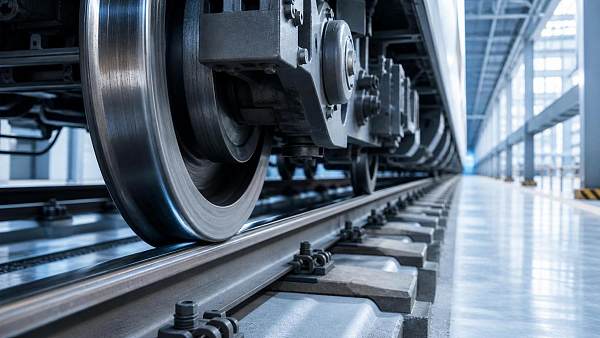
In urban transit, one of the most overlooked cost drivers is wheel and rail interaction on tight-radius curves, often below 300 m in dense networks. If a bogie upgrade improves steering performance or lowers lateral force, rail grinding frequency and wheel wear can decline over 6–18 month planning cycles. That effect is not always visible in initial tender pricing, but it is very visible in long-term maintenance planning.
In high-speed applications, bogie upgrades also support carbon-neutral rail objectives. Lower drag from cleaner underframe integration, reduced mechanical losses, and better mass distribution can support small but compounding energy gains. Even a 1%–3% reduction in energy use per trainset becomes commercially meaningful when scaled across large fleets and annual high-kilometer operations.
For distributors, agents, and commercial intermediaries, the strategic point is clear: bogie value must be framed by operational context. Selling a technically advanced bogie without mapping it to route profile, maintenance maturity, and local regulation creates downstream risk for both the supplier and the buyer.
Typical upgrade priorities by application
The comparison below shows how upgrade priorities shift depending on service type, operating speed, and maintenance pressure.
The table highlights a practical procurement lesson: the “best” bogie system is rarely universal. The right upgrade is the one that matches operating regime, workshop capability, and contractual performance targets over the full service period.
Technical and regulatory criteria that should shape bogie upgrade decisions
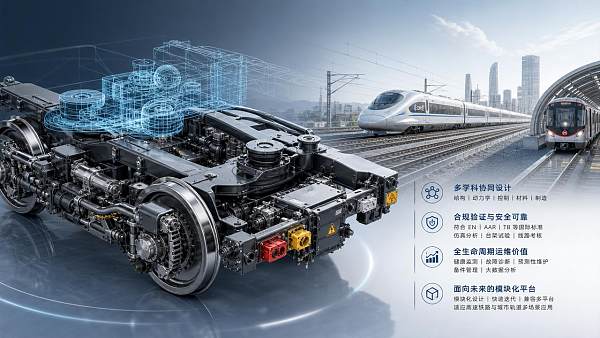
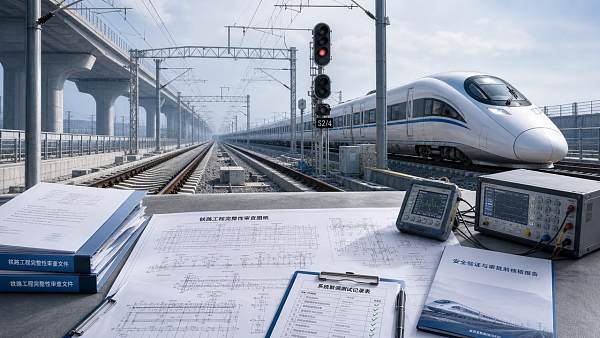
A bogie upgrade is only commercially useful if it passes technical evaluation, fleet integration review, and compliance assessment. For international projects, this means aligning design and maintenance logic with standards such as ISO/TS 22163, IEC 62278, and EN 50126, while also addressing regional acceptance procedures, local safety authority expectations, and operator-specific technical specifications.
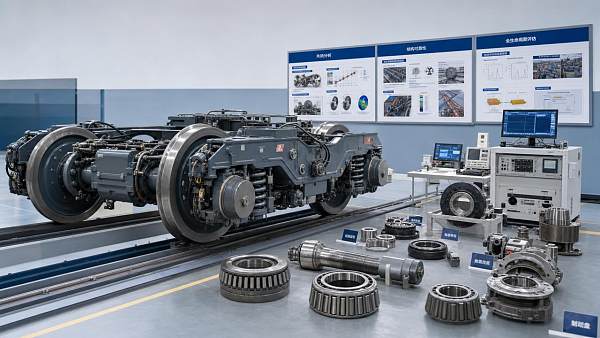
From an engineering standpoint, technical teams typically evaluate 5 categories: structural integrity, dynamic performance, maintainability, digital monitoring capability, and interoperability with the existing rolling stock platform. Each category should be verified with evidence such as fatigue analysis, test documentation, maintenance planning assumptions, and interface compatibility data. A visually attractive upgrade proposal without those documents increases project risk.
One common mistake in commercial assessments is treating certification language as proof of field readiness. Certification and compliance are necessary, but they do not replace route-specific validation. A bogie that performs well on one network may need suspension retuning, braking adaptation, or software threshold changes on another network due to track stiffness, climate, or service intensity.
For buyers working across Europe, the Middle East, and Asia, supplier transparency matters as much as nominal performance. Decision-makers should ask whether the supplier can provide component traceability, welding quality documentation, inspection plans, and spare support commitments over 10–15 years. Without that visibility, lifecycle cost projections can quickly become unreliable.
Core evaluation criteria before approval
- Confirm bogie frame strength, fatigue assumptions, and test evidence for the intended axle load and service profile.
- Review suspension behavior, damping settings, and stability envelope across expected speed ranges.
- Check maintainability metrics such as inspection access, tool requirements, and planned workshop hours per cycle.
- Assess sensor and data architecture for predictive maintenance, including alarm thresholds and integration into fleet systems.
- Verify documentation quality, regulatory pathway, and long-term parts support before final award.
A practical decision matrix for procurement teams
The matrix below can help technical and commercial teams score bogie upgrade proposals beyond unit price.
For many tenders, these criteria are decisive because they connect technical suitability with operating economics. A proposal that scores well in all 3 categories often creates better long-term value than one that wins only on the initial price sheet.
How predictive maintenance changes the business case for bogie upgrades
Predictive maintenance is one of the strongest reasons bogie upgrades can shift lifecycle cost curves. Traditional bogie maintenance relies on fixed intervals: inspect after a set number of kilometers, replace after a set number of months, and overhaul after a defined operating cycle. That model is still necessary, but it often leads to either premature maintenance or late detection of defects.
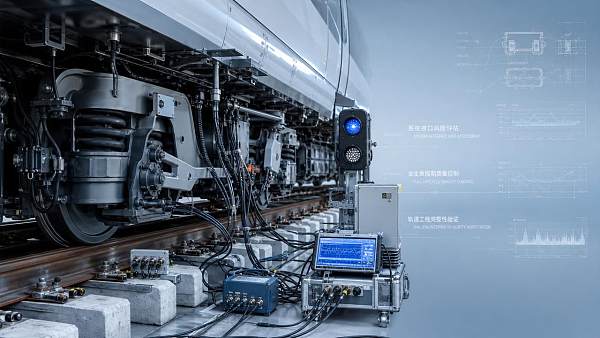
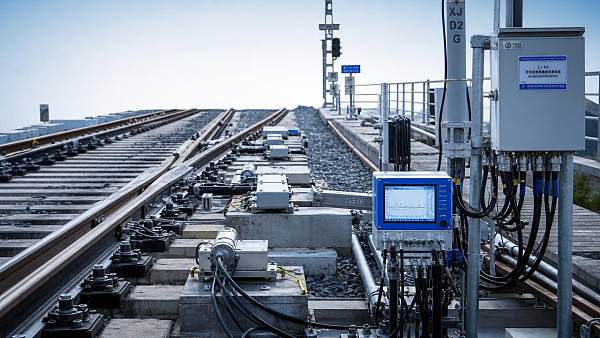
By integrating sensors for bearing temperature, vibration, suspension behavior, and load response, operators can move from interval-based maintenance toward condition-informed maintenance. In practical terms, that can improve planning precision over 3 areas: workshop scheduling, spare parts procurement, and failure prevention. A fleet manager gains more confidence in what needs attention now, what can safely wait, and what should be monitored more closely over the next 7–30 days.
The commercial effect is particularly visible in large urban fleets and intercity corridors with tight service obligations. If predictive monitoring reduces even a small number of in-service failures per year, the savings extend beyond repair cost. Operators avoid train withdrawal, customer disruption, emergency logistics, and reputational damage. For concession-based or availability-linked contracts, that benefit can be material.
However, predictive maintenance only works if the bogie system is designed to support reliable data capture and actionable maintenance logic. Installing sensors without clear alarm thresholds, data ownership rules, or maintenance workflows will not deliver full value. Bogie upgrades should therefore be assessed as both hardware modernization and operational process redesign.
What buyers should verify in a predictive maintenance-ready bogie package
- Sensor durability under vibration, moisture, dust, and temperature swings that may range from -25°C to 45°C.
- Data transmission architecture and whether it integrates with fleet maintenance platforms or depot systems.
- Alarm thresholds tied to real maintenance actions, not just raw data collection.
- Clear division of responsibility between vehicle OEM, bogie supplier, operator, and maintainer.
- Cybersecurity and data governance rules for cross-border digital rail environments.
For distributors and agents, this creates an additional commercial opportunity. The conversation can expand from parts supply to long-term support models, including condition monitoring services, spare forecasting, and maintenance analytics. That is often more valuable than competing on component margins alone.
Common procurement mistakes and a practical roadmap for implementation
The most common procurement mistake is assuming that a bogie upgrade should be judged mainly by immediate retrofit simplicity. Ease of installation matters, but if a low-cost solution creates higher wheel wear, short inspection cycles, or poor data visibility over the next 10 years, the apparent savings disappear. Another frequent mistake is separating technical evaluation from maintenance planning, which leads to unrealistic total cost assumptions.
A stronger approach is to structure the decision across 4 stages: baseline assessment, technical and regulatory screening, pilot validation, and scaled deployment. The baseline stage should capture current maintenance frequency, workshop hours, failure modes, track wear hotspots, and service interruptions. Without that baseline, it is difficult to prove whether an upgrade is actually delivering value.
The pilot phase is particularly important. A limited deployment over 6–12 months allows operators to compare wear patterns, sensor behavior, labor inputs, and operational reliability against the legacy configuration. This is often more credible than relying entirely on generic supplier presentations or laboratory claims. In mixed fleets, pilot deployment can also reveal interface issues early enough to avoid broader retrofit disruption.
From a business perspective, distributors and commercial evaluators should also examine support depth. A technically acceptable bogie package without local spare availability, repair training, or documentation support can create avoidable delays. In many regions, the most bankable offer is not the one with the lowest quote, but the one with the strongest long-term execution model.
Implementation roadmap
- Measure current performance: document maintenance intervals, unscheduled removals, wheel wear trends, and service impact over at least 12 months.
- Screen candidate upgrades: compare compliance fit, structural evidence, digital readiness, and route compatibility.
- Run a pilot: validate performance on representative service lines, track conditions, and climate exposure.
- Scale with support: align spare planning, training, documentation, and data workflows before fleet-wide rollout.
FAQ: questions buyers frequently ask
Below are concise answers to common decision-stage questions from information researchers, technical evaluators, and commercial teams.
These answers reinforce the same point: rail bogie system upgrades should be planned as an operational and financial transformation, not a narrow engineering substitution. The earlier that technical, maintenance, and procurement teams align, the stronger the project outcome.
For organizations navigating global rail procurement, the real advantage lies in disciplined benchmarking. When bogie upgrades are evaluated through structural performance, regulatory fit, predictive maintenance capability, and long-term service economics, lifecycle costs become more controllable and asset performance becomes more predictable. G-RTI supports that decision process by connecting technical benchmarking with commercial intelligence across high-speed rail, metro, signaling, infrastructure, and traction ecosystems.
If you are assessing a new bogie platform, planning a retrofit, or comparing supply chain options for international rail projects, now is the right time to build a clearer lifecycle-cost model. Contact us to discuss your technical evaluation needs, request a tailored benchmarking view, or explore more rail transit solutions aligned with your target market and compliance requirements.
Search News
Industry Portal
Hot Articles

Popular Tags
- urban metro transit
- rolling stock manufacturers
- rail procurement
- ISO/TS 22163
- IEC 62278
- EN 50126
- rail bogie systems
- transit systems
- high-speed rail
- urban metro
- rolling stock
- bogie systems
- predictive maintenance
- EPC contractors
- rail standards
- carbon-neutral rail
- rail transit efficiency
- rail regulatory frameworks
Recommended News
 Aug 27, 2026How Rail Integrity Consultants Identify Fatigue Risks in Bogies and WheelsetsMechanical integrity in rail systems consultant insights: identify bogie and wheelset fatigue risks early, strengthen inspections, and protect fleet safety and uptime.
 Aug 18, 2026How to Evaluate Bogie Systems for Metro Cars by Load, Curving, and NoiseBogie systems for metro: learn how to evaluate load capacity, curving performance, and noise control to choose safer, quieter, lower-maintenance metro bogies.
 Jun 29, 2026Wheel-Rail Contact Mechanics Explained: Key Parameters for Wear, Noise, and StabilityWheel-rail contact mechanics explained clearly: discover how contact stress, creepage, friction, and conicity affect wear, noise, and stability—and make smarter rail system decisions.
 Jun 24, 2026Rail Bogie Systems: Key Components, Suspension Types, and Performance Trade-OffsRail bogie systems explained: explore key components, suspension types, and real performance trade-offs to compare comfort, stability, maintenance, and lifecycle value.
 Jun 20, 2026Plastic Injection Molds Cost Breakdown: Tooling, Cavities, Materials, and Lead TimePlastic injection molds cost breakdown: learn how tooling design, cavity count, mold materials, and lead time shape pricing, quality, and risk—so you can compare quotes smarter and source with confidence.
 May 27, 2026What rail multi-disciplinary work changes in bogie design reviewRail multi-disciplinary insights reveal how bogie design review changes across high-speed, metro, and retrofit projects—improving safety, compliance, and lifecycle value.
 May 23, 2026How to compare rail bogie systems without missing failuresRail bogie systems compared the right way: discover a failure-aware checklist covering fatigue, stability, maintenance, compliance, and lifecycle cost to make safer, smarter rail decisions.
 May 21, 2026What to check before choosing rail bogie systemsRail bogie systems: learn what to check before choosing—stability, maintenance, compliance, and lifecycle cost across metro, high-speed, and freight applications.
 May 20, 2026How to judge rail engineering integrity before approvalRail engineering integrity starts with evidence, not assumptions. Learn the approval checklist that verifies safety, interfaces, RAMS, testing, and long-term rail system reliability.
 May 19, 2026How to assess rail Tier-1 suppliers beyond price aloneRail Tier-1 suppliers should be assessed beyond unit price. Discover how to compare compliance, delivery resilience, and lifecycle value to reduce rail project risk.
 May 18, 2026What to check before choosing rail bogie systemsRail bogie systems: learn what to check first before you buy—load capacity, suspension, fatigue strength, certifications, and lifecycle cost for safer, smarter fleet decisions.
 May 15, 2026Rail Bogie Systems: Which Design Choices Raise Lifecycle Risk?Rail bogie systems face hidden lifecycle risks from lightweighting, packaging, sealing, and route compromise. Explore scenario-based design choices that impact reliability, maintenance, and long-term cost.
 May 14, 2026Rail Bogie Systems Fail Early for Reasons Many Teams MissRail bogie systems fail early for reasons many teams overlook. Learn the hidden interaction effects, inspection blind spots, and practical fixes that improve reliability.
 May 13, 2026Rail engineering integrity issues that rarely appear in bid reviewsRail engineering integrity risks often hide beyond bid checklists. Learn the overlooked gaps in interfaces, validation, software, and maintainability before they become costly rail project failures.
 May 12, 2026Rail Bogie Systems: Which Design Choices Reduce Lifecycle Failures?Rail bogie systems that cut lifecycle failures start with smarter design. Explore how frame fatigue control, suspension tuning, sealing, braking, and monitoring lower risk and total cost.
 May 09, 2026Why rail engineering integrity is harder to verify than it seemsRail engineering integrity is harder to verify than certificates suggest. Learn the hidden risks audits miss and how stronger QC, safety, and supplier checks prevent costly rail failures.
 May 08, 2026Rail Bogie Systems Fail in Small Ways First. Here Is What to WatchRail bogie systems often show small warning signs before major failure. Learn what vibration, wear, noise, and heat changes reveal to improve rail safety and reduce costly downtime.
 May 07, 2026How to Judge Rail Engineering Integrity Before Failures SurfaceRail engineering integrity starts with early, evidence-based judgment. Learn how to spot hidden risks, assess system weakness, and prevent costly rail failures before they surface.
 May 06, 2026Rail Bogie Systems: When Lower Weight Brings Higher RiskRail bogie systems can boost efficiency through lower weight, but hidden fatigue and safety risks may follow. Learn how to verify lightweight designs before costly failures occur.
 May 04, 2026Rail Bogie Systems: Which Design Choices Raise Lifecycle Costs?Rail bogie systems can hide major lifecycle costs. Learn which design choices drive downtime, wheel wear, maintenance risk, and higher total ownership costs.
 May 02, 2026Rail Engineering Integrity Failures Rarely Start Where You ThinkRail engineering integrity often fails long before the visible incident. Discover how to spot upstream risks, benchmark suppliers, and prevent costly rail safety and reliability issues.
 May 01, 2026Rail Engineering Integrity Checks That Catch Early FailuresRail engineering integrity checks reveal early failure signals across track, signaling, traction, and rolling stock—helping safety and QC teams cut downtime, strengthen compliance, and act before costly disruptions occur.
 Apr 30, 2026Rail bogie systems: which design choices raise lifecycle cost?Rail bogie systems can quietly inflate fleet lifecycle costs. Discover which design choices raise maintenance, downtime, and spare-part risk before procurement approval.
 Apr 29, 2026Rail bogie systems selection mistakes that show up in serviceRail bogie systems selection mistakes often stay hidden until service begins. Learn how to avoid wear, instability, maintenance overruns, and compliance risks.




Quarterly Executive Summaries Delivered Directly.
Join 50,000+ industry leaders who receive our proprietary market analysis and policy outlooks before they hit the public library.