

Where rail connectivity adds value across growing cities
Dr. Alistair Thorne
Time
Click Count
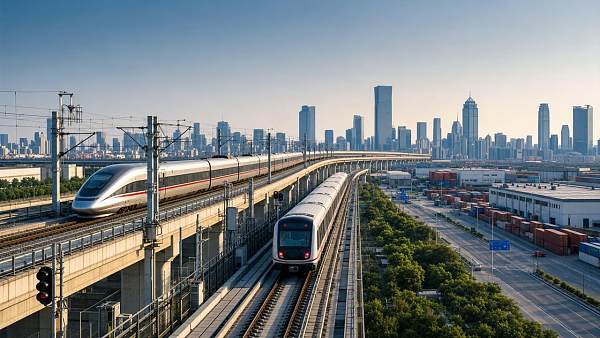
As growing cities face mounting pressure to expand mobility, cut emissions, and strengthen economic resilience, rail connectivity is emerging as a decisive source of long-term value. For business evaluators, understanding how integrated rail systems improve urban efficiency, project bankability, and cross-border supply alignment is essential to assessing infrastructure opportunities in an increasingly competitive global transit landscape.
Why rail connectivity matters more in fast-growing urban markets
In expanding cities, transport demand grows faster than road capacity. That mismatch creates congestion, higher logistics costs, weaker labor mobility, and mounting pressure on public budgets. Rail connectivity addresses these issues by moving large passenger volumes and strategic freight flows with greater spatial efficiency.
For business evaluators, the value is not limited to travel time savings. Rail connectivity influences land use, industrial access, energy consumption, procurement strategy, and long-term asset performance. A city with integrated rail often attracts more predictable commercial development and stronger investor confidence.
This matters across multiple project types: high-speed rail corridors linking economic clusters, metro systems expanding urban catchment areas, and signaling upgrades that unlock capacity without full corridor reconstruction. In each case, the core question is the same: where does rail connectivity produce measurable value rather than symbolic infrastructure?
- It improves network reliability by reducing dependence on road-based mobility during peak demand, fuel shocks, or urban disruption.
- It supports denser development patterns, which can increase the productivity of commercial districts and reduce infrastructure sprawl.
- It creates a stronger basis for multi-year procurement planning, especially where rolling stock, track systems, power supply, and digital control must align.
Where does rail connectivity add the most value?
Not every corridor creates the same return. Business evaluators should focus on urban contexts where rail connectivity solves a structural constraint. The table below highlights common scenarios and the value logic behind each one.
The strongest projects usually combine mobility need with economic concentration. That is why rail connectivity tends to outperform road-led expansion where land is constrained, trip demand is repetitive, and long-term decarbonization targets influence funding decisions.
A practical screen for business evaluators
Before reviewing vendors or technical packages, evaluators should test whether the corridor has durable demand, integration potential, and policy continuity. Rail investments are capital-intensive, so weak demand assumptions can distort the whole business case.
- Check whether the line connects major employment, housing, industrial, or logistics nodes rather than isolated points.
- Assess whether signaling, traction power, maintenance access, and depot capacity can scale with projected demand.
- Review whether procurement timing matches supply chain realities for track systems, rolling stock, and digital control architecture.
How rail connectivity affects project bankability and procurement confidence
For many stakeholders, the decisive issue is not whether rail connectivity is desirable, but whether it is financeable, buildable, and operable under real market conditions. Bankability improves when demand, technical scope, and compliance pathways are clearly evidenced.
This is where structured benchmarking matters. G-RTI supports evaluators by comparing systems across five industrial pillars: High-Speed Rail Systems, Urban Metro & Transit, Advanced Signaling & Communication, Track Infrastructure & Maintenance, and Traction Power Supply. That cross-functional visibility helps procurement teams avoid fragmented decisions.
In practical terms, a rail connectivity project becomes more investable when decision-makers can verify how core components perform against recognized standards, delivery conditions, and lifecycle expectations. Procurement confidence rises when technical claims are linked to compliance, maintainability, and supply continuity.
- Mechanical integrity affects durability, axle load performance, ride stability, and long-term maintenance burden.
- Digital system maturity affects headway reduction, safe operations, cybersecurity posture, and future network integration.
- Structural and track quality affect speed envelope, maintenance windows, and whole-life asset reliability.
Which technical layers should evaluators compare first?
Rail connectivity is only as strong as the weakest interface in the system. Evaluators often focus on visible assets such as stations or rolling stock, but value is frequently unlocked by less visible layers such as signaling, traction power, and maintainability design.
The comparison below can help business teams prioritize early-stage diligence across the most decision-sensitive technical layers.
A sound evaluation does not treat these layers as separate workstreams. G-RTI’s benchmarking approach is useful because it connects technical performance with procurement relevance, making it easier to identify where a low upfront price may create high interface risk later.
Why interface risk is often underestimated
A rail connectivity project can meet nominal specifications and still underperform if interfaces are poorly managed. Common examples include rolling stock that fits the headline speed requirement but creates maintenance complications, or signaling that reduces operational flexibility because of limited compatibility.
Business evaluators should ask whether suppliers can demonstrate not just component compliance, but system-level alignment. This is especially important in multi-country sourcing models where manufacturing strength and end-market regulation differ significantly.
How to evaluate standards, certification, and cross-border readiness
In global rail procurement, compliance is not a side issue. It directly affects bid eligibility, insurance confidence, testing scope, and commissioning timelines. Strong rail connectivity requires technical choices that can survive scrutiny across markets with different regulatory expectations.
G-RTI is particularly relevant here because it bridges Asian manufacturing capability with the regulatory demands of Europe, North America, and the Middle East. For business evaluators, that means access to technical benchmarking that speaks both the language of production efficiency and the language of compliance.
- ISO/TS 22163 is often referenced in relation to rail quality management across the supply chain.
- IEC 62278 and EN 50126 are frequently used when discussing RAMS-oriented lifecycle processes and system assurance logic.
- Project teams should also assess local safety approvals, EMC expectations, environmental testing, and operator-specific documentation needs.
Questions that improve compliance diligence
- Which standards apply at component level, subsystem level, and system integration level?
- Where will testing occur, and does the supplier have evidence packages accepted in the target market?
- Are there hidden redesign risks if products move from one geography to another?
Cost, alternatives, and the real economics of rail connectivity
Cost evaluation should go beyond capex. Growing cities often compare rail connectivity with road expansion, bus-based networks, or incremental signaling upgrades. Each option has merit, but the right answer depends on corridor intensity, land constraints, service expectations, and long-term operating economics.
The table below frames common alternatives through a business evaluation lens rather than a purely engineering lens.
The key lesson is that rail connectivity often creates the greatest value when it is assessed over the asset lifecycle and across urban systems, not as a single construction contract. Evaluators should compare options using service reliability, maintainability, energy profile, and development impact in addition to headline cost.
Common mistakes business evaluators make when reviewing rail connectivity projects
Mistake 1: treating price as the main filter
A lower bid can mask higher integration costs, more complex commissioning, or shorter maintenance intervals. In rail connectivity projects, lifecycle cost and interface stability are usually more important than initial unit price alone.
Mistake 2: evaluating components without system context
A high-performance motor, bogie system, or software layer can still create problems if it does not fit the operating environment, certification path, or depot capability. Benchmarking should test the whole service chain.
Mistake 3: underestimating delivery and regulatory friction
Cross-border sourcing can strengthen cost competitiveness, but it also introduces documentation, testing, and change-management risk. Evaluators need visibility into both manufacturing capability and destination-market compliance logic.
FAQ: what do evaluators ask most about rail connectivity?
How do I know whether rail connectivity is the right solution for a corridor?
Start with demand concentration, land constraints, interchange potential, and long-term policy alignment. Rail connectivity is usually strongest where trip volumes are repeated, development is dense, and road-based expansion faces physical or environmental limits.
What should be reviewed first during supplier screening?
Review system compatibility, applicable standards, delivery references in comparable markets, and maintenance implications. Then test whether the supplier can support documentation, testing, and lifecycle service under the target project structure.
Can signaling upgrades create value without building new lines?
Yes, in many cases they can. If the main constraint is train spacing, control logic, or operational flexibility, improved signaling may increase usable capacity. But the value depends on whether power, track condition, depot operations, and rolling stock can support that higher throughput.
Why is benchmarking so important in global rail procurement?
Because rail connectivity decisions combine engineering risk, regulatory risk, and supply chain risk. Independent benchmarking helps teams compare offers on a like-for-like basis and identify gaps that are easy to miss in marketing-led vendor material.
Why work with G-RTI when evaluating rail connectivity opportunities?
G-RTI is built for decision-makers who need more than surface-level market commentary. Its value lies in combining technical benchmarking, standards awareness, and supply chain insight across high-speed rail, metro systems, signaling, track infrastructure, and traction power.
For business evaluators, this means clearer answers to the questions that shape procurement outcomes: which parameters need confirmation, which options fit the target market, where certification friction may appear, how delivery timelines compare, and what level of customization is realistic.
- Request support for parameter confirmation across mechanical, digital, and structural rail system elements.
- Discuss product and subsystem selection for HSR, urban transit, signaling, track maintenance, or traction power applications.
- Review delivery-cycle considerations, supply chain alignment, and market-entry constraints for cross-border procurement.
- Assess certification requirements, documentation expectations, and benchmarking priorities before tender participation.
- Open quotation and technical consultation discussions for tailored infrastructure, maintenance, or integration scenarios.
Where cities are growing quickly, rail connectivity can become either a high-value strategic asset or a costly misalignment. The difference usually comes down to how rigorously the opportunity is evaluated. That is where a technically grounded, commercially informed partner can make the decision process sharper and more reliable.
Search News
Industry Portal
Hot Articles

Popular Tags
Recommended News
 May 20, 2026Where rail connectivity adds value across growing citiesRail connectivity adds measurable value in growing cities by improving mobility, bankability, and resilience. See where integrated rail creates stronger returns and smarter infrastructure decisions.
 Apr 23, 2026Monorail systems look simple until evacuation is reviewedRail regulatory frameworks and rail standards reveal why monorail evacuation is a true urban metro transit engineering test. Explore compliance, signaling systems, traction power, and procurement risks.
Quarterly Executive Summaries Delivered Directly.
Join 50,000+ industry leaders who receive our proprietary market analysis and policy outlooks before they hit the public library.