

Why rail multi-disciplinary design fails at interface handover
Dr. Alistair Thorne
Time
Click Count
In rail multi-disciplinary projects, interface handover is where strong designs often break down. When civil, signaling, power, and rolling stock teams work to different assumptions, operators inherit delays, rework, and hidden risk. Understanding why these failures happen is essential for anyone responsible for safe, efficient transit delivery and long-term system performance.
Why rail multi-disciplinary interface handover fails so often
Rail multi-disciplinary delivery rarely fails because one team lacks technical skill. It fails because each discipline optimizes its own package while the operational system depends on synchronized assumptions, shared tolerances, and verified handover rules.
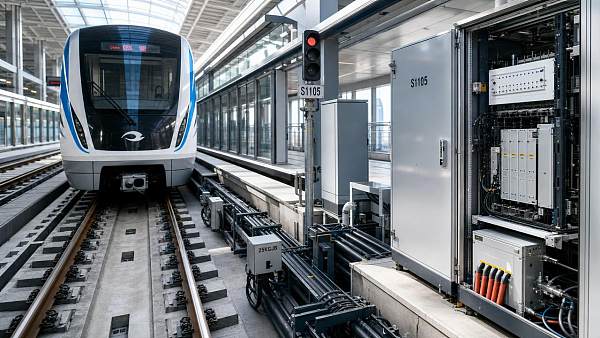
For operators, the damage appears late. Platforms do not align with train stopping logic. Power rooms are accessible on drawings but difficult to maintain in service. Cable routes conflict with fire barriers. Signaling rooms satisfy one specification but not the maintenance workflow.
This is why rail multi-disciplinary coordination is not just a design management issue. It is an operational readiness issue that affects safety, maintainability, possession planning, spare strategy, and passenger service reliability.
- Civil teams may freeze structural dimensions before signaling equipment footprints are fully confirmed.
- Power designers may define feeder capacity without updated traction load data from rolling stock suppliers.
- Systems integrators may assume data interfaces that are not yet locked by communications and control vendors.
- Operators may receive asset packages that are technically complete but not usable for maintenance planning or fault response.
In complex metro, mainline, and high-speed rail projects, interface handover should be treated as a governed technical product. If it is handled as paperwork at the end of design, the project usually transfers unresolved risk into testing, commissioning, and operations.
Which handover gaps create the biggest operational risk
Operators and end users need to distinguish between visible coordination errors and hidden interface failures. The visible ones create immediate rework. The hidden ones surface later as degraded performance, access constraints, alarm ambiguity, or maintenance inefficiency.
Typical failure points across rail multi-disciplinary packages
The following table highlights where rail multi-disciplinary handover commonly breaks and how those failures affect day-to-day operations rather than just design compliance.
The key lesson is that interface handover failure is rarely isolated. One weak assumption often cascades into testing disruption, operating rule changes, maintenance burden, and supplier disputes after delivery.
Why operators often discover problems too late
Many projects invite operations teams into the process only during late review, trial running, or final acceptance. By then, major equipment rooms are built, cable pathways are fixed, and digital interfaces are already embedded in contractual boundaries.
- Asset naming conventions may not match the operator’s maintenance management structure.
- Alarm hierarchies may be too engineering-focused and not suitable for control room response.
- Access routes may meet construction needs but not safe maintenance isolation procedures.
- Delivered documentation may describe components well but fail to explain system dependencies.
That is why rail multi-disciplinary handover must include operator-oriented evidence, not only contractor-originated completion files.
What causes misalignment between disciplines in real projects
The root causes are usually commercial, procedural, and technical at the same time. Multi-package contracting creates handoff seams. Changing standards across regions add complexity. Tight delivery schedules encourage teams to freeze designs before all interfaces are mature.
Five recurring causes behind failed rail multi-disciplinary handover
- Unclear interface ownership. Teams know what they design, but not who owns the boundary condition, validation method, or acceptance evidence.
- Document control without assumption control. A revision may be current, yet its design basis may already be obsolete due to supplier updates or route changes.
- Contract fragmentation. EPC, subsystem vendors, and independent certifiers may use different acceptance logic and different risk thresholds.
- Late operational input. Maintainers and controllers are asked to comment after architectural and equipment decisions are largely fixed.
- Weak cross-market benchmarking. Projects entering Europe, North America, or the Middle East may underestimate local compliance expectations compared with manufacturing assumptions from other regions.
This is where a technical intelligence platform such as G-RTI becomes valuable. Instead of relying on isolated package claims, decision-makers can benchmark hardware, systems logic, and compliance assumptions against recognized international frameworks and project-specific market conditions.
How to assess rail multi-disciplinary handover quality before commissioning
A useful handover review does not ask only whether documents exist. It asks whether interface evidence is decision-ready for operations, maintenance, safety assurance, and fault isolation. That requires structured evaluation criteria.
The table below provides a practical procurement and acceptance lens for rail multi-disciplinary handover reviews.
If two or more warning signs appear together, the project should not treat handover as an administrative milestone. It should trigger a focused interface recovery plan before integrated testing expands the cost of correction.
A practical review sequence for operators and users
- Start with the highest-risk interfaces: train to platform, traction power to rolling stock, signaling to communications, and depot access arrangements.
- Check whether design assumptions match the latest supplier data, not only approved drawings.
- Ask for evidence that maintenance scenarios were tested, including isolation, replacement, and fault response.
- Review interface registers together with test plans, because unresolved boundaries often reappear during dynamic testing.
- Confirm that digital and physical asset data can migrate into the operator’s maintenance and control systems.
What standards and compliance frameworks matter at handover
In cross-border rail programs, rail multi-disciplinary teams often work under multiple technical cultures. A manufacturer may be strong in product delivery, while the target market requires more explicit traceability, RAMS linkage, or safety-case evidence.
Common frameworks used to structure better interface decisions
The table below summarizes how common standards can support more disciplined handover, especially when procurement, engineering, and operations teams need one reference language.
These frameworks do not remove interface risk by themselves. Their value comes from using them to define evidence requirements early, assign ownership clearly, and benchmark supplier maturity before late-stage integration pressure builds.
G-RTI’s strength in this area is the ability to connect equipment benchmarking, regulatory expectations, and market-specific procurement reality. That matters when Asian manufacturing capability must align with European, American, or Middle Eastern operating and compliance expectations.
How G-RTI helps reduce rail multi-disciplinary handover risk
For operators, project owners, EPC contractors, and major system suppliers, the hardest part is not finding more documents. It is knowing which assumptions are fragile, which interfaces are underdefined, and which benchmarks should drive corrective decisions.
Practical value for users and operators
- Benchmark subsystem compatibility across HSR systems, urban metro, signaling, track infrastructure, and traction power supply.
- Compare supplier claims against recognized standards and realistic regional compliance requirements.
- Support procurement teams with evidence-based questions before contract award and design freeze.
- Help operations teams identify whether delivered data packages are suitable for maintenance, control, and asset integrity management.
- Provide visibility into tender trends, supply chain constraints, and cross-market technical expectations that influence handover quality.
Because G-RTI focuses on technical benchmarking rather than generic market commentary, it is especially useful in projects where interface failure is likely to emerge from mixed suppliers, evolving specifications, or region-specific approval pathways.
FAQ: what operators ask about rail multi-disciplinary handover
How early should operators review rail multi-disciplinary interfaces?
Operators should be involved before major design freeze points, especially where access, maintainability, train-to-infrastructure geometry, alarm management, and isolation procedures are affected. Waiting until pre-commissioning usually means operational concerns can only be mitigated, not designed out.
What is the most overlooked handover deliverable?
A common gap is interface evidence that is usable in operation. Many projects deliver drawings and test records, but not a clear map of dependencies between assets, software logic, maintenance tasks, and failure responses. That gap slows fault diagnosis and increases training burden.
How can procurement teams detect weak interface control before award?
Ask bidders to show named interface ownership, assumption registers, configuration control methods, test evidence logic, and operator-facing deliverables. If a supplier can describe components well but cannot explain boundary risks, the rail multi-disciplinary handover will likely become reactive later.
Are digital systems now the main source of interface failure?
Digital systems are a growing source of failure, but physical and digital interfaces usually fail together. A data protocol issue may be rooted in equipment location, environmental control, power quality, or access limitations. The correct response is integrated review, not software-only troubleshooting.
Why choose us for interface benchmarking and decision support
If your project is struggling with rail multi-disciplinary alignment, G-RTI can help you move beyond general coordination meetings and into evidence-based interface control. Our value lies in combining system benchmarking, compliance awareness, and global supply chain insight for real project decisions.
You can contact us to discuss specific topics such as parameter confirmation for subsystem compatibility, supplier comparison for multi-package procurement, likely delivery-cycle constraints, localized compliance expectations, documentation gaps before handover, and tailored benchmarking for HSR, metro, signaling, track, or traction power packages.
For operators and technical users, that means clearer selection logic, earlier risk visibility, and stronger control over what gets handed over into service. For procurement and project leaders, it means better questions before award and fewer costly surprises after integration begins.
Search News
Industry Portal
Hot Articles
Popular Tags
Recommended News
 May 26, 2026Why rail connectivity matters more as networks expandRail connectivity becomes critical as networks expand. Discover how it drives interoperability, capacity, efficiency, and long-term rail investment value across metro, cross-border, and high-speed systems.
 May 13, 2026Why rail multi-disciplinary design fails at interface handoverRail multi-disciplinary projects often fail at interface handover when teams work from misaligned assumptions. Learn the hidden risks, operational impacts, and smarter ways to prevent delays and rework.
 May 07, 2026Rail Technical Specifications That Cause Delays After AwardRail technical specifications often trigger post-award delays through interface gaps, approvals, and maintainability issues. Learn the hidden risks and how to keep rail projects on schedule.
 Apr 23, 2026Interlocking tech upgrades can disrupt proven operating logicRail regulatory frameworks and rail transit efficiency are reshaped as interlocking upgrades affect signaling systems, ETCS, CBTC, rolling stock, and predictive maintenance—see how to protect compliance and carbon-neutral rail goals.


Quarterly Executive Summaries Delivered Directly.
Join 50,000+ industry leaders who receive our proprietary market analysis and policy outlooks before they hit the public library.