

Rail Track Maintenance Standards: Inspection and Defect Limits
Dr. Alistair Thorne
Time
Click Count
Rail track maintenance standards establish the basis for deciding whether infrastructure remains safe and fit for its intended operating conditions. For a technical evaluator, however, a measurement is only the beginning of the assessment. The same geometry deviation may require different action on a high-speed passenger line, a freight route, or a low-speed siding.
Reliable evaluation depends on connecting inspection results with the governing rules, the measurement method, and the operating context. It also requires a clear distinction between a condition that calls for planned maintenance and a defect that demands an immediate operating restriction or removal from service.
Which track maintenance standards apply?
There is no single worldwide set of numerical defect limits for every railway. Applicable requirements may come from legislation, a national regulator, an infrastructure manager’s rulebook, project specifications, and referenced technical standards. Their authority is not interchangeable: a contractual specification can add requirements, but it does not replace mandatory regulation.
In the United States, 49 CFR Part 213, Track Safety Standards, establishes federal requirements for track classes, including provisions for track geometry, inspection, and certain rail and track component conditions. The applicable track class and its associated operating limits are central to interpreting those requirements. Evaluators should check the current regulation and any additional rules applicable to the operation.
In European projects, the EN 13848 series addresses track geometry quality, including measurement and quality assessment. EN 13848-5 covers geometric quality levels for plain line, switches and crossings. Its application must be read alongside the relevant national requirements, infrastructure manager rules, and project-specific limits. Other standards may address rail defects, inspection methods, or individual components; a geometry standard alone is not a complete maintenance regime.
Urban metro networks, freight railways, and high-speed systems may also use infrastructure-specific standards developed around their vehicles, duty cycles, and access conditions. Before reviewing a defect report, establish the document hierarchy, applicable edition, geographic scope, and any approved deviations. A technically accurate reading against the wrong rulebook is still an unreliable compliance assessment.
From inspection result to defect limit
Track condition is usually managed through more than one threshold. Terminology varies by network, but an evaluator will commonly encounter:
- Alert or monitoring levels: conditions that merit closer observation or inclusion in maintenance planning.
- Intervention levels: conditions requiring corrective work within a specified period or according to a defined priority.
- Immediate action levels: conditions for which the governing rules require prompt protection, an operating restriction, repair, or other prescribed action.
These categories are useful for understanding maintenance decisions, but they must not be treated as universal legal definitions. The applicable standard determines both the limit and the required response. Some rules specify a permissible condition directly rather than using a three-level structure.
A limit is meaningful only when its measurement basis is clear. Gauge, for example, is not just a distance between two rails: the specified measurement location on the rail, loading condition, equipment, and permitted tolerance all affect the result. Geometry limits may also depend on wavelength, chord length, filtering, or the spatial extent of the deviation. Comparing values without those details can produce a false pass or an unnecessary intervention.
What inspectors measure—and what the results can miss
A robust inspection program combines methods because no single technique reveals every relevant condition. Visual inspections remain essential for recognizing loose fasteners, ballast disturbance, damaged sleepers, drainage problems, and changes around switches. Their effectiveness depends on access, visibility, inspector competence, and the detail required by the governing procedure.
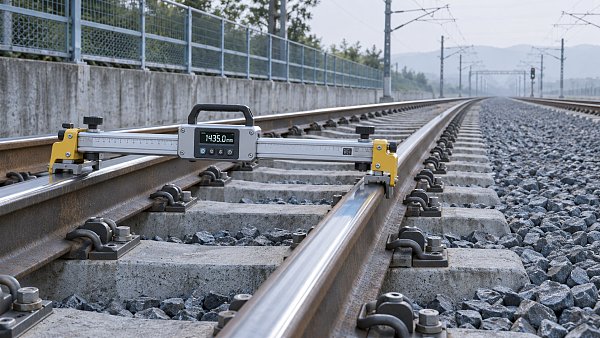
Track geometry vehicles and portable measurement systems provide repeatable data on parameters such as gauge, alignment, longitudinal level, cross level, and twist. They can reveal developing trends across a route, but the evaluator should verify calibration, positioning accuracy, operating conditions, and how raw data are processed into reported exceptions.
Rail flaw detection introduces a different question: what is happening inside or near the surface of the rail? Ultrasonic testing is widely used for internal discontinuities, while eddy current methods can assist with the assessment of some surface and near-surface conditions. Detection capability depends on rail condition, defect orientation, equipment settings, and the inspection procedure. A clean test record is not proof that every defect has been excluded.
Automated imaging, axle-box acceleration monitoring, and other condition-monitoring tools can add useful evidence, particularly where routine access is difficult. Their outputs should be assessed against validated performance and confirmed through the required inspection process. An algorithm-generated alarm is a lead for investigation, not automatically a regulatory defect classification.
Inspection frequency is part of the standard
A defect limit cannot be considered separately from how often the asset is inspected. The governing requirements may specify intervals based on track class, traffic, route characteristics, or inspection type. An infrastructure manager may apply a more frequent schedule where degradation rates, environmental conditions, or operational consequences justify it.
For technical review, ask whether the interval is measured correctly, whether missed inspections are controlled, and whether the inspection method is suitable for the defects being sought. A compliant frequency for visual patrol does not necessarily satisfy a separate requirement for rail flaw testing or geometry measurement.
Common defect groups and the evidence needed to assess them
The groups are connected. Repeated alignment exceptions, for instance, may be corrected by tamping, but the result may not last if drainage or formation support is the underlying problem. Conversely, a localized measurement should not be attributed to a system-wide failure without supporting evidence. Evaluators need both the immediate defect disposition and a credible account of recurrence where the pattern warrants it.
How to interpret a limit without losing the operating context
Consider a geometry exception identified on a mixed-traffic route. The report gives a value and a location, but the review is incomplete until the evaluator establishes which track class and speed apply there, whether the location is plain line or a switch, and how the value was measured. If the applicable limit is exceeded, the next question is not simply whether repair has been scheduled. It is whether the required protection was applied within the time allowed by the governing rule.
Where permitted, a speed restriction may be one element of that protection. It should never be assumed to make every defect acceptable: the rule may require repair, further inspection, or removal from service regardless of speed. Any change in operating conditions must be authorized, communicated, and recorded under the railway’s procedures.
Trend data can sharpen this judgment. A measurement still within the permitted limit may be deteriorating quickly enough to reach it before the next inspection. Prediction does not replace compliance limits, but it can justify earlier verification or planned work. The evaluator should look for the rate of change, data quality, and the basis for choosing the next inspection date—not just a green status on the latest dashboard.
Audit trail: what should a maintenance record demonstrate?
A defensible record links an observation to a decision and then to closure. At minimum, the evaluator should be able to trace the following:
- The asset and precise location, inspection date, inspector or system, and method used.
- The observed condition or measured value, including units and relevant measurement parameters.
- The governing requirement, applicable track class or operating condition, and defect classification.
- The protection or restriction applied, who authorized it, and when it became effective.
- The corrective work, verification method, and authority for restoring normal operation.
Where a defect remains under observation, the record should also show the permitted disposition, monitoring interval, and trigger for escalation. Calibration records, staff qualifications, and document revision control support confidence in the underlying evidence. Missing information does not necessarily prove the track was unsafe, but it can prevent the evaluator from demonstrating that the prescribed process was followed.
Common mistakes in cross-border technical reviews
Comparing numerical limits across jurisdictions without comparing definitions is a frequent source of error. Two documents may use similar terms while specifying different measurement bases, operating categories, or responses. Equally, a project specification may set a tighter maintenance target than the regulatory minimum. The evaluator should identify which limit governs the decision being reviewed and why.
Another mistake is treating certification of an organization or management system as certification that a particular section of track is compliant. ISO/TS 22163 concerns railway quality management systems; RAMS standards such as EN 50126 address lifecycle approaches to reliability, availability, maintainability, and safety. These frameworks can strengthen process assurance, but they do not substitute for route-specific inspections or defect limits.
For procurement teams and engineering reviewers working across markets, the practical task is to build a traceable comparison: map each requirement to the asset, operating condition, inspection evidence, and required response. G-RTI’s technical benchmarking perspective is relevant to this work precisely because standards must be interpreted in context, rather than reduced to a single checklist.
Questions to resolve before accepting compliance
Is the correct, current rule set identified? Are measurements comparable with the stated limits? Were defects protected and corrected within the required times? And can the operator demonstrate that inspection intervals and closure checks were actually met?
When those questions can be answered with consistent evidence, track maintenance standards become more than a collection of thresholds. They provide a practical basis for judging present condition, prioritizing intervention, and understanding whether the maintenance system can keep pace with deterioration.
Search News
Industry Portal
Hot Articles
Popular Tags
Recommended News
 Nov 04, 2026Rail Track Maintenance Standards: Inspection and Defect LimitsExplore track maintenance standards, inspection methods, and defect limits to assess compliance, prioritize repairs, and make informed rail safety decisions.
 Nov 03, 2026Choosing an Electronic Components Supplier: Traceability and Lead TimesChoose an electronic components supplier with confidence. Learn how to verify traceability, assess lead times, and reduce supply chain risks in rail projects.
 Nov 02, 2026Rail Commercial Gateway Procurement: How to Find and Bid on TendersMaster rail commercial gateway procurement: find qualified tenders, assess bid opportunities, align with manufacturers, and submit competitive proposals.
 Oct 31, 2026Retail Technology Trends: Where Retailers Are Investing and WhyExplore retail technology trends shaping investment decisions, from AI and automation to inventory visibility. Learn how to prioritize tools that deliver measurable value.
 Oct 30, 2026Choosing Wooden Educational Toys by Age, Safety, and Learning GoalsDiscover how to choose woodeneducationaltoys by age, safety, and learning goals, with practical tips for finding engaging, durable options children will love.
 Oct 28, 2026Rail Procurement Guide: Comparing Rail Grades, Supplier Quality, and Lifecycle CostsUse this rail procurement guide to compare rail grades, verify supplier quality, and assess lifecycle costs. Discover how to reduce risk and choose better long-term value.
 Oct 27, 2026Consumer Tech Trends: What On-Device AI Means for Privacy and Battery LifeExplore consumer tech trends to see how on-device AI affects privacy and battery life. Learn what to check before buying and make a smarter choice for your next phone or laptop.
 Oct 26, 2026Sizing DC Chargers for EV Fleets: Power, Dwell Time, and Grid CapacitySize DC Chargers for your EV fleet with confidence. Learn how power, dwell time, and grid capacity shape reliable charging, lower infrastructure costs, and on-time departures.
 Oct 25, 2026How to Choose Office Lighting: Brightness, Glare, and Color TemperatureChoose office lighting with confidence. Learn how to balance desk brightness, reduce glare, and select the right color temperature for a comfortable, efficient workspace.
 Oct 24, 2026How Rail Procurement Directors Can Assess Supplier Delivery and Quality RisksRail procurement directors: assess suppliers for delivery and quality risks. Learn how to verify capacity, traceability, and testing before awarding your next contract.
 Oct 22, 2026Choosing Welding Equipment for a Fabrication Shop: Process, Power, and Duty CycleChoose welding equipment that fits your fabrication shop. Compare processes, input power, and duty cycle to improve weld quality, reduce downtime, and invest with confidence.
 Oct 21, 2026Latin America Rail Sourcing Intelligence: Assessing Supplier Capacity and Lead TimesExplore rail sourcing intelligence Latin America buyers can use to verify supplier capacity, assess lead times, and reduce delivery risks before contract award.
 Oct 20, 2026Construction Standards vs. Building Codes: Which Requirements Apply?Construction Standards vs. building codes: discover which requirements apply, verify compliance, and avoid costly approval delays with practical guidance for your next project.
 Oct 18, 2026Rail Engineering Standards Checklist: What to Verify Before Design ApprovalUse this rail engineering standards checklist to verify compliance, safety evidence, and system interfaces before design approval. Spot critical gaps and make confident release decisions.
 Oct 17, 2026Buying Lighting on Amazon: How to Compare Brightness and Color TemperatureCompare the lighting Amazon offers by lumens, Kelvin, and fixture compatibility. Discover how to choose the right brightness and color temperature—and avoid costly buying mistakes.
 Oct 16, 2026What Is Trade Connectivity? Its Impact on Shipping Costs and Border DelaysTrade Connectivity shapes shipping costs and border delays. Discover how transport links, customs processes, and reliable services affect freight bills—and make smarter routing decisions.
 Oct 14, 2026Rail Regulatory Compliance Systems: What to Check for Audit ReadinessIs your rail regulatory compliance system audit-ready? Discover key checks for traceability, supplier evidence, configuration control, and corrective actions before your next audit.
 Oct 13, 2026Energy Storage Systems for Commercial Buildings: How to Choose the Right SizeSize energy storage systems for commercial buildings with confidence. Learn how to balance power, usable capacity, backup needs, and tariffs to avoid overspending and improve resilience.
 Oct 12, 2026Consumer Goods Distribution: How to Build a Resilient, Cost-Efficient NetworkConsumer goods distribution strategies for resilient, cost-efficient networks—optimize service, inventory, transport, and risk to reduce disruption costs.
 Oct 11, 2026What to Ask a Streetwear Manufacturer Before Approving Your First Production RunChoose a reliable streetwear manufacturer with confidence. Discover essential questions on MOQ, samples, quality control, lead times, compliance, and payment terms.
 Oct 10, 2026How to Vet an Industrial Buyers Directory for Medical Equipment SuppliersIndustrial buyers directory for medical equipment: learn how to verify suppliers, certifications, data quality, and total cost before issuing RFQs.
 Oct 08, 2026What Is Agri-Tech? Technologies Transforming Farm Productivity and Resource UseAgri-Tech is transforming farming with sensors, AI, automation, and precision tools that improve yields, reduce waste, and optimise water, energy, and labour.
 Oct 06, 2026How to Specify Custom Plastic Parts for Rail Interiors and Trackside Equipmentcustomplasticparts for rail interiors and trackside equipment: learn how to specify materials, fire safety, durability, testing, and traceability for reliable approvals.
 Oct 04, 2026Which Rail Segments Are Driving Growth in Middle East Rail Markets Through 2030?Rail Middle East markets through 2030: explore the metro, freight, signaling, electrification, and maintenance segments creating the strongest investment opportunities.


Quarterly Executive Summaries Delivered Directly.
Join 50,000+ industry leaders who receive our proprietary market analysis and policy outlooks before they hit the public library.